
Learn how to do shoulder press with perfect form, avoid common mistakes, and discover the best shoulder press variations to build real upper-body strength.
Shoulder presses are one of the most effective exercises for developing strong shoulders, improving overhead pressing power, and enhancing athletic performance. Whether you are training for military fitness tests, bodybuilding, or general fitness, mastering the shoulder press is essential.
What Is a Shoulder Press?
A shoulder press is an upper-body exercise where you press a weight overhead until your arms are fully extended before lowering it back under control.
The shoulder press is considered one of the best compound exercises because it trains multiple upper-body muscles simultaneously while building functional pressing strength.
Shoulder presses are commonly used in:
- Strength and conditioning programs
- Bodybuilding routines
- Athletic performance training
- General fitness workouts
Unlike many isolation exercises, shoulder presses develop real-world overhead strength that transfers directly to sports and daily activities.
Benefits of Shoulder Presses
Shoulder presses are one of the most effective exercises for developing upper-body strength.
Benefits include:
- Builds stronger shoulders
- Increases overhead pressing power
- Strengthens the triceps
- Improves shoulder stability
- Enhances athletic performance
- Supports posture and upper-body balance
Few exercises challenge the shoulders as effectively as the shoulder press.
Muscles Worked in Shoulder Presses
Shoulder presses activate several upper-body muscles simultaneously.
Primary Muscles
- Anterior Deltoids
- Lateral Deltoids
Secondary Muscles
- Triceps Brachii
- Upper Chest (Clavicular Pectorals)
- Upper Trapezius
- Serratus Anterior
- Core Muscles
Because of this muscle activation, shoulder presses are one of the best exercises for developing powerful shoulders and pressing strength.
How to Do Shoulder Press (Step-by-Step)
Step 1: Set Up Your Position
Stand with:
- Feet shoulder-width apart
- Chest up
- Core engaged
- Back neutral
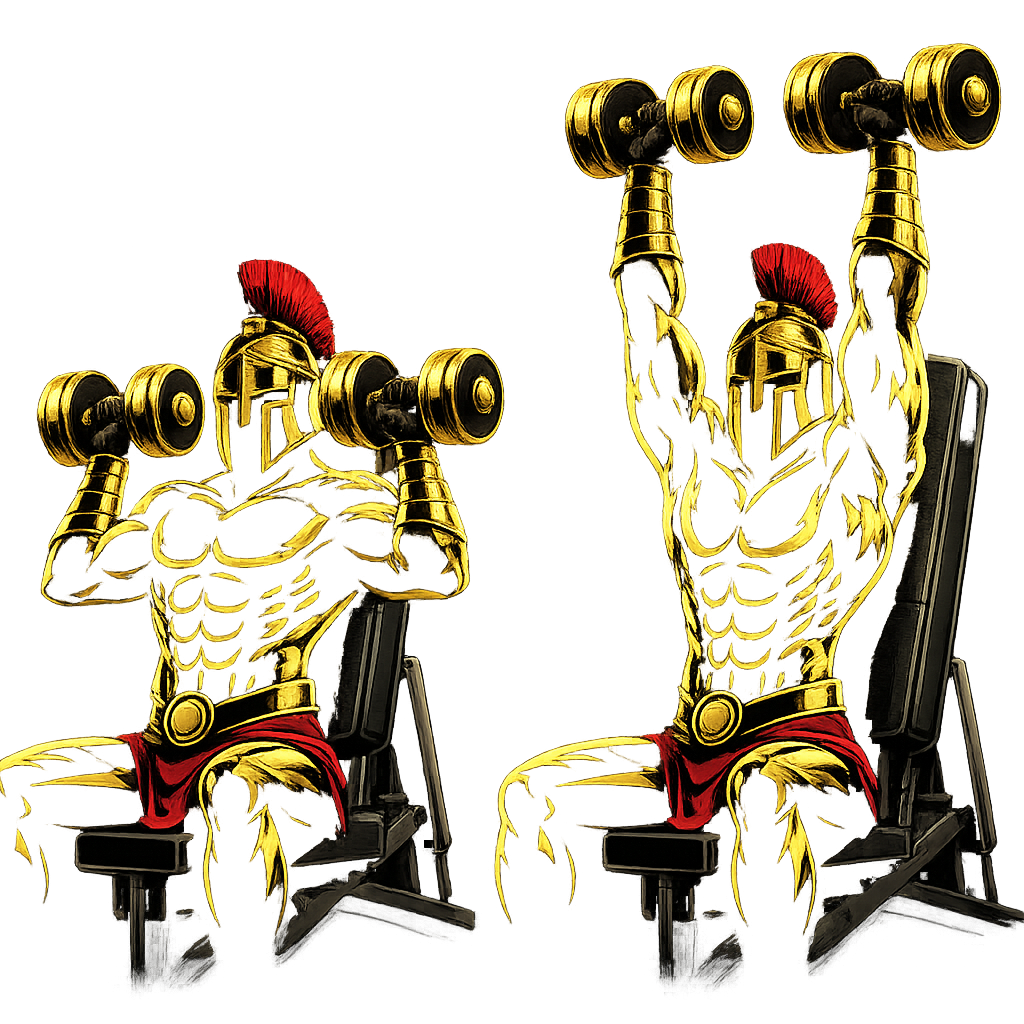
Hold a pair of dumbbells at shoulder height with your palms facing forward.
Tip: Keep your wrists straight and elbows slightly in front of your body.
Step 2: Brace Your Core
Before pressing:
- Tighten your abdominal muscles
- Squeeze your glutes
- Maintain an upright posture
This position creates a stable foundation for pressing.
Step 3: Press the Weights Overhead
Push the weights upward until your arms are fully extended.
Focus on:
- Pressing in a straight path
- Keeping your core tight
- Avoiding excessive leaning
Avoid arching your lower back.
Step 4: Reach the Top Position
At the top of the movement:
- Arms are fully extended
- Biceps are near the ears
- Core remains tight
Pause briefly while maintaining control.
Step 5: Lower With Control
Slowly lower the weights back to shoulder level.
Avoid dropping the weights quickly.
The lowering phase builds significant strength and muscle control.
Shoulder Press Form Checklist
Use this quick checklist to ensure perfect shoulder press form.
- Keep your core tight
- Maintain a neutral spine
- Press through a full range of motion
- Keep your wrists straight
- Lower the weights under control
Perfect form builds strength faster and prevents injury.
Common Shoulder Press Mistakes
Arching the Lower Back
Problem: Places unnecessary stress on the spine.
Fix: Tighten your core and glutes throughout the movement.
Using Momentum
Problem: Reduces shoulder activation.
Fix: Use controlled repetitions and avoid pushing with your legs.
Pressing Too Far Forward
Problem: Places stress on the shoulder joints.
Fix: Press the weights directly overhead.
Using Excessive Weight
Problem: Leads to poor form and increases injury risk.
Fix: Choose a weight you can control properly.
Lowering Too Quickly
Problem: Reduces muscle activation.
Fix: Control the lowering phase of every repetition.
Clean reps always beat heavy weights.
Shoulder Press Variations
Once you master the basic shoulder press, different variations can help build strength and target different areas of the shoulders.
Seated Shoulder Press
Provides additional stability.
How to Do Seated Shoulder Presses
- Sit upright on a bench or chair
- Press the weights overhead
- Lower slowly under control
This variation allows greater focus on the shoulders.
Barbell Shoulder Press
A powerful compound movement.
How to Do Barbell Shoulder Presses
- Hold the barbell at shoulder height
- Press overhead until arms are fully extended
- Lower under control
This variation develops maximum pressing strength.
Arnold Press
Targets multiple parts of the deltoids.
How to Do Arnold Presses
- Begin with palms facing you
- Rotate the hands outward while pressing overhead
- Reverse the motion while lowering
This variation increases shoulder muscle activation.
Single-Arm Shoulder Press
Improves balance and core stability.
How to Do Single-Arm Shoulder Presses
- Hold one dumbbell at shoulder height
- Press overhead
- Lower slowly and switch arms
This variation challenges unilateral strength and coordination.
Final Thoughts
The shoulder press is one of the most effective exercises you can master.
It builds:
- Shoulder strength
- Triceps strength
- Core stability
- Overhead pressing power
- Functional athletic performance
Progress may feel slow at first, especially for beginners. However, with consistent training and proper form, your pressing strength will steadily improve. Learn more about Push Workouts here.
One perfect repetition is always better than ten sloppy reps.
Focus on quality repetitions, full range of motion, and controlled movement.
A warrior develops power not by forcing the weight, but by controlling it.
Essential Gear for Shoulder Presses
The right equipment can improve your pressing performance, support proper technique, and help you progress safely as your shoulder strength increases. Here are the essentials every warrior should consider.
- Wrist Wraps: Provide extra wrist support and stability during heavier shoulder presses, helping you maintain proper alignment throughout each repetition.
- Resistance Bands: Ideal for warming up the shoulders, improving mobility, and adding accommodating resistance to shoulder press variations.
- Exercise Mat: Creates a stable, non-slip training surface for standing, kneeling, or seated shoulder press variations performed at home.
- Adjustable Dumbbells: One of the most versatile tools for shoulder presses, allowing you to increase resistance gradually while performing bilateral and single-arm variations.
- Barbell and Weight Plates: Perfect for building maximum overhead pressing strength through progressive overload and compound training.
- Adjustable Weight Bench: Essential for seated shoulder presses, providing greater stability and support while helping you isolate the shoulders more effectively.
Shoulder Press FAQ
Q1: Should beginners use dumbbells or barbells for shoulder presses?
Most beginners should start with dumbbells because they allow a more natural range of motion and help correct strength imbalances.
Q2: How many repetitions should I do for shoulder presses?
Most beginners can perform 8–15 repetitions for 2–4 sets while focusing on proper form.
Q3: How often should I train shoulder presses?
You can train shoulder presses 1–3 times per week depending on your recovery and overall training program.