
Learn how to do a push-up with perfect form, avoid common mistakes, and discover the best push-up variations to build real upper-body strength.
The push-up is one of the most effective bodyweight exercises ever created. It builds strength in the chest, shoulders, triceps, and core while improving endurance and full-body stability.
Whether you’re training for military fitness tests, calisthenics, or general strength, mastering the push-up is a fundamental step in building functional power.
What Is a Push-Up?
A push-up is a classic bodyweight exercise in which you lower your body toward the ground and push back up while maintaining a straight plank position.
Push-ups train multiple muscle groups simultaneously and require no equipment, making them one of the most accessible strength exercises.
They are widely used in:
- Military fitness training
- Calisthenics programs
- Athletic conditioning
- Home workouts
Although push-ups appear simple, proper push-up form is essential. Many beginners struggle not because of weakness, but because of incorrect technique.
Learning proper push-up form will help you build strength faster, prevent injury, and progress to more advanced variations.
Remember: Form builds muscle, not reps.
Benefits of Push-Ups
Push-ups are a foundational exercise for developing upper-body strength and endurance.
Key benefits include:
- Builds chest, shoulder, and triceps strength
- Improves posture and shoulder stability
- Strengthens the core and lower back
- Requires no equipment
- Can be performed anywhere
- Develops functional upper-body power
Because of their effectiveness, push-ups are a core exercise in military and tactical fitness training.
Muscles Worked in Push-Ups
Push-ups train multiple upper-body and core muscles at once.
Primary Muscles
- Chest (Pectoralis Major)
- Shoulders (Anterior Deltoids)
- Triceps
Secondary Muscles
- Core (Abdominals and Obliques)
- Lower Back
- Glutes
- Serratus Anterior
This makes push-ups one of the best compound bodyweight exercises for building total upper-body strength.
How to Do a Push-Up Correctly (Step-by-Step)
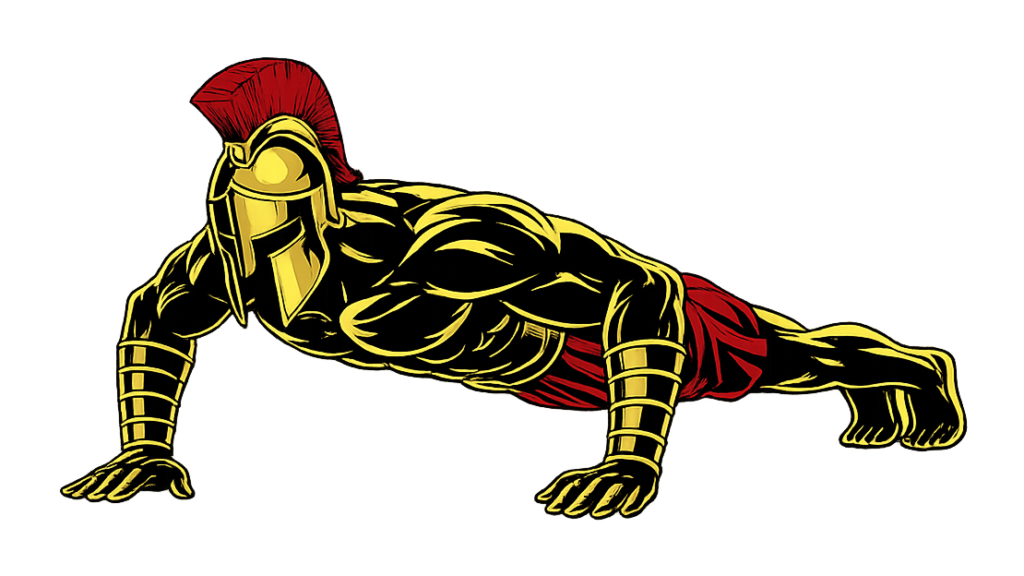
Step 1: Get Into the Starting Position
Place your hands slightly wider than shoulder-width apart.
- Fingers pointing forward
- Feet together or slightly apart
- Body in a straight line from head to heels
Imagine your body forming a solid plank.
Step 2: Brace Your Core
Before lowering your body:
- Tighten your abdominal muscles
- Squeeze your glutes
- Keep your spine neutral
A strong core prevents your hips from sagging or rising.
Step 3: Lower Your Body
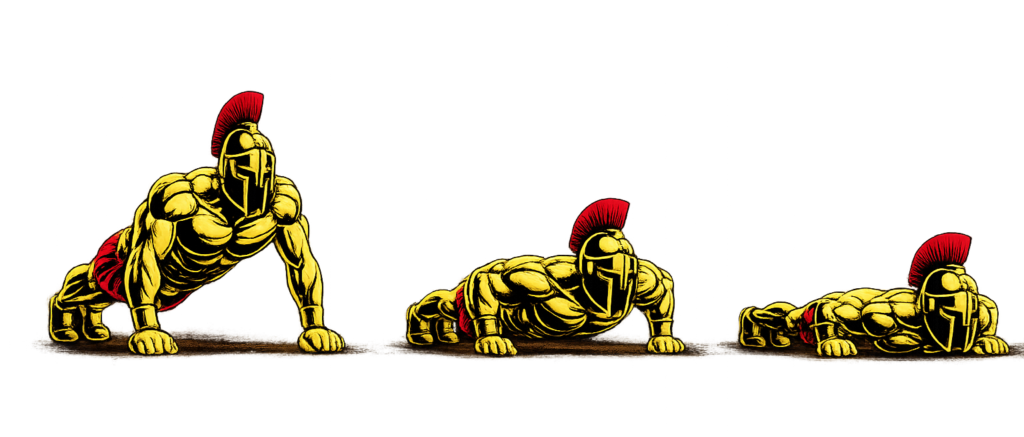
Bend your elbows and lower your chest toward the floor.
- Keep elbows at a 30–45° angle
- Maintain a straight body line
- Keep your neck neutral
Lower until your chest is just above the floor.
Step 4: Push Back Up
Push through your palms and extend your arms.
- Keep your body straight
- Engage your chest and triceps
- Lock out your arms at the top
This completes one perfect push-up repetition.
Push-Up Proper Form Checklist
Use this checklist to ensure perfect push-up technique.
- Maintain a straight body line
- Keep your core and glutes tight
- Lower your chest close to the floor
- Keep elbows slightly tucked
- Move with controlled tempo
Quality always beats quantity.
Common Push-Up Mistakes (And How to Fix Them)
Sagging Hips
Problem: Weak core causes hips to drop.
Fix: Tighten your abs and glutes to maintain a plank position.
Flared Elbows
Problem: Elbows pointing outward increases shoulder stress.
Fix: Keep elbows at 30–45° from your torso.
Half Reps
Problem: Not lowering fully reduces muscle activation.
Fix: Lower until your chest is just above the ground.
Dropping the Head
Problem: Looking upward strains the neck.
Fix: Keep your neck neutral and gaze slightly forward.
Rushing the Movement
Problem: Fast reps reduce strength development.
Fix: Use a controlled tempo:
- 2 seconds down
- 1 second up
Push-Up Variations
Once you master the basic push-up, different variations can help you build strength and target different muscle groups.
Knee Push-Ups (Beginner)
Knee push-ups reduce bodyweight load and are perfect for beginners.
How to Do Knee Push-Ups
- Start in a push-up position with knees on the ground
- Keep your body straight from knees to head
- Lower your chest and push back up
Incline Push-Ups
Incline push-ups reduce difficulty by elevating your hands.
How to Do Incline Push-Ups
- Place hands on a bench, chair, or wall
- Keep your body straight
- Lower your chest toward the surface and push back up
This variation is excellent for beginners and for building strength.
Decline Push-Ups
Decline push-ups increase difficulty and emphasize the upper chest and shoulders.
How to Do Decline Push-Ups
- Place your feet on a bench or elevated surface
- Hands remain on the floor
- Lower your chest and push back up
Diamond Push-Ups
Diamond push-ups focus heavily on the triceps.
How to Do Diamond Push-Ups
- Place hands close together, forming a diamond shape
- Keep elbows close to your body
- Lower your chest and push upward
Wide Push-Ups
Wide push-ups increase chest activation.
How to Do Wide Push-Ups
- Place hands wider than shoulder-width
- Lower your chest while keeping your body straight
- Push back up with control
Weighted Push-Ups
An advanced push-up variation that increases resistance by adding extra weight to your back.
How to Do Weighted Push-Ups
- Place a weighted backpack or weight plate securely on your upper back.
- Perform a standard push-up while keeping your core tight and body in a straight line.
- Lower your chest close to the floor, then push back up with full control.
Explosive Push-Ups
Explosive push-ups develop power and athletic performance.
How to Do Explosive Push-Ups
- Lower your chest toward the floor
- Push upward as fast as possible
- Hands may briefly leave the ground
Final Thoughts
The push-up is one of the most effective bodyweight exercises for building upper-body strength, endurance, and core stability.
With proper form and consistent practice, push-ups will strengthen:
- Chest
- Shoulders
- Triceps
- Core
Progress takes time, but small improvements in technique and strength add up quickly. Learn more about Push Workouts here.
Focus on clean repetitions, full range of motion, and disciplined training.
Master the push-up, and you build the foundation for advanced calisthenics and true functional strength.
Essential Gear for Push-Ups
The right equipment can improve your push-up performance, reduce joint strain, and help you progress safely as your upper-body strength increases. Here are the essentials every warrior should consider.
- Push-Up Handles: Increase your range of motion, keep your wrists in a more neutral position, and make high-volume push-up training more comfortable while reducing wrist strain.
- Wrist Wraps: Provide extra wrist support and stability during high-repetition or weighted push-up sessions, helping reduce discomfort and improve confidence.
- Exercise Mat: Creates a stable, cushioned training surface that improves comfort for your hands and feet while protecting your joints during floor-based training.
- Resistance Bands: Perfect for assisted push-up progressions, mobility drills, and adding accommodating resistance to advanced push-up variations.
- Weighted Vest: An excellent way to increase resistance once standard push-ups become easy, allowing you to continue building strength, muscle, and endurance without changing the exercise itself.
FAQ
Q1. How many push-ups should a beginner do?
Start with 2–3 sets of 8–12 reps, focusing on proper form rather than high numbers.
Q2. Can I do push-ups every day?
Yes, but beginners should train them 3–5 times per week and allow rest if muscles feel overly sore.
Q3. What if I can’t do a full push-up yet?
Begin with incline push-ups or knee push-ups and gradually progress to full push-ups as your strength improves.
Comments are closed.