Learn how to do dips with perfect form, avoid common mistakes, and discover the best variations to build serious upper-body strength.
Dips are one of the most effective bodyweight exercises for developing a strong chest, powerful triceps, and stable shoulders. Whether you are training for military fitness tests, calisthenics, or athletic performance, mastering dips is essential.
What Are Dips?
Dips are a bodyweight exercise where you lower and raise your body using parallel bars by bending and extending your arms.
This compound movement targets multiple upper-body muscles and builds real pushing strength.
Dips are commonly used in:
- Military fitness training
- Calisthenics workouts
- Strength and conditioning programs
- Athletic performance training
Unlike many gym machines, dips build functional strength that directly transfers to real-world performance.
Benefits of Dips
Dips are one of the most powerful exercises for upper-body development.
Benefits include:
- Builds strong chest and triceps
- Increases pushing strength
- Improves shoulder stability
- Enhances functional strength
- Develops upper-body control
- Essential for military and tactical fitness
Few exercises challenge the pushing muscles as effectively as dips.
Muscles Worked in Dips
Dips activate several major upper-body muscle groups.
Primary Muscles
- Triceps
- Chest (Pectoralis Major)
Secondary Muscles
- Shoulders (Anterior Deltoids)
- Core Muscles
- Lower Chest
This makes dips one of the best compound exercises for upper-body strength.
How to Do Dips (Step-by-Step)
Step 1: Grip the Bars
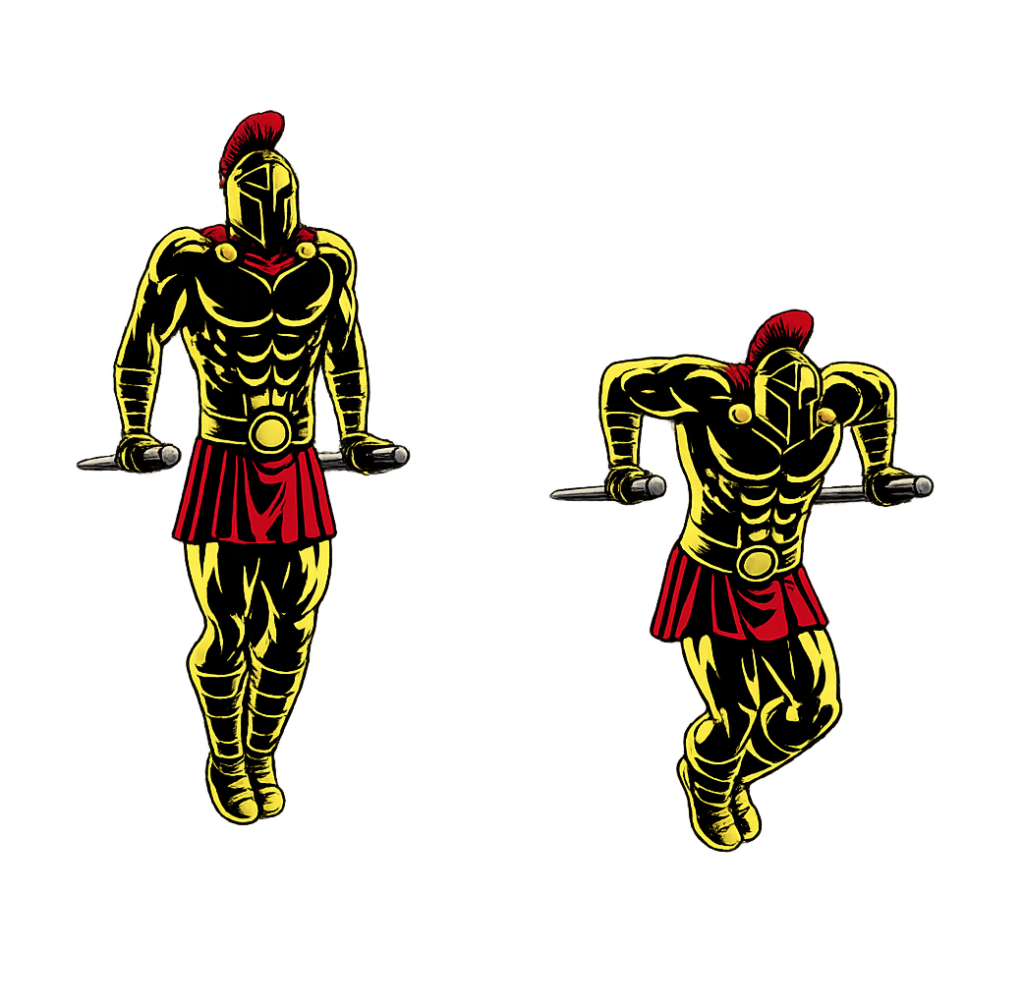
Hold onto parallel bars with your arms fully extended.
- Hands firmly gripping
- Arms locked out
- Body upright
Tip: Keep your shoulders stable and avoid shrugging.
Step 2: Start in the Top Position
Begin at the top with:
- Arms straight
- Chest slightly forward
- Core tight
- Legs still
This ensures proper control before lowering.
Step 3: Lower Your Body
Slowly bend your elbows and lower your body.
- Elbows move slightly backward
- Chest leans slightly forward
- Descend until the upper arms are parallel to the ground
Step 4: Push Back Up
Drive through your palms and extend your arms to return to the top.
- Keep movement controlled
- Avoid locking elbows aggressively
Step 5: Control the Movement
Maintain a steady tempo.
Avoid bouncing at the bottom — controlled reps build more strength.
Dips Form Checklist
Use this checklist to ensure perfect form:
- Keep your core tight
- Control both the lowering and pushing phases
- Lean slightly forward for chest engagement
- Keep shoulders stable
- Use a full range of motion
Perfect form builds strength and prevents injury.
Common Dips Mistakes
Going Too Low
Problem: Can strain the shoulders.
Fix: Lower until your upper arms are parallel to the ground.
Flaring Elbows Too Wide
Problem: Reduces efficiency and stresses the shoulders.
Fix: Keep elbows angled slightly backward.
Using Momentum
Problem: Reduces muscle activation.
Fix: Perform slow and controlled reps.
Shrugging Shoulders
Problem: Causes instability.
Fix: Keep shoulders down and stable.
Partial Reps
Problem: Limits strength development.
Fix: Use a full range of motion.
Dips Variations
Once you master the basic dip, these variations can increase strength and difficulty.
Bench Dips (Beginner Variation)
An easier version for beginners.
How to Do Bench Dips
- Place your hands on a bench behind you
- Extend your legs forward
- Lower your body by bending your elbows
- Push back up to the starting position
This variation reduces resistance and helps build initial strength.
Chest Dips
Targets the chest more intensely.
How to Do Chest Dips
- Lean your torso forward
- Allow elbows to flare slightly
- Lower slowly and push up
Triceps Dips
Focuses more on the triceps.
How to Do Triceps Dips
- Keep your body upright
- Keep elbows close to your sides
- Lower and push up with control
Weighted Dips
Adds resistance for advanced strength.
How to Do Weighted Dips
- Attach weight using a belt or hold between legs
- Perform controlled dips
- Maintain proper form
Final Thoughts
Dips are one of the most powerful upper-body exercises you can master.
They build:
- Chest strength
- Triceps strength
- Shoulder stability
- Core control
- Functional pushing power
Progress may feel challenging at first, especially for beginners. However, with consistent training and proper form, your strength will rapidly improve.
Focus on clean reps — not shortcuts. Learn more about Push Workouts here.
A warrior pushes his body with control — never with momentum.
Essential Gear for Dips
The right equipment can help you perform dips with better stability, improve comfort, and progress safely as your upper-body strength increases. Whether you’re building your first strict dip or adding resistance for advanced training, these essentials can support your progress.
- Dip Bars: The foundation of any dip workout. A sturdy pair of dip bars provides the stability and range of motion needed for building chest, triceps, and shoulder strength.
- Resistance Bands: Ideal for assisted dips, allowing beginners to practice proper form while gradually building the strength needed for unassisted repetitions.
- Wrist Wraps: Offer additional wrist support during high-volume or weighted dip sessions, helping improve comfort and confidence under load.
- Chalk: Improves grip by reducing sweat, helping you maintain a secure hold on the bars throughout every repetition.
- Weighted Dip Belt: The best option for progressive overload once bodyweight dips become easy, allowing you to safely increase resistance and continue building strength.
Dips FAQ
Q1: How many dips should a beginner do?
Beginners can start with 5–8 reps per set. Use bench dips if full dips are too difficult.
Q2: Are dips better than push-ups?
Both are effective. Dips provide greater resistance and are better for building maximum pushing strength.
Q3: How often should I do dips?
You can train dips 2–4 times per week, depending on recovery and intensity.
Comments are closed.