Learn how to do mixed grip pull-ups with perfect form, avoid common mistakes, and discover the best mixed grip pull-up variations to build greater pulling strength, improve grip endurance, and prepare for advanced bodyweight training.
Mixed grip pull-ups are an effective pull-up variation that combines an overhand grip with an underhand grip. This unique hand position challenges your muscles differently from standard pull-ups, improves grip versatility, and helps overcome strength plateaus. Whether you’re training for calisthenics, military fitness, climbing, or functional strength, mastering mixed grip pull-ups is a valuable addition to your workout routine.
What Are Mixed Grip Pull-Ups?
A mixed grip pull-up is a pull-up variation performed with one hand using an overhand (pronated) grip and the other using an underhand (supinated) grip. During the movement, you pull your body upward until your chin clears the bar while maintaining control and minimizing body rotation.
Mixed grip pull-ups combine the back emphasis of a traditional pull-up with the increased bicep involvement of a chin-up, creating a balanced upper-body exercise.
Mixed grip pull-ups are commonly used in:
- Calisthenics training
- Military fitness programs
- Climbing preparation
- Functional strength training
Because one arm is in a stronger position than the other, it is important to alternate hand positions between sets to develop balanced strength.
Benefits of Mixed Grip Pull-Ups
Mixed grip pull-ups are one of the best variations for improving pulling strength and grip development.
Benefits include:
- Builds upper-body pulling strength
- Improves grip strength and endurance
- Increases bicep activation
- Develops a stronger back
- Helps overcome pull-up plateaus
- Improves grip versatility for advanced training
Few pull-up variations provide as much variety while strengthening the entire upper body.
Muscles Worked in Mixed Grip Pull-Ups
Mixed grip pull-ups activate numerous upper-body muscles simultaneously.
Primary Muscles
- Latissimus Dorsi
- Biceps Brachii
- Rhomboids
Secondary Muscles
- Trapezius
- Rear Deltoids
- Brachialis
- Brachioradialis
- Forearms
- Core Muscles
Because of this muscle activation, mixed grip pull-ups are excellent for building balanced pulling strength and improving grip endurance.
How to Do Mixed Grip Pull-Ups (Step-by-Step)
Step 1: Grip the Pull-Up Bar
Grab the pull-up bar with:
- One hand using an overhand grip
- The other hand using an underhand grip
- Hands approximately shoulder-width apart
Wrap your thumbs around the bar for a secure grip.
Tip: Alternate which hand uses the overhand grip every set to avoid developing muscular imbalances.
Step 2: Start in a Dead Hang
Begin from a full dead hang with:
- Arms fully extended
- Core engaged
- Legs together
- Shoulders slightly active
Keep your body still before beginning the pull.
Step 3: Pull Yourself Up
Drive your elbows downward while pulling your chest toward the bar.
Focus on:
- Keeping your body straight
- Pulling evenly with both arms
- Preventing excessive twisting
Imagine pulling both elbows toward your ribs.
Step 4: Chin Over the Bar
At the top position:
- Chin clears the bar
- Chest stays lifted
- Core remains tight
Pause briefly while maintaining full control.
Step 5: Lower With Control
Slowly lower yourself back to the starting position.
Maintain:
- Full body tension
- A controlled descent
- Equal effort from both arms
Return to a complete dead hang before beginning the next repetition.
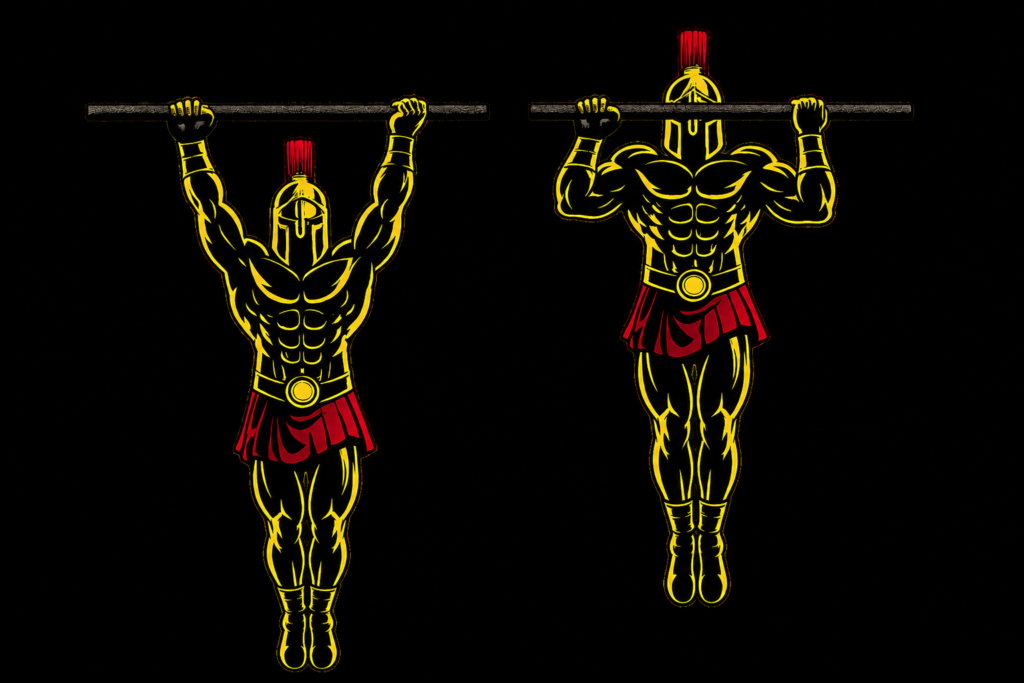
Mixed Grip Pull-Up Form Checklist
Use this quick checklist to ensure perfect mixed grip pull-up form.
- Use one overhand grip and one underhand grip
- Keep your body straight
- Pull evenly with both arms
- Control every repetition
- Alternate your grip orientation between sets
Perfect form develops balanced strength and reduces injury risk.
Common Mixed Grip Pull-Up Mistakes
Twisting the Body
Problem: Shifts most of the work onto one side.
Fix: Keep your core engaged and pull evenly with both arms.
Relying Too Much on the Underhand Arm
Problem: Creates muscular imbalances.
Fix: Focus on pulling equally with both hands throughout the movement.
Using Momentum
Problem: Reduces muscle activation.
Fix: Perform slow, controlled repetitions without swinging.
Performing Half Repetitions
Problem: Limits strength development.
Fix: Begin from a full dead hang and finish with your chin clearly above the bar.
Never Switching Grip Sides
Problem: May lead to uneven strength development.
Fix: Alternate which hand uses the overhand grip every set or every workout.
Clean, symmetrical repetitions build stronger pull-ups than uneven ones.
Mixed Grip Pull-Up Variations
Once you master the standard mixed grip pull-up, these variations can help continue your progress.
Assisted Mixed Grip Pull-Ups
The ideal beginner progression.
How to Do Assisted Mixed Grip Pull-Ups
- Attach a resistance band to the pull-up bar
- Place one foot or knee inside the band
- Perform controlled repetitions while maintaining the mixed grip
This variation helps beginners develop proper pulling mechanics.
Weighted Mixed Grip Pull-Ups
Builds maximum strength.
How to Do Weighted Mixed Grip Pull-Ups
- Wear a weighted vest or attach weight using a dip belt
- Perform strict mixed grip pull-ups
- Maintain perfect technique throughout
This variation develops elite pulling power.
Commando Pull-Ups
A more advanced asymmetrical variation.
How to Do Commando Pull-Ups
- Grip the bar with both palms facing each other
- Position your head beside the bar
- Pull upward while alternating sides each repetition
This variation further challenges unilateral pulling strength and coordination.
Towel Mixed Grip Pull-Ups
An advanced grip progression.
How to Do Towel Mixed Grip Pull-Ups
- Wrap a towel over one side of the pull-up bar
- Grip the towel with one hand and the bar with the other
- Perform strict repetitions
This variation dramatically increases grip strength and forearm endurance.
Final Thoughts
Mixed grip pull-ups are an excellent variation for building upper-body strength and improving grip versatility.
They build:
- Pulling strength
- Grip endurance
- Back development
- Arm strength
- Functional athletic performance
Although one hand is naturally stronger during each repetition, alternating your grip orientation ensures balanced muscular development over time. Consistent practice with proper technique will improve both your strength and control. Learn more about Pull Workouts here.
Focus on smooth repetitions, equal pulling effort, and complete range of motion.
A warrior develops strength equally on both sides of the body.
Mixed Grip Pull-Up FAQ
Q1: Are mixed grip pull-ups easier than regular pull-ups?
For many people, yes. The underhand grip allows one arm to contribute more through the biceps, making the movement feel slightly easier. However, the exercise still requires significant upper-body strength and control.
Q2: Should I switch my hand positions?
Yes. Alternate which hand uses the overhand and underhand grip between sets or workouts to prevent muscular imbalances and promote balanced strength development.
Q3: Do mixed grip pull-ups help improve regular pull-ups?
Yes. Mixed grip pull-ups strengthen the lats, biceps, forearms, and grip while improving pulling mechanics, making them an effective accessory exercise for increasing overall pull-up performance.