Learn how to do bicep curls with perfect form, avoid common mistakes, and discover the best bicep curl variations to build real arm strength.
Bicep curls are one of the most effective exercises for developing stronger arms, improving pulling strength, and increasing muscle size. Whether you are training for military fitness tests, bodybuilding, or general fitness, mastering the bicep curl is essential.
What Is a Bicep Curl?
A bicep curl is a resistance exercise where you lift a weight by bending your elbows and bringing the weight toward your shoulders.
The bicep curl is considered one of the best arm exercises because it isolates the biceps while also strengthening the forearms and grip.
Bicep curls are commonly used in:
- Strength and conditioning programs
- Bodybuilding routines
- Athletic performance training
- General fitness workouts
Unlike compound pulling exercises, bicep curls allow you to focus specifically on building stronger arms.
Benefits of Bicep Curls
Bicep curls are one of the most effective exercises for developing upper-arm strength.
Benefits include:
- Builds stronger biceps
- Improves grip strength
- Enhances pulling performance
- Increases arm size and definition
- Strengthens the forearms
- Supports other pulling exercises like pull-ups and rows
Few exercises isolate the arms as effectively as the bicep curl.
Muscles Worked in Bicep Curls
Bicep curls activate several upper-body muscles simultaneously.
Primary Muscles
- Biceps Brachii
- Brachialis
Secondary Muscles
- Brachioradialis
- Forearm Flexors
- Wrist Stabilizers
Because of this muscle activation, bicep curls are one of the best exercises for developing stronger and more muscular arms.
How to Do Bicep Curls (Step-by-Step)
Step 1: Stand Tall
Begin with:
- Feet shoulder-width apart
- Chest up
- Core engaged
- Arms fully extended
Hold a dumbbell in each hand with your palms facing forward.
Tip: Keep your elbows close to your sides throughout the movement.
Step 2: Start the Curl
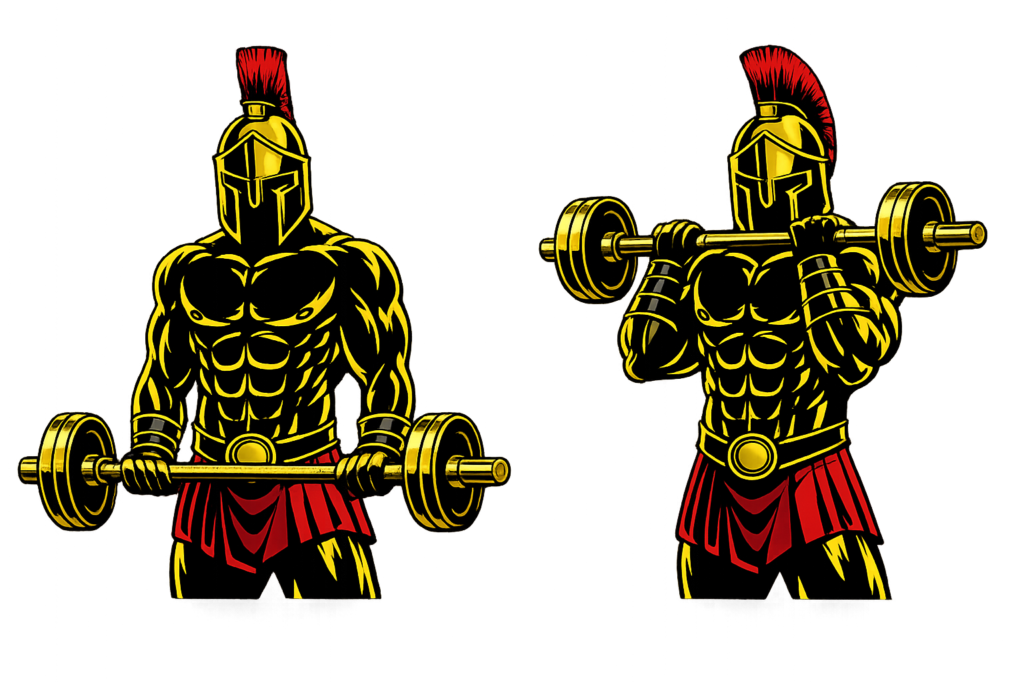
Raise the weights by bending your elbows.
Focus on:
- Keeping your upper arms stationary
- Squeezing your biceps
- Avoiding momentum
The movement should come from the elbows, not the shoulders.
Step 3: Reach the Top Position
At the top of the curl:
- Dumbbells are near shoulder level
- Elbows remain close to the torso
- Biceps are fully contracted
Pause briefly to maximize muscle activation.
Step 4: Lower With Control
Slowly lower the weights back to the starting position.
Avoid dropping the weights quickly.
The lowering phase builds significant strength and muscle.
Step 5: Repeat the Movement
Continue performing repetitions with smooth and controlled movement.
Maintain proper posture throughout every rep.
Bicep Curl Form Checklist
Use this quick checklist to ensure perfect bicep curl form.
- Keep your elbows close to your body
- Maintain a tight core
- Use a full range of motion
- Lower the weights slowly
- Control every repetition
Perfect form builds strength faster and prevents injury.
Common Bicep Curl Mistakes
Swinging the Weights
Problem: Using momentum reduces bicep activation.
Fix: Use lighter weights and perform each repetition under control.
Moving the Elbows Forward
Problem: Transfers work away from the biceps.
Fix: Keep your elbows close to your sides throughout the movement.
Using Excessive Weight
Problem: Leads to poor form and reduced muscle activation.
Fix: Choose a weight you can control properly.
Incomplete Repetitions
Problem: Limits muscle development.
Fix: Fully extend your arms and squeeze the biceps at the top.
Lowering Too Quickly
Problem: Reduces time under tension.
Fix: Control the lowering phase of every repetition.
Clean reps always beat heavy weights.
Bicep Curl Variations
Once you master the basic bicep curl, different variations can help build strength and target different areas of the arms.
Hammer Curls
Hammer curls emphasize the brachialis and forearms.
How to Do Hammer Curls
- Hold the dumbbells with palms facing each other
- Curl the weights upward
- Lower slowly under control
This variation improves arm thickness and grip strength.
Alternating Bicep Curls
Allows you to focus on one arm at a time.
How to Do Alternating Bicep Curls
- Curl one arm while the other remains extended
- Lower under control
- Alternate sides
This variation improves muscular balance.
Concentration Curls
Provides maximum bicep isolation.
How to Do Concentration Curls
- Sit on a bench
- Rest your elbow against your inner thigh
- Curl the weight upward slowly
This variation improves the mind-muscle connection.
Resistance Band Curls
A beginner-friendly option.
How to Do Resistance Band Curls
- Stand on a resistance band
- Grip the handles or ends
- Perform the curl under control
This variation provides constant tension throughout the movement.
Final Thoughts
The bicep curl is one of the most effective exercises you can master for building stronger arms.
It builds:
- Bicep strength
- Forearm strength
- Grip endurance
- Pulling performance
- Muscular arm development
Progress may feel slow at first, especially if you are new to resistance training. However, with consistent training and proper form, your arm strength will steadily improve. Learn more about Pull Workouts here.
One perfect rep is always better than ten sloppy ones.
Focus on quality repetitions, full range of motion, and controlled movement.
A warrior builds strength with discipline, not momentum.
Essential Gear for Bicep Curls
Using the right equipment can help you perform bicep curls with better control, increase training variety, and continue progressing as your arm strength improves.
- Adjustable Dumbbells: The most versatile option for bicep curls, allowing you to gradually increase the weight as you get stronger without needing multiple pairs of dumbbells.
- Resistance Bands: A beginner-friendly alternative that provides constant tension throughout the movement, making them ideal for home workouts and travel.
- Weightlifting Gloves or Gym Chalk: Help improve grip and reduce hand fatigue during higher-volume training, allowing you to focus on squeezing your biceps through every repetition.
- Adjustable Weight Bench: Perfect for performing seated, incline, and concentration curls, adding variety to your workouts while improving exercise stability.
- Wrist Wraps: Provide extra wrist support when lifting heavier weights, helping you maintain a neutral wrist position and better control throughout each repetition.
Bicep Curl FAQ
Q1: How many bicep curls should a beginner do?
Most beginners can start with 8–15 repetitions per set for 2–4 sets while focusing on proper form.
Q2: Can I do bicep curls every day?
It is generally better to train biceps 2–3 times per week, allowing enough time for recovery and muscle growth.
Q3: Are bicep curls enough to build bigger arms?
Bicep curls are excellent for arm development, but combining them with compound pulling exercises like pull-ups and rows will produce better overall results.
Comments are closed.