Learn how to do calf raises with perfect form, avoid common mistakes, and discover the best variations to build powerful lower legs.
Calf raises are one of the most effective exercises for developing stronger calves, improving ankle stability, and enhancing athletic performance. Whether you are training for military fitness tests, sports performance, or general fitness, mastering calf raises is essential.
What Are Calf Raises?
A calf raise is a lower-leg exercise where you lift your heels off the ground by pushing through the balls of your feet, then slowly lower yourself back down.
The calf raise is considered one of the best exercises for strengthening the calves and improving lower-leg endurance.
Calf raises are commonly used in:
- Military fitness training
- Strength and conditioning programs
- Running and athletic performance training
- Rehabilitation and injury prevention routines
Unlike many machine exercises, calf raises develop functional strength that improves jumping, sprinting, and everyday movement.
Benefits of Calf Raises
Calf raises are among the most effective exercises for developing strong, resilient lower legs.
Benefits include:
- Builds stronger calves
- Improves ankle stability and mobility
- Enhances running and jumping performance
- Increases lower-leg endurance
- Reduces the risk of ankle injuries
- Supports balance and coordination
Few exercises target the calves as effectively as calf raises.
Muscles Worked in Calf Raises
Calf raises activate several lower-leg muscles simultaneously.
Primary Muscles
- Gastrocnemius
- Soleus
Secondary Muscles
- Tibialis Posterior
- Peroneal Muscles
- Foot Stabilizers
- Achilles Tendon Complex
Because of this muscle activation, calf raises are one of the best exercises for developing lower-leg strength and endurance.
How to Do Calf Raises (Step-by-Step)
Step 1: Stand Tall
Begin with:
- Feet shoulder-width apart
- Toes pointing forward
- Chest upright
- Core engaged
Tip: Stand near a wall or sturdy object if you need assistance with balance.
Step 2: Set Your Position
Before lifting:
- Keep your knees slightly bent or straight
- Distribute your weight evenly
- Maintain good posture
This creates a stable foundation.
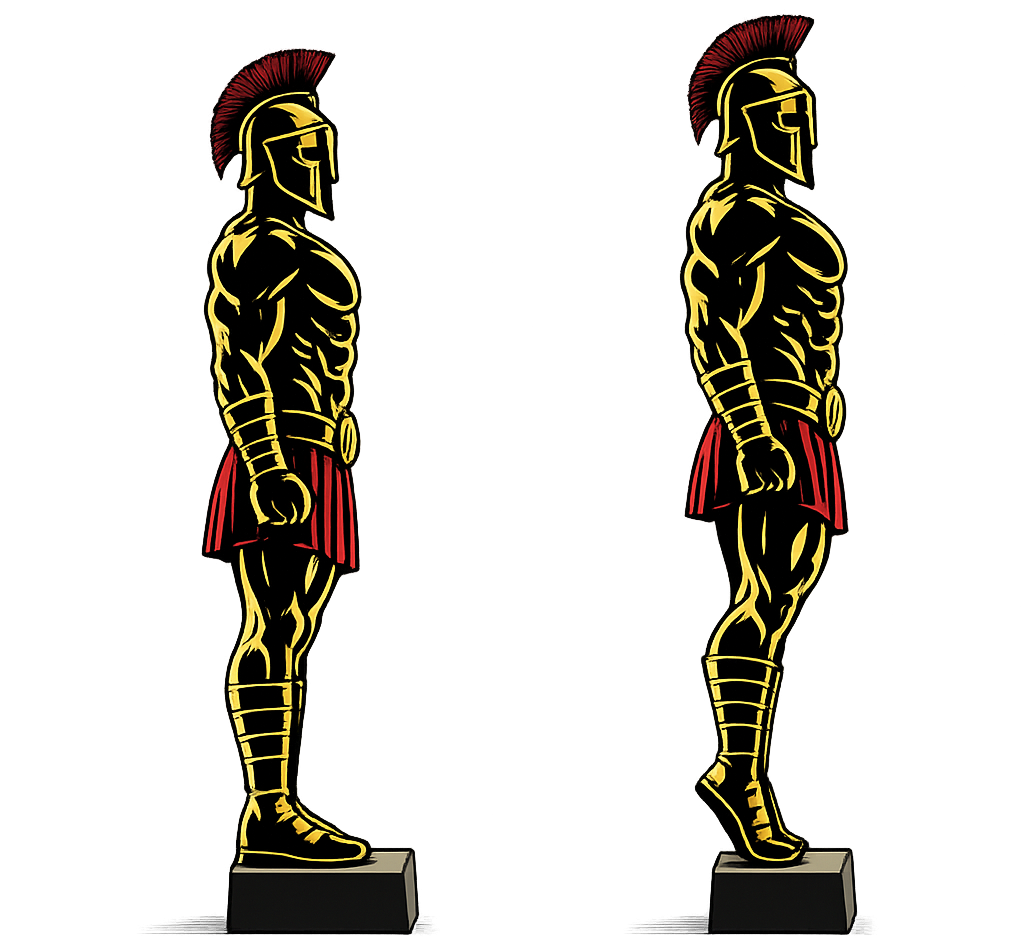
Step 3: Rise Onto Your Toes
Push through the balls of your feet and raise your heels as high as possible.
Focus on:
- Contracting your calf muscles
- Keeping movements smooth
- Maintaining balance
Step 4: Pause at the Top
At the highest position:
- Heels are elevated
- Calves are fully contracted
- Body remains upright
Pause briefly to maximize muscle activation.
Step 5: Lower Slowly
Lower your heels back to the ground under control.
Avoid bouncing or dropping quickly.
Repeat for the desired number of repetitions.
Calf Raise Form Checklist
Use this quick checklist to ensure perfect calf raise form.
- Keep your body upright
- Push through the balls of your feet
- Raise your heels as high as possible
- Pause briefly at the top
- Lower with control
Perfect form builds strength faster and prevents injury.
Common Calf Raise Mistakes
Using Momentum
Problem: Reduces calf activation.
Fix: Perform every repetition slowly and under control.
Bouncing at the Bottom
Problem: Places unnecessary stress on the Achilles tendon.
Fix: Lower smoothly and avoid rebounding.
Incomplete Range of Motion
Problem: Limits muscle development.
Fix: Fully raise and lower your heels during each rep.
Leaning Forward Excessively
Problem: Affects balance and posture.
Fix: Keep your chest upright throughout the movement.
Rushing the Exercise
Problem: Reduces effectiveness.
Fix: Focus on controlled repetitions and proper contractions.
Quality reps always beat rushed reps.
Calf Raise Variations
Once you master the basic calf raise, different variations can help build strength and increase difficulty.
Single-Leg Calf Raises
Improves balance and unilateral strength.
How to Do Single-Leg Calf Raises
- Lift one foot off the ground
- Raise yourself using the opposite leg
- Lower under control and switch sides
This variation helps correct strength imbalances.
Elevated Calf Raises
Increases range of motion.
How to Do Elevated Calf Raises
- Stand on the edge of a step or platform
- Allow your heels to drop below the step
- Raise your heels as high as possible
This variation provides a deeper stretch and greater muscle activation.
Seated Calf Raises
Places greater emphasis on the soleus muscle.
How to Do Seated Calf Raises
- Sit on a bench or chair
- Place feet flat on the ground
- Raise and lower your heels under control
This variation improves lower-leg endurance.
Weighted Calf Raises
Adds resistance for increased strength gains.
How to Do Weighted Calf Raises
- Hold dumbbells or wear a weighted vest
- Perform the movement normally
- Maintain perfect form throughout
This variation is excellent for building stronger calves.
Final Thoughts
The calf raise is one of the most effective exercises you can master to develop powerful calves.
It builds:
- Calf strength
- Lower-leg endurance
- Ankle stability
- Athletic performance
- Balance and coordination
Progress may feel slow because the calves are highly endurance-oriented muscles. However, with consistent training and proper form, your lower-leg strength and resilience will steadily improve. Learn more about Leg Workouts here.
One controlled rep is always better than several sloppy reps.
Focus on quality repetitions, full range of motion, and controlled movement.
A warrior stands strongest from the ground up.
Essential Gear for Calf Raises
The right equipment can improve your calf raise performance, increase comfort, and help you progress safely as your lower-leg strength develops. Whether you’re mastering bodyweight calf raises or adding resistance for advanced variations, these essentials can support your training.
- Elevated Calf Raise Block or Step Platform: Provides the extra range of motion needed for deeper stretches and stronger contractions, making it ideal for elevated calf raises and maximizing calf development.
- Exercise Mat: Creates a stable, cushioned training surface that improves comfort and grip while protecting your feet during bodyweight calf raise workouts.
- Resistance Bands: Excellent for adding progressive resistance to calf raises, improving ankle stability, and increasing lower-leg muscle activation without requiring heavy weights.
- Weighted Vest: Adds resistance while keeping your hands free, making it an excellent option for progressing standing and single-leg calf raises while maintaining natural movement.
- Weightlifting Shoes: Provide a stable, supportive base during weighted calf raises, helping improve balance and control throughout every repetition.
Explore our equipment guides to find the best gear for your training and take your calf raises to the next level.
Calf Raise FAQ
Q1: How many calf raises should a beginner do?
Most beginners can start with 15–20 repetitions per set while focusing on proper form and controlled movement.
Q2: Are calf raises good for runners?
Yes. Calf raises help improve ankle strength, lower-leg endurance, and running performance while reducing the risk of injury.
Q3: How often should I do calf raises?
You can train calf raises 2–6 times per week depending on your recovery and overall training volume.