How to Do Mountain Climbers Correctly: Step-by-Step Guide for Beginners

Learn how to do mountain climbers with perfect form, avoid common mistakes, and discover the best variations to build a strong core and elite conditioning.

Mountain climbers are one of the most effective bodyweight exercises for developing core strength, improving cardiovascular endurance, and burning fat. Whether you are training for military fitness tests, calisthenics, or athletic performance, mastering mountain climbers is essential.


What Are Mountain Climbers?

Mountain climbers are a dynamic bodyweight exercise performed in a high plank position where you rapidly drive your knees toward your chest in an alternating motion.

This exercise combines core training with cardio, making it highly effective for full-body conditioning.

Mountain climbers are commonly used in:

  • Military fitness training
  • HIIT (High-Intensity Interval Training) workouts
  • Fat-loss programs
  • Athletic conditioning

Unlike static exercises, mountain climbers train both strength and endurance simultaneously.

Benefits of Mountain Climbers

Mountain climbers are one of the most powerful exercises for building endurance and core strength.

Benefits include:

• Strengthens the core and abs
• Improves cardiovascular endurance
• Burns calories and supports fat loss
• Enhances coordination and agility
• Builds full-body endurance
• Essential for military and tactical fitness

Few exercises combine cardio and strength as effectively as mountain climbers.

Muscles Worked in Mountain Climbers

Mountain climbers activate multiple muscle groups across the body.

Primary Muscles

• Rectus Abdominis
• Lower Abdominals
• Hip Flexors

Secondary Muscles

• Shoulders (Deltoids)
• Chest (Pectorals)
• Quadriceps
• Hamstrings
• Glutes

This makes mountain climbers a highly effective full-body exercise.


How to Do Mountain Climbers (Step-by-Step)

Step 1: Get Into a High Plank Position

Start in a push-up position with:

• Hands directly under shoulders
• Arms fully extended
• Body in a straight line

Tip: Engage your core to maintain stability.

Step 2: Drive One Knee Toward Your Chest

Bring one knee forward toward your chest.

• Keep your core tight
• Avoid lifting your hips too high

Step 3: Switch Legs Quickly

Return the leg to the starting position and immediately switch legs.

• Alternate knees in a running motion
• Keep movement controlled

Warrior showcasing How to do Mountain Climbers with proper form

Step 4: Maintain Proper Form

Throughout the movement:

• Keep hips low
• Maintain a straight body line
• Engage your core continuously

Step 5: Control Your Speed

Perform the exercise at a steady pace.

Avoid going too fast — proper form is more important than speed.


Mountain Climbers Form Checklist

Use this checklist to ensure perfect form:

Keep your body in a straight line
Engage your core throughout
Keep hips low and stable
Drive your knees toward your chest
Control your movement

Perfect form maximizes results and prevents injury.


Common Mountain Climbers Mistakes

Hips Too High

Problem: Reduces core engagement.

Fix: Keep your body in a straight plank position.

Moving Too Fast

Problem: Leads to poor form and less effectiveness.

Fix: Focus on controlled movement before increasing speed.

Not Engaging the Core

Problem: Turns it into a leg exercise.

Fix: Keep your abs tight throughout.

Short Range of Motion

Problem: Limits effectiveness.

Fix: Bring knees fully toward your chest.

Bouncing or Sloppy Form

Problem: Reduces muscle activation.

Fix: Stay controlled and stable.


Mountain Climbers Variations

Once you master basic mountain climbers, these variations can increase intensity and effectiveness.

Slow Mountain Climbers

Focuses on control and core strength.

How to Do Slow Mountain Climbers

• Perform the movement slowly
• Hold each knee drive briefly
• Maintain strict plank form

Cross-Body Mountain Climbers

Targets the obliques more effectively.

How to Do Cross-Body Mountain Climbers

• Drive your knee toward the opposite elbow
• Keep your core tight
• Move in a controlled manner

Elevated Mountain Climbers

Increases upper-body involvement.

How to Do Elevated Mountain Climbers

• Place hands on an elevated surface
• Perform standard movement
• Maintain stability

Sliding Mountain Climbers (Advanced)

Adds instability and difficulty.

How to Do Sliding Mountain Climbers

• Place feet on sliders or a smooth surface
• Slide knees toward your chest
• Control the movement throughout


Final Thoughts

Mountain climbers are one of the most effective full-body exercises you can master.

They build:

• Core strength
• Cardiovascular endurance
• Full-body coordination
• Fat-burning capacity
• Functional athletic performance

Progress may feel challenging at first, especially when maintaining form under fatigue. However, with consistent training and proper technique, your endurance and strength will rapidly improve. Learn more about Core Workouts here.

Focus on control before speed.

A warrior moves with precision — even at high intensity.


Mountain Climbers FAQ

Q1: How long should beginners do mountain climbers?
Beginners can start with 20–30 seconds per set and gradually increase to 45–60 seconds.

Q2: Are mountain climbers good for fat loss?
Yes, mountain climbers are excellent for burning calories and improving overall conditioning.

Q3: How often should I do mountain climbers?
You can train mountain climbers 3–5 times per week as part of your workouts, depending on recovery.

How to Do Reverse Crunches Correctly: Step-by-Step Guide for Beginners

Learn how to do reverse crunches with perfect form, avoid common mistakes, and discover the best variations to build strong, defined lower abs.

Reverse crunches are one of the most effective bodyweight exercises for targeting the lower abdominal muscles, improving core strength, and enhancing control. Whether you are training for military fitness tests, calisthenics, or athletic performance, mastering reverse crunches is essential.


What Are Reverse Crunches?

A reverse crunch is a bodyweight core exercise where you lift your hips off the ground by bringing your knees toward your chest.

Unlike traditional crunches, reverse crunches emphasize the lower abs rather than the upper abs.

Reverse crunches are commonly used in:

  • Core strengthening workouts
  • Fat-loss training programs
  • Athletic conditioning
  • Military fitness routines

This exercise builds real core strength that translates directly into better performance and control.

Benefits of Reverse Crunches

Reverse crunches are one of the best exercises for targeting the lower abs.

Benefits include:

• Strengthens lower abdominal muscles
• Improves core control and stability
• Reduces strain on the neck and upper back
• Enhances pelvic control
• Supports better posture
• Essential for military and tactical fitness

Few exercises isolate the lower abs as effectively as reverse crunches.

Muscles Worked in Reverse Crunches

Reverse crunches activate multiple core muscles.

Primary Muscles

• Lower Abdominals
• Rectus Abdominis

Secondary Muscles

• Obliques
• Hip Flexors
• Lower Back Stabilizers

This makes reverse crunches highly effective for building a strong and controlled core.


How to Do Reverse Crunches (Step-by-Step)

Step 1: Lie Flat on the Ground

Lie on your back with your arms by your sides and knees bent at 90 degrees.

Tip: Keep your lower back pressed into the ground.

Step 2: Bring Knees Toward Chest

Lift your feet off the ground and bring your knees toward your chest.

• Keep movement controlled
• Core engaged
• Legs relaxed

Step 3: Lift Your Hips

Using your core, lift your hips slightly off the ground.

Focus on curling your pelvis upward rather than swinging your legs.

Warrior showcasing How to do Reverse Crunches

Step 4: Pause at the Top

At the top of the movement:

• Hips slightly elevated
• Core fully engaged
• Movement controlled

Pause briefly to maximize muscle activation.

Step 5: Lower With Control

Slowly lower your hips back down to the starting position.

Avoid dropping your legs quickly — control is key.


Reverse Crunch Form Checklist

Use this checklist to ensure perfect form:

Keep your lower back pressed into the ground
Lift hips using your core, not momentum
Use slow and controlled reps
Avoid swinging your legs
Maintain constant tension on the abs

Perfect form builds stronger abs and prevents injury.


Common Reverse Crunch Mistakes

Using Momentum

Problem: Swinging the legs reduces core activation.

Fix: Focus on slow, controlled movement.

Not Lifting the Hips

Problem: Turns the exercise into a basic leg raise.

Fix: Actively curl your pelvis upward.

Arching the Lower Back

Problem: Reduces effectiveness and causes strain.

Fix: Keep your lower back pressed into the ground.

Fast Reps

Problem: Reduces muscle engagement.

Fix: Use a controlled tempo:

• 1–2 seconds up
• 2–3 seconds down

Pulling With Legs Instead of Core

Problem: Shifts focus away from abs.

Fix: Initiate movement from your core.


Reverse Crunch Variations

Once you master the basic reverse crunch, these variations can increase difficulty and effectiveness.

Hanging Reverse Crunch

A more advanced version using a pull-up bar.

How to Do Hanging Reverse Crunch

• Hang from a bar with legs extended
• Bring your knees toward your chest
• Lift hips slightly upward

Decline Reverse Crunch

Increases resistance and range of motion.

How to Do Decline Reverse Crunch

• Lie on a decline bench
• Perform reverse crunch with controlled movement
• Focus on lifting hips

Straight-Leg Reverse Crunch

Adds intensity by keeping legs straight.

How to Do Straight-Leg Reverse Crunch

• Keep legs extended
• Lift hips using core strength
• Lower slowly with control

Assisted Reverse Crunch (Beginner Variation)

Easier version for beginners.

How to Do Assisted Reverse Crunch

• Place hands under hips for support
• Perform a smaller range of motion
• Focus on control


Final Thoughts

Reverse crunches are one of the most effective lower ab exercises you can master.

They build:

• Lower ab strength
• Core stability
• Pelvic control
• Functional athletic strength
• Improved body control

Progress may feel slow at first, especially when learning to control the movement. However, with consistent training and proper form, your core strength will steadily improve. Learn more about Core Workouts here.

Focus on control — not speed.

A warrior trains the core with precision — not momentum.


FAQ

Q1: Are reverse crunches better than regular crunches?
Reverse crunches are better for targeting the lower abs, while regular crunches focus more on the upper abs. Both have their place in a complete core routine.

Q2: How many reverse crunches should beginners do?
Beginners can start with 10–15 reps per set and gradually increase as strength improves.

Q3: How often should I do reverse crunches?
You can train reverse crunches 3–5 times per week as part of your core routine, depending on recovery.

How to Do a Side Plank Correctly: Step-by-Step Guide for Beginners

Learn how to do a side plank with perfect form, avoid common mistakes, and discover the best variations to build a strong, stable core.

The side plank is one of the most effective bodyweight exercises for developing core stability, strengthening the obliques, and improving overall balance. Whether you are training for military fitness tests, calisthenics, or athletic performance, mastering the side plank is essential.


What Is a Side Plank?

A side plank is a bodyweight exercise where you support your body on one forearm (or hand) while keeping your body in a straight line from head to feet.

Unlike traditional planks, the side plank specifically targets the obliques and lateral core muscles.

Side planks are commonly used in:

  • Core strengthening workouts
  • Rehabilitation and injury prevention programs
  • Athletic performance training
  • Military fitness routines

This exercise builds real core stability that translates directly into strength and balance.

Benefits of Side Planks

• Strengthens obliques and lateral core
• Improves balance and stability
• Enhances posture and spinal support
• Reduces risk of lower back injuries
• Builds core endurance
• Essential for military and tactical fitness

Few exercises target the side core as effectively as the side plank.

Muscles Worked in Side Planks

Side planks activate multiple core and stabilizing muscles.

Primary Muscles

• Obliques (Internal and External)
• Transverse Abdominis

Secondary Muscles

• Rectus Abdominis
• Glutes
• Shoulders (Deltoids)
• Lower Back Stabilizers

This makes the side plank highly effective for building a strong, balanced core.


How to Do a Side Plank (Step-by-Step)

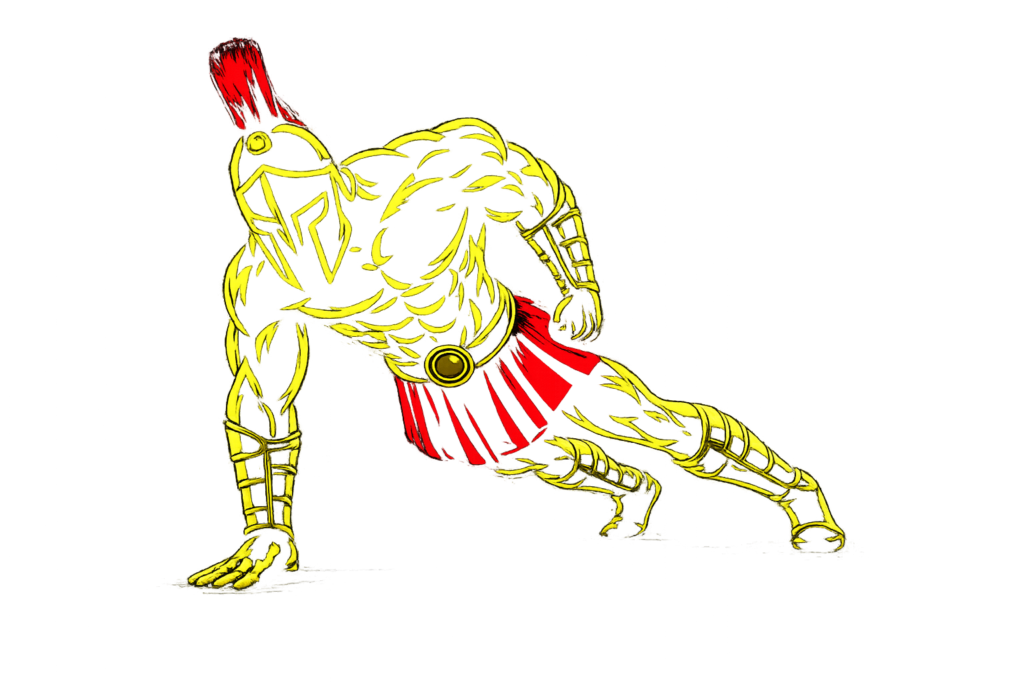
Step 1: Position Your Body

Lie on your side with your legs extended and stacked on top of each other.

Place your forearm directly under your shoulder.

Tip: Keep your elbow aligned with your shoulder to avoid strain.

Step 2: Lift Your Hips

Push through your forearm and lift your hips off the ground.

• Body forms a straight line
• Core is engaged
• Neck stays neutral

Step 3: Hold the Position

Maintain the side plank position while keeping:

• Hips elevated
• Core tight
• Body aligned

Avoid letting your hips drop.

Warrior showcasing How to do a Side Plank with correct form

Step 4: Breathe and Stay Controlled

Breathe steadily while holding the position.

Do not hold your breath — controlled breathing improves endurance.

Step 5: Lower With Control

Slowly lower your hips back to the ground.

Switch sides and repeat.


Side Plank Form Checklist

Use this checklist to ensure perfect form:

Keep your body in a straight line
Engage your core and glutes
Keep your elbow under your shoulder
Avoid dropping your hips
Maintain steady breathing

Perfect form builds stability and prevents injury.


Common Side Plank Mistakes

Dropping the Hips

Problem: Reduces core activation.

Fix: Keep hips lifted and body aligned.

Shoulder Misalignment

Problem: Causes shoulder strain.

Fix: Keep your elbow directly under your shoulder.

Twisting the Body

Problem: Reduces effectiveness.

Fix: Keep your chest facing forward and body stacked.

Holding Breat

Problem: Reduces endurance.

Fix: Breathe steadily throughout the hold.

Short Hold Times

Problem: Limits progress.

Fix: Gradually increase hold duration.


Side Plank Variations

Once you master the basic side plank, these variations can increase difficulty and effectiveness.

Bent-Knee Side Plank (Beginner Variation)

An easier version for beginners.

How to Do Bent-Knee Side Plank

• Bend your knees at 90 degrees
• Lift hips while keeping knees on the ground
• Maintain a straight line from head to knees

Side Plank with Leg Raise

Adds intensity and balance challenge.

How to Do Side Plank with Leg Raise

• Perform a standard side plank
• Raise your top leg upward
• Keep movement controlled

High Side Plank (Straight Arm)

Increases shoulder engagement.

How to Do High Side, Plank

• Support your body on your hand instead of your forearm
• Keep arm fully extended
• Maintain full-body alignment

Weighted Side Plank

Adds resistance for advanced strength.

How to Do Weighted Side Plank

• Place a lightweight on your hip
• Hold the side plank position
• Maintain strict form


Final Thoughts

The side plank is one of the most effective core stability exercises you can master.

It builds:

• Oblique strength
• Core stability
• Balance and coordination
• Shoulder stability
• Functional athletic strength

Progress may feel difficult at first, especially when holding the position for longer durations. However, with consistent training and proper form, your endurance and stability will steadily improve.

Focus on control and alignment.

A warrior builds strength from the core — solid and unbreakable.


Side Plank FAQ

Q1: How long should beginners hold a side plank?
Beginners can start with 15–30 seconds per side. Gradually increase to 45–60 seconds as strength improves.

Q2: Are side planks better than regular planks?
Both are effective. Side planks target the obliques more, while regular planks focus on the entire core.

Q3: How often should I do side planks?
You can train side planks 3–5 times per week as part of your core routine, depending on recovery.

How to Do Flutter Kicks Correctly: Step-by-Step Guide for Beginners

Learn how to do flutter kicks with perfect form, avoid common mistakes, and discover the best variations to build a strong, defined core.

Flutter kicks are one of the most effective bodyweight exercises for developing core strength, improving endurance, and building lower abdominal definition. Whether you are training for military fitness tests, calisthenics, or athletic performance, mastering flutter kicks is essential.


What Are Flutter Kicks?

Flutter kicks are a bodyweight core exercise where you lie on your back and alternate lifting your legs up and down in a controlled kicking motion.

This movement primarily targets the lower abs while also engaging the hip flexors and stabilizing muscles.

Flutter kicks are commonly used in:

  • Military fitness training
  • Core strengthening workouts
  • Endurance and conditioning programs
  • Athletic performance training

Unlike many ab exercises, flutter kicks build core endurance and control, which is crucial for real-world performance.

Benefits of Flutter Kicks

• Strengthens lower abdominal muscles
• Improves core endurance
• Enhances hip flexor strength
• Supports better posture and stability
• Builds muscular control and coordination
• Essential for military and tactical fitness tests

Few exercises challenge the lower abs as effectively as flutter kicks.

Muscles Worked in Flutter Kicks

Primary Muscles

• Lower Abdominals
• Rectus Abdominis

Secondary Muscles

• Hip Flexors
• Obliques
• Quadriceps
• Lower Back Stabilizers

This makes flutter kicks highly effective for building a strong, stable core.


How to Do Flutter Kicks (Step-by-Step)

Step 1: Lie Flat on the Ground

Lie on your back with your legs fully extended and arms placed by your sides or under your hips for support.

Tip: Keep your lower back pressed into the ground.

Step 2: Lift Your Legs Slightly Off the Ground

Raise both legs a few inches off the ground.

• Keep legs straight
• Toes pointed forward
• Core engaged

This is your starting position.

Step 3: Begin the Kicking Motion

Alternate lifting one leg up while the other lowers slightly.

• Keep movements small and controlled
• Do not let your heels touch the ground

Step 4: Maintain Core Engagement

Throughout the movement:

• Keep your core tight
• Lower back stays pressed down
• Avoid arching your spine

Step 5: Control the Movement

Continue alternating kicks in a steady rhythm.

Avoid rushing — controlled reps build more strength and endurance.


Flutter Kicks Form Checklist

Use this checklist to ensure perfect form:

Keep your lower back pressed into the ground
Engage your core throughout
Use small, controlled kicks
Keep legs straight
Avoid letting heels touch the ground

Perfect form builds stronger abs and prevents injury.


Common Flutter Kicks Mistakes

Arching the Lower Back

Problem: Reduces core activation and causes strain.

Fix: Keep your lower back pressed firmly into the ground.

Kicking Too Fast

Problem: Reduces control and effectiveness.

Fix: Use a slow, controlled tempo.

Raising Legs Too High

Problem: Shifts focus away from lower abs.

Fix: Keep legs low to maximize core tension.

Bending the Knees

Problem: Reduces tension on the abs.

Fix: Keep legs straight throughout the movement.

Not Engaging the Core

Problem: Turns it into a leg exercise.

Fix: Actively tighten your abs during every rep.


Flutter Kick Variations

Once you master basic flutter kicks, these variations can increase difficulty and effectiveness.

Scissor Kicks

Scissor kicks involve crossing your legs over each other, increasing core engagement.

How to Do Scissor Kicks

• Lift legs slightly off the ground
• Cross one leg over the other alternately
• Keep movements controlled

Elevated Flutter Kicks

This variation increases difficulty by raising your upper body.

How to Do Elevated Flutter Kicks

• Lift your shoulders slightly off the ground
• Perform flutter kicks while holding the crunch position
• Keep your core tight

Weighted Flutter Kicks

Adds resistance for increased strength.

How to Do Weighted Flutter Kicks

• Place light ankle weights or hold a small weight between your feet
• Perform controlled kicks
• Maintain strict form

Bent-Knee Flutter Kicks (Beginner Variation)

Easier version for beginners.

How to Do Bent-Knee Flutter Kicks

• Slightly bend your knees
• Perform smaller kicks
• Focus on core engagement


Final Thoughts

Flutter kicks are one of the most powerful core exercises you can master.

They build:

• Lower ab strength
• Core endurance
• Hip flexor strength
• Stability and control
• Functional athletic performance

Progress may feel challenging at first, especially for beginners. However, with consistent training and proper form, your core strength will steadily improve. Learn more about Core Workouts here.

Focus on control, not speed.

A warrior trains the core with discipline — not shortcuts.


Flutter Kicks FAQ

Q1: How long should beginners do flutter kicks?
Beginners can start with 20–30 seconds per set. Gradually increase to 45–60 seconds as strength improves.

Q2: Are flutter kicks good for abs?
Yes, flutter kicks are excellent for targeting the lower abs and building core endurance.

Q3: How often should I do flutter kicks?
You can train flutter kicks 3–5 times per week as part of your core routine. Ensure proper recovery and avoid overtraining.

How to Do Russian Twists Correctly: Step-by-Step Guide for Beginners

Russian Twists are one of the most effective core exercises for building strong, defined abs—especially the obliques. This movement not only improves your physique but also enhances rotational strength, which is crucial for athletic performance, combat training, and overall stability.


What Are Russian Twists?

Russian Twists are a seated core exercise where you rotate your torso from side to side while maintaining balance. The movement targets your obliques and deep core muscles, helping develop both strength and control.

Benefits of Russian Twists

  • Builds strong and defined obliques
  • Improves rotational strength and power
  • Enhances core stability and balance
  • Supports athletic and combat performance
  • Can be done anywhere with minimal equipment

Muscles Worked

Primary Muscles
  • Obliques
Secondary Muscles
  • Rectus Abdominis (Abs)
  • Transverse Abdominis (Deep Core)
  • Hip Flexors
  • Lower Back (Stabilizers)

How to Do Russian Twists Properly (Step-by-Step)

  1. Sit on the ground with your knees bent and feet flat
  2. Lean back slightly while keeping your back straight
  3. Engage your core and lift your feet slightly (optional)
  4. Clasp your hands together or hold a weight
  5. Rotate your torso to one side, bringing your hands beside your hip
  6. Return to the center, then rotate to the opposite side
  7. Continue alternating in a slow, controlled motion
Warrior showcasing Russian Twists with proper form

Proper Form Checklist

  • Keep your back straight (avoid rounding)
  • Engage your core throughout the movement
  • Move your torso—not just your arms
  • Keep your chest up and shoulders relaxed
  • Breathe out as you twist

Common Russian Twists Mistakes (And How to Fix Them)

Rounding your lower back
Fix: Keep your chest up and maintain a neutral spine.

Swinging arms instead of rotating the torso
Fix: Focus on twisting your torso, not just moving your hands.

Going too fast and losing control
Fix: Slow down and perform each rep with control.

Not engaging the core properly
Fix: Brace your abs before starting each repetition.

Letting your feet move excessively
Fix: Keep your feet stable or controlled throughout the movement.


Variations of Russian Twists

1. Bodyweight Russian Twists (Beginner)

  • Keep your feet on the ground
  • Focus on slow and controlled movement
  • Build balance and core activation

2. Weighted Russian Twists

  • Hold a dumbbell, plate, or medicine ball
  • Keep the weight close to your body
  • Rotate fully for maximum oblique engagement

3. Elevated Feet Russian Twists

  • Lift your feet off the ground
  • Balance on your glutes
  • Keep movements controlled to avoid swinging

4. Decline Russian Twists (Advanced)

  • Perform on a decline bench
  • Maintain tight core control
  • Increase difficulty and resistance

Final Thoughts

Russian Twists are a simple yet powerful exercise for developing a strong, stable, and athletic core. When performed with proper form and progression, they can significantly improve both your physique and performance. Learn more about Core Workouts here.


FAQ

Q1: Should beginners lift their feet off the ground?
No, beginners should keep their feet on the ground to maintain balance and proper form.

Q2: Can Russian Twists reduce belly fat?
They help build core muscles, but fat loss comes from overall calorie control and training.

Q3: Should I use weights for Russian Twists?
Only after mastering bodyweight form should you gradually add resistance.

How to Do Bulgarian Split Squats Correctly: Step-by-Step Guide for Beginners

Learn how to do Bulgarian split squats correctly with this step-by-step beginner guide. Build powerful legs, improve balance, and develop single-leg strength with proper form.


What are Bulgarian Split Squats?

Bulgarian split squats are a single-leg lower-body exercise where your rear foot is elevated on a bench, chair, or platform while the front leg performs the squat.

This movement places intense focus on one leg at a time, making it highly effective for building strength, balance, and correcting muscle imbalances. It also increases stability and mobility in the hips and knees.

Bulgarian split squats are one of the best exercises for athletes, runners, and military training, as they develop functional leg strength and control.

Benefits of Bulgarian Split Squats

  • Builds strong quads, glutes, and hamstrings
  • Improves balance and coordination
  • Corrects muscle imbalances between legs
  • Enhances athletic performance and running power
  • Increases hip mobility and stability
  • Requires minimal equipment — perfect for home workouts

Muscles Worked

Primary Muscles
  • Quadriceps
  • Glutes
Secondary Muscles
  • Hamstrings
  • Calves
  • Hip flexors
  • Core (stabilization)
  • Hip stabilizers

Step-by-Step: How to Do Bulgarian Split Squats Properly

Step 1: Setup

  • Stand a few feet in front of a bench or elevated surface
  • Place one foot behind you on the bench
  • Keep your front foot flat on the ground
  • Stand tall with your chest up

Step 2: Starting Position

  • Keep your torso upright
  • Engage your core
  • Look straight ahead
  • Keep your balance steady

Step 3: Lower Your Body

  • Bend your front knee and lower your body
  • Your back knee moves toward the ground
  • Keep your front knee aligned with your toes
  • Lower until your front thigh is about parallel
Warrior showcasing Bulgarian Split Squats

Step 4: Push Back Up

  • Drive through your front heel
  • Extend your front leg to stand back up
  • Keep your balance controlled
  • Repeat for reps, then switch legs

Proper Form Checklist

  • Keep your torso upright
  • Front knee aligned with toes
  • Move slowly and with control
  • Core tight throughout
  • Push through the front heel
  • Maintain balance and stability

Common Bulgarian Split Squat Mistakes (And How to Fix Them)

Front Knee Going Too Far Forward
Fix: Step slightly farther away from the bench.

Leaning Too Far Forward
Fix: Keep your chest up and spine neutral.

Losing Balance
Fix: Slow down and focus on control.

Pushing Off the Back Leg
Fix: Focus on driving through the front leg.

Shallow Range of Motion
Fix: Lower until your front thigh is parallel to the ground.


Bulgarian Split Squat Variations

Bodyweight Bulgarian Split Squats

  • Perform the movement using only your body weight
  • Focus on balance and perfect form
  • Control both the lowering and lifting phases

Dumbbell Bulgarian Split Squats

  • Hold a dumbbell in each hand at your sides
  • Perform the squat while maintaining balance
  • Keep your torso upright and controlled

Barbell Bulgarian Split Squats

  • Place a barbell across your upper back
  • Keep your core tight and posture stable
  • Lower and push up with control

Resistance Band Bulgarian Split Squats

  • Stand on a resistance band with your front foot
  • Hold the band handles at shoulder level
  • Perform the movement while maintaining tension

Beginner Bulgarian Split Squat Progressions

If you’re new, start with:

  • Bodyweight only
  • Shorter range of motion
  • Using support (wall or chair for balance)

To make it harder:

  • Add dumbbells or a backpack
  • Increase depth
  • Slow down the tempo
  • Add pauses at the bottom

Final Thoughts

Bulgarian split squats are one of the most powerful lower-body exercises you can do. They build strength, improve balance, and develop real single-leg power.

Focus on control, proper form, and gradual progression. Don’t rush the movement — master it. Strong legs are built one rep at a time. Learn more about Leg Workouts here.

Train like a warrior, and dominate your lower-body strength.


FAQ

Q1: Are Bulgarian split squats better than regular squats?
They are excellent for single-leg strength and balance, while squats build overall leg mass.

Q2: Why do I feel this more in my quads than in myglutes?
Your stance may be too short. Step further forward to engage your glutes more.

Q3: Can beginners do Bulgarian split squats?
Yes, but start with bodyweight and focus on balance first.

How to Do a Shoulder Press Correctly: Step-by-Step Guide for Beginners

Learn how to do a shoulder press correctly with this beginner-friendly step-by-step guide. Build strong shoulders, increase upper-body power, and improve pressing strength with proper form.


What is a Shoulder Press?

The shoulder press is a fundamental upper-body exercise that targets the shoulders, triceps, and upper chest. It involves pressing a weight overhead from shoulder level until your arms are fully extended.

This movement is essential for building upper-body strength, improving stability, and developing powerful shoulders. Whether performed with dumbbells, a barbell, or resistance bands, the shoulder press is a key exercise for athletes, lifters, and military fitness preparation.

Benefits of Shoulder Press

  • Builds strong and defined shoulders
  • Increases upper-body pushing strength
  • Improves shoulder stability and control
  • Strengthens triceps and upper chest
  • Enhances athletic performance
  • Can be done with various equipment or bodyweight

Muscles Worked

Primary Muscles
  • Shoulders (Deltoids – especially anterior and lateral)
  • Triceps
Secondary Muscles
  • Upper chest
  • Trapezius
  • Core (stabilization)
  • Serratus anterior

Step-by-Step: How to Do a Shoulder Press Properly

Step 1: Starting Position

  • Stand or sit upright
  • Hold weights at shoulder level
  • Palms facing forward (or slightly inward)
  • Keep core tight and chest up

Step 2: Brace and Align

  • Engage your core
  • Keep your back neutral (avoid arching)
  • Keep your elbows slightly in front of your body
  • Look straight ahead

Step 3: Press Overhead

  • Push the weight upward in a straight line
  • Extend your arms fully at the top
  • Keep wrists stacked over elbows
  • Do not lock your elbows aggressively

Step 4: Lower with Control

  • Slowly lower the weight back to shoulder level
  • Maintain control throughout the movement
  • Keep tension in your shoulders
  • Prepare for the next rep

Proper Form Checklist

  • Keep your core tight throughout
  • Avoid excessive lower back arch
  • Press in a straight vertical path
  • Control both lifting and lowering phases
  • Keep wrists neutral
  • Elbows slightly forward, not flared

Common Shoulder Press Mistakes (And How to Fix Them)

Arching the Lower Back
Fix: Tighten your core and squeeze your glutes to stay stable.

Pressing Too Far Forward or Backward
Fix: Keep the weight moving in a straight vertical line.

Using Too Much Weight
Fix: Lower the load and focus on clean reps.

Flaring Elbows Too Wide
Fix: Keep your elbows slightly in front of your body.

Incomplete Range of Motion
Fix: Lower fully to shoulder level and press to near lockout.


Shoulder Press Variations

Dumbbell Shoulder Press

  • Hold a dumbbell in each hand at shoulder level
  • Press both weights overhead until your arms extend
  • Lower slowly back to the starting position

Barbell Shoulder Press

  • Grip the bar slightly wider than shoulder-width
  • Press the bar straight overhead from shoulder level
  • Lower under control back to your upper chest

Resistance Band Shoulder Press

  • Stand on the band with feet shoulder-width apart
  • Hold the band handles at shoulder height
  • Press upward and control the return

Seated Shoulder Press

  • Sit upright on a bench with back support
  • Press weights overhead without leaning back
  • Keep your core engaged and movement controlled

Beginner Shoulder Press Progressions

If you’re new, start with:

  • Light dumbbells or resistance bands
  • Seated shoulder press (more stability)
  • Higher reps (10–15) with perfect form

To make it harder:

  • Increase weight gradually
  • Perform standing presses (more core engagement)
  • Add pauses at the top
  • Slow down the tempo

Final Thoughts

The shoulder press is one of the best exercises for building strong, powerful shoulders. It improves upper-body strength, stability, and overall performance.

Focus on proper form, controlled movement, and gradual progression. Don’t chase heavyweight — master the basics first. Strength is built with discipline and consistency. Learn more about Push Workouts here.

Train like a warrior, and your shoulders will follow.


FAQ

Q1: Is the shoulder press better than lateral raises?
Both are important. Shoulder press builds overall strength, while lateral raises isolate the side delts.

Q2: Should I do shoulder press standing or seated?
Standing builds more core stability, while seated allows better control.

Q3: Why does my lower back hurt during shoulder press?
This usually happens due to arching. Engage your core and reduce the weight.

How to Do Face Pulls Correctly: Step-by-Step Guide for Beginners

Learn how to do face pulls correctly with this step-by-step beginner guide. Build strong shoulders, improve posture, and prevent injuries with proper form and technique.


What are Face Pulls?

Face pulls are an upper-body exercise that targets the rear delts, upper back, and rotator cuff muscles. The movement involves pulling a rope or band toward your face while keeping your elbows high and flaring outward.

Face pulls are essential for balancing pushing exercises such as push-ups and bench presses. They strengthen the often-neglected rear shoulder muscles and improve posture by pulling your shoulders back into proper alignment.

Whether you’re training at home or in the gym, face pulls are one of the best exercises for shoulder health, stability, and long-term strength.

Benefits of Face Pulls

  • Strengthens rear delts and upper back
  • Improves posture and shoulder alignment
  • Reduces the risk of shoulder injuries
  • Enhances pulling strength and stability
  • Balances pushing exercises
  • Great for warm-ups and rehab work

Muscles Worked

Primary Muscles
  • Rear Deltoids (Posterior Shoulders)
  • Upper Trapezius
  • Rhomboids
Secondary Muscles
  • Rotator cuff muscles
  • Biceps (stabilization)
  • Forearms
  • Core (stabilization)

Step-by-Step: How to Do Face Pulls Properly

Step 1: Setup

  • Attach a rope to a cable machine at the upper chest or face height
  • Stand tall with feet shoulder-width apart
  • Grab the rope with both hands (neutral grip)
  • Step back slightly to create tension

Step 2: Starting Position

  • Arms extended forward
  • Keep your chest up and core engaged
  • Slight bend in the knees
  • Maintain a neutral spine
Warrior showcasing Face Pulls exercise with proper form

Step 3: Pull Toward Your Face

  • Pull the rope toward your face
  • Lead with your elbows (keep them high)
  • Separate the rope ends as you pull
  • Bring your hands toward your temples or ears

Step 4: Squeeze and Return

  • Squeeze your shoulder blades together at the top
  • Pause briefly for maximum contraction
  • Slowly return to the starting position
  • Maintain control throughout

Proper Form Checklist

  • Elbows stay high and wide
  • Pull toward your face, not your chest
  • Keep your core tight and posture upright
  • Move slowly and with control
  • Squeeze shoulder blades at the top
  • Avoid using momentum

Common Face Pull Mistakes (And How to Fix Them)

Pulling Too Low (to Chest or Neck)
Fix: Aim for your face or the upper part of your nose.

Dropping Elbows
Fix: Keep elbows high to properly target rear delts.

Using Too Much Weight
Fix: Lower the weight and focus on controlled movement.

Leaning Back Excessively
Fix: Stay upright and avoid turning it into a row.

Rushing the Reps
Fix: Slow down and focus on muscle contraction.


Face Pull Variations

Band Face Pulls

  • Attach a resistance band to a stable anchor at face height
  • Pull the band toward your face while keeping your elbows high
  • Control the return slowly to maintain tension

Cable Face Pulls

  • Use a rope attachment on a cable machine
  • Pull toward your face with elbows flared outward
  • Pause at the top and squeeze your upper back

Seated Face Pulls

  • Sit on a bench facing the cable machine
  • Keep your torso upright and stable
  • Perform the same pulling motion without leaning

Single-Arm Face Pulls

  • Use one hand at a time
  • Focus on correcting muscle imbalances
  • Keep your body stable and avoid rotation

Beginner Face Pull Progressions

If you’re new, start with:

  • Light resistance bands
  • Higher reps (12–15) with perfect form
  • Slow and controlled movement

To make it harder:

  • Increase resistance gradually
  • Add pauses at the top
  • Perform single-arm variations
  • Increase time under tension

Final Thoughts

Face pulls are one of the most important exercises for shoulder health and long-term strength. They correct posture, strengthen weak muscles, and protect your shoulders from injury. Learn more about Pull Workouts here.

Don’t skip them. Train smart, stay consistent, and focus on perfect form over heavy weight. Strong shoulders aren’t just built — they’re maintained. Train like a warrior.


FAQ

Q1: Are face pulls good for shoulder pain?
Yes, when done correctly. They strengthen stabilizing muscles and improve joint health.

Q2: Should I go heavy on face pulls?
No. Focus on light to moderate weight with perfect form and control.

Q3: Do face pulls fix bad posture?
Yes. They strengthen the upper back and help pull your shoulders into proper alignment.

How to Do Pseudo Planche Pushups Correctly: Step-by-Step Guide for Beginners

Learn how to do pseudo planche pushups correctly with this step-by-step beginner guide. Build serious upper-body strength, improve shoulder stability, and master advanced bodyweight control.


What are Pseudo Planche Pushups?

Pseudo planche pushups are an advanced pushup variation that shifts your body weight forward to heavily target the shoulders, chest, and triceps. Unlike regular pushups, your hands are placed closer to your hips, and you lean forward so your shoulders move past your wrists.

This forward lean mimics the planche position, making it a powerful progression exercise for calisthenics athletes. It builds straight-arm strength, shoulder stability, and elite-level pushing power.

Pseudo planche pushups are one of the best upper-body exercises for developing the strength needed for advanced skills like the planche, handstand pushups, and explosive pushing movements. Whether you’re training at home or preparing for military fitness, this movement builds real, functional strength.

Benefits of Pseudo Planche Pushups

  • Builds strong shoulders and upper chest
  • Develops triceps power
  • Improves body control and balance
  • Strengthens wrists and joints
  • Prepares you for advanced calisthenics skills
  • Requires no equipment — perfect for home training

Muscles Worked

Primary Muscles
  • Shoulders (Anterior Deltoids)
  • Chest (Upper Pectorals)
  • Triceps
Secondary Muscles
  • Core (abs and lower back)
  • Serratus anterior
  • Wrist stabilizers
  • Upper back (stabilization)

Step-by-Step: How to Do Pseudo Planche Pushups Properly

Step 1: Starting Position

  • Get into a pushup position
  • Place your hands lower toward your hips (not under your shoulders)
  • Turn your fingers slightly outward if needed
  • Keep your body straight and core tight

Step 2: Lean Forward

  • Shift your body forward
  • Your shoulders should move past your hands
  • Keep elbows locked initially
  • Maintain a straight line from head to heels

Step 3: Lower Your Body

  • Bend your elbows and lower slowly
  • Keep your elbows close to your body
  • Maintain the forward lean
  • Lower until your chest is just above the ground
Warrior doing Pseudo Planche Pushups with proper form

Step 4: Push Back Up

  • Push through your palms
  • Extend your arms back to the top
  • Keep your body tight and controlled
  • Do not lose the forward lean

Proper Form Checklist

  • Keep your body straight (no sagging hips)
  • Lean forward throughout the movement
  • Elbows stay close to your body
  • Move slowly and with control
  • Core tight at all times
  • Shoulders stay ahead of hands

Common Pseudo Planche Pushup Mistakes (And How to Fix Them)

Not Leaning Forward Enough
Fix: Actively shift your shoulders past your hands before lowering.

Elbows Flaring Out
Fix: Keep elbows tucked to maximize triceps and shoulder engagement.

Sagging Hips
Fix: Tighten your core and glutes to maintain a straight line through your body.

Hands Too Far Forward
Fix: Place your hands closer to your hips to increase difficulty and proper positioning.

Rushing the Movement
Fix: Slow down — control builds strength faster than speed.


Beginner Pseudo Planche Progressions

If this exercise feels too difficult, start with:

  • Planche lean holds (hold forward lean position)
  • Incline pseudo planche pushups (hands elevated)
  • Knee pseudo planche pushups
  • Standard pushups (build base strength)

To make it harder:

  • Elevate your feet
  • Add a backpack for resistance
  • Increase forward lean
  • Slow tempo reps (3–5 seconds down)

Final Thoughts

Pseudo planche pushups are a true test of upper-body strength and control. They bridge the gap between basic pushups and elite calisthenics skills. Focus on forward lean, tight form, and controlled reps — not just getting through the movement. Learn more about Push Workouts here.

Stay consistent, train smart, and push your limits. Strength isn’t given — rep builds it. Train like a warrior, and the results will follow.


FAQ

Q1: Are pseudo planche pushups better than regular pushups?
Yes, for advanced strength. They place more load on shoulders and triceps, making them more challenging and effective for progression.

Q2: Why do my wrists hurt during pseudo planche pushups?
This is common due to the forward lean. Warm up your wrists and gradually build strength with planche leans.

Q3: Do pseudo planche pushups help achieve the planche?
Yes. They are among the best exercises for building the strength required for the full planche.

How to Do Jump Squats Properly: Step-by-Step Guide for Beginners

Jump squats are a powerful, explosive bodyweight exercise that combines strength and cardio. They are widely used in athletic training, fat loss workouts, and lower body development because they improve power, speed, and endurance.

If done correctly, jump squats can help you build stronger legs, increase vertical jump, and burn calories efficiently.


What Is a Jump Squat?

A jump squat is a plyometric variation of the traditional squat where you explode upward into a jump at the top of the movement.

This exercise targets your lower body muscles while also challenging your cardiovascular system. It is commonly used in sports training to improve explosiveness and agility.

Benefits of Jump Squats

  • Builds explosive power and strength
  • Improves athletic performance and speed
  • Burns a high number of calories
  • Strengthens lower body muscles
  • Enhances coordination and balance
  • Increases heart rate for cardio conditioning

Muscles Worked

Primary Muscles
  • Quadriceps
  • Glutes
  • Hamstrings
Secondary Muscles
  • Calves
  • Core (abs and lower back)
  • Hip flexors

How to Do Jump Squats Properly

1. Start Position

  • Stand with feet shoulder-width apart
  • Keep your chest up and core engaged
  • Arms relaxed by your sides

2. Lower Into a Squat

  • Push your hips back
  • Bend your knees
  • Lower until your thighs are at least parallel to the ground

3. Explode Upward

  • Drive through your heels
  • Swing your arms upward
  • Jump as high as possible
Warrior showcasing How to do Jump Squats properly

4. Land Softly

  • Land on the balls of your feet first
  • Bend your knees to absorb impact
  • Keep your chest upright

5. Repeat With Control

  • Immediately go into the next rep
  • Maintain rhythm without losing form

Common Mistakes and Fixes

❌ Knees caving inward
Fix: Keep your knees tracking over your toes throughout the movement

❌ Landing stiff-legged
Fix: Bend your knees on landing to absorb impact safely

❌ Not going deep enough
Fix: Lower into a full squat before jumping for maximum power

❌ Leaning too far forward
Fix: Keep your chest up and core tight

❌ Using arms poorly
Fix: Swing your arms explosively to generate power


Proper Form Checklist

  • Chest up and core engaged
  • Knees track over toes
  • Full squat depth before jumping
  • Explosive upward movement
  • Soft, controlled landing

Final Thoughts

Jump squats are one of the best exercises for developing explosive strength, endurance, and athletic performance. When performed with proper form, they can significantly improve lower-body power while also providing a great cardio workout. Learn more about Leg Workouts here.

Focus on quality over quantity, land softly, and maintain control throughout each rep. Stay consistent, and you’ll build stronger, more powerful legs over time.


FAQ

Q1. Are jump squats good for beginners?
Yes, but beginners should start with regular squats before adding jumps.

Q2. Do jump squats build muscle?
Yes, they build strength and explosive power in the lower body.

Q3. Can jump squats help lose fat?
Yes, they burn calories and increase heart rate for fat loss.