
Learn how to do jump squats with perfect form, avoid common mistakes, and discover the best variations to build explosive lower-body power.
Jump squats are one of the most effective bodyweight exercises for developing explosive strength, athleticism, and conditioning. Whether you are training for military fitness tests, sports performance, or general fitness, mastering jump squats is essential.
What Are Jump Squats?
A jump squat is a plyometric exercise in which you perform a squat, then explode upward into a powerful jump before landing and repeating the movement.
The exercise combines strength and speed, making it highly effective for developing lower-body power.
Jump squats are commonly used in:
- Military fitness training
- Athletic conditioning programs
- Sports performance training
- HIIT workouts
Unlike regular squats, jump squats emphasize explosive force production and athletic performance.
Benefits of Jump Squats
Jump squats are one of the most powerful exercises for developing lower-body explosiveness.
Benefits include:
- Builds explosive leg power
- Improves athletic performance
- Enhances sprinting and jumping ability
- Strengthens the glutes and quadriceps
- Boosts cardiovascular conditioning
- Develops coordination and balance
Few exercises improve lower-body power as effectively as jump squats.
Muscles Worked in Jump Squats
Jump squats activate multiple lower-body muscles simultaneously.
Primary Muscles
- Quadriceps
- Glutes
- Calves
Secondary Muscles
- Hamstrings
- Core Muscles (Abdominals and Obliques)
- Hip Flexors
- Lower Back Stabilizers
Because of this muscle activation, jump squats are one of the best bodyweight exercises for athletic development.
How to Do Jump Squats (Step-by-Step)
Step 1: Stand in the Starting Position
Stand upright with:
- Feet shoulder-width apart
- Chest up
- Core engaged
- Arms relaxed at your sides
Tip: Maintain a balanced athletic stance.
Step 2: Lower Into a Squat
Push your hips backward and bend your knees.
Focus on:
- Keeping heels planted
- Maintaining a neutral spine
- Lowering until thighs are roughly parallel to the ground
This loads your muscles for the jump.
Step 3: Explode Upward
Drive through your feet and jump as high as possible.
- Extend hips, knees, and ankles powerfully
- Swing arms naturally for momentum
- Keep your body controlled in the air
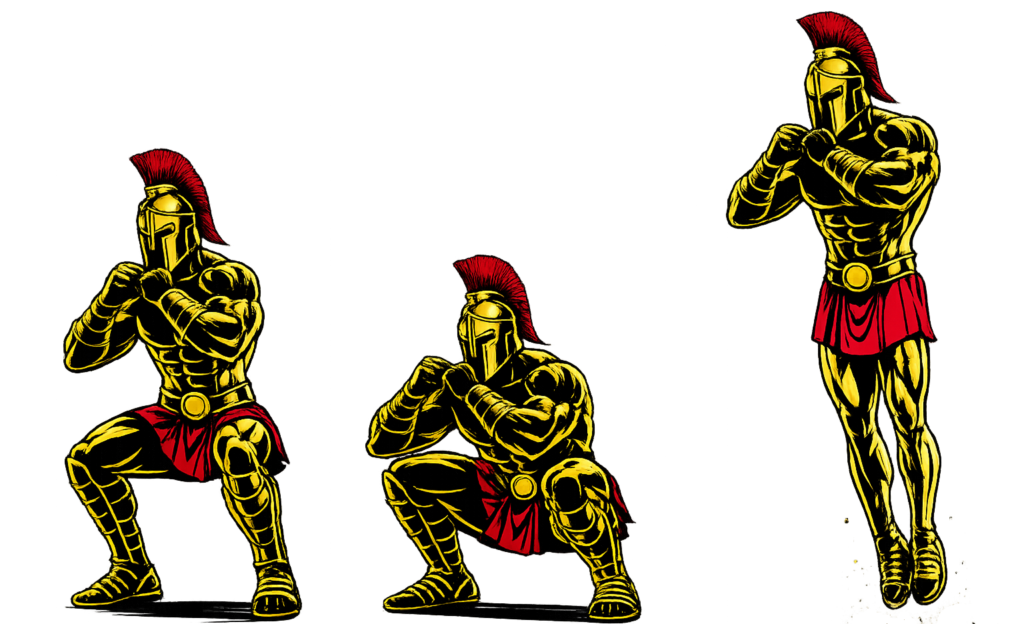
Step 4: Land Softly
Return to the ground under control.
Focus on:
- Landing on the balls of your feet first
- Bending knees to absorb impact
- Keeping your chest upright
A soft landing protects your joints and prepares you for the next rep.
Step 5: Repeat the Movement
Immediately transition into the next squat-and-jump.
Maintain proper form throughout every repetition.
Jump Squat Form Checklist
Use this quick checklist to ensure perfect jump squat form.
- Keep your chest upright
- Land softly with bent knees
- Explode upward with maximum effort
- Maintain a neutral spine
- Use a full squat range of motion
Perfect form improves performance and reduces injury risk.
Common Jump Squat Mistakes
Landing With Stiff Legs
Problem: Increases stress on the knees and ankles.
Fix: Land softly and absorb impact by bending your knees.
Jumping Without Squatting
Problem: Reduces power development.
Fix: Perform a proper squat before each jump.
Knees Collapsing Inward
Problem: Increases injury risk.
Fix: Keep your knees tracking over your toes.
Looking Down
Problem: Encourages poor posture.
Fix: Keep your eyes forward throughout the movement.
Sacrificing Form for Height
Problem: Reduces safety and efficiency.
Fix: Focus on quality movement before maximum jump height.
Clean jumps always beat reckless jumps.
Jump Squat Variations
Once you master the basic jump squat, different variations can help build power, coordination, and athletic performance.
Half Jump Squats
A beginner-friendly variation.
How to Do Half Jump Squats
- Perform a shallow squat
- Jump explosively
- Land softly and repeat
This variation reduces stress while developing explosive movement.
Tuck Jump Squats
Adds additional core and coordination demands.
How to Do Tuck Jump Squats
- Perform a jump squat
- Bring knees toward your chest at the top of the jump
- Land softly and under control
This variation develops explosiveness and athleticism.
Box Jump Squats
Focuses on vertical power production.
How to Do Box Jump Squats
- Perform a squat
- Jump onto a sturdy box or platform
- Step down carefully after each repetition
This variation builds lower-body explosiveness.
Weighted Jump Squats
An advanced variation for experienced athletes.
How to Do Weighted Jump Squats
- Hold light dumbbells or wear a weighted vest
- Perform controlled jump squats
- Maintain proper landing mechanics
This variation increases strength and power demands.
Final Thoughts
The jump squat is one of the most effective explosive exercises you can master.
It builds:
- Lower-body power
- Athletic performance
- Sprinting ability
- Jumping ability
- Conditioning and endurance
Progress may feel challenging at first because jump squats require both strength and explosiveness. However, with consistent training and proper form, your power output and athleticism will steadily improve. Learn more about Leg Workouts here.
Focus on quality repetitions, explosive effort, and controlled landings.
A warrior rises with power — but lands with control.
Jump Squat FAQ
Q1: How many jump squats should a beginner do?
Most beginners can start with 5–10 repetitions per set while focusing on proper landing mechanics and explosive movement.
Q2: Are jump squats good for athletic performance?
Yes. Jump squats are one of the best exercises for developing explosive power, sprinting ability, and vertical jump performance.
Q3: How often should I do jump squats?
You can train jump squats 1–3 times per week depending on recovery, training volume, and overall athletic goals.