Learn how to do chin-ups with perfect form, avoid common mistakes, and discover the best chin-up variations to build upper-body strength, improve grip endurance, and develop impressive pulling power.
The chin-up is one of the most effective bodyweight exercises for building a strong back, powerful biceps, and functional pulling strength. Using an underhand grip places greater emphasis on the arms while still heavily engaging the back, making chin-ups an excellent progression for beginners and a staple exercise for advanced athletes alike.
Whether you’re training for calisthenics, military fitness, rock climbing, or general strength, mastering the chin-up will improve your overall upper-body performance.
What Are Chin-Ups?
A chin-up is a bodyweight pulling exercise performed by hanging from a pull-up bar with an underhand (supinated) grip and pulling yourself upward until your chin clears the bar before lowering under control.
Compared to pull-ups, chin-ups involve greater activation of the biceps due to the underhand grip, making them slightly easier for many people while still providing exceptional upper-body development.
Chin-ups are commonly used in:
- Calisthenics training
- Military fitness programs
- Functional strength workouts
- Climbing preparation
- General fitness routines
Because they strengthen multiple muscle groups at once, chin-ups are considered one of the best compound bodyweight exercises.
Benefits of Chin-Ups
Chin-ups offer a wide range of strength and performance benefits.
Benefits include:
- Builds upper-body pulling strength
- Increases bicep size and strength
- Develops a wider, stronger back
- Improves grip strength
- Strengthens the shoulders
- Enhances core stability
- Requires minimal equipment
Few bodyweight exercises build upper-body strength as efficiently as chin-ups.
Muscles Worked in Chin-Ups
Chin-ups recruit numerous muscles throughout the upper body.
Primary Muscles
- Latissimus Dorsi
- Biceps Brachii
- Brachialis
Secondary Muscles
- Rhomboids
- Trapezius
- Rear Deltoids
- Forearm Flexors
- Brachioradialis
- Core Muscles
- Rotator Cuff Muscles
Because of this muscle activation, chin-ups are one of the best exercises for building balanced upper-body strength.
How to Do Chin-Ups (Step-by-Step)
Step 1: Grip the Pull-Up Bar
Reach overhead and grasp the pull-up bar using an underhand grip.
Maintain:
- Hands shoulder-width apart
- Thumbs wrapped securely around the bar
- Arms fully extended
Tip: A shoulder-width grip provides the best balance between comfort and muscle activation.
Step 2: Engage Your Body
Before pulling:
- Tighten your core
- Pull your shoulders slightly downward
- Keep your legs together
- Cross your ankles if it feels more comfortable
Your body should remain stable throughout the movement.
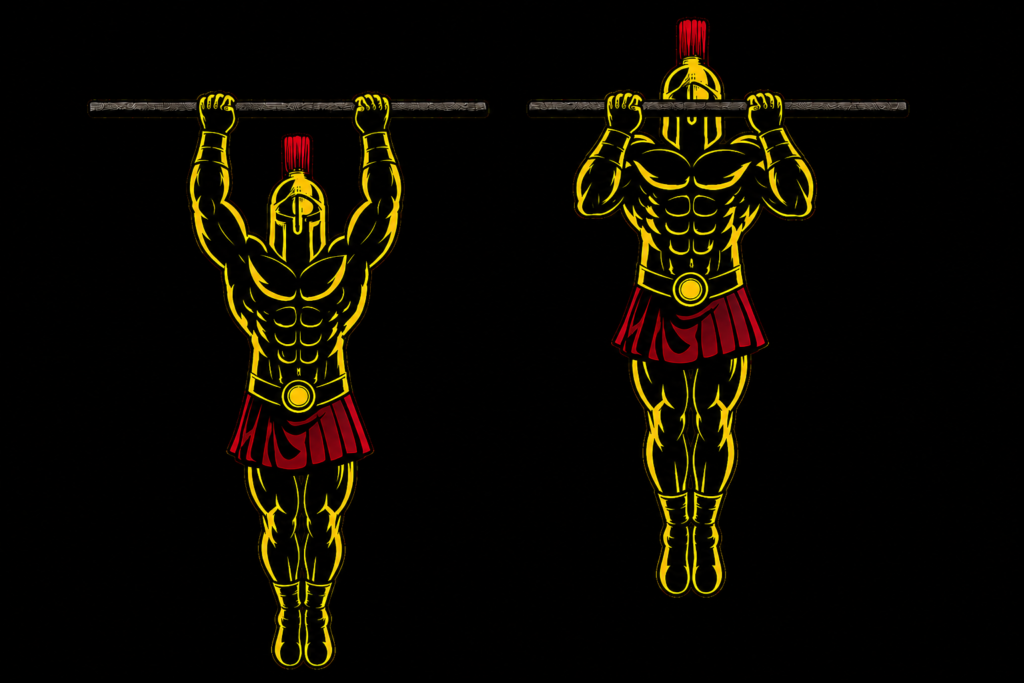
Step 3: Pull Yourself Up
Drive your elbows downward while pulling your chest toward the bar.
Focus on:
- Pulling with your back and arms together
- Keeping your elbows close to your body
- Avoiding swinging
- Maintaining a smooth movement
Continue until your chin clears the bar.
Step 4: Pause Briefly
At the top position:
- Keep your chin above the bar
- Maintain shoulder engagement
- Keep your body controlled
Pause briefly before lowering.
Step 5: Lower Yourself Slowly
Slowly return to the starting position.
Maintain:
- A controlled descent
- Full arm extension
- Stable shoulders
- Core engagement
Begin the next repetition from a complete dead hang.
Chin-Up Form Checklist
Use this quick checklist to ensure perfect chin-up form.
- Use a shoulder-width underhand grip
- Keep your core engaged
- Pull your chin above the bar
- Lower under control
- Fully extend your arms between repetitions
Perfect technique builds more strength while reducing injury risk.
Common Chin-Up Mistakes
Using Momentum
Problem: Swinging reduces muscle activation and makes the exercise less effective.
Fix: Start each repetition from a dead hang and pull under complete control.
Incomplete Range of Motion
Problem: Partial repetitions limit strength development.
Fix: Fully extend your arms at the bottom and bring your chin above the bar at the top.
Shrugging the Shoulders
Problem: Places unnecessary stress on the neck and shoulders.
Fix: Keep your shoulders depressed and engaged throughout the movement.
Flaring the Elbows
Problem: Reduces pulling efficiency.
Fix: Keep your elbows close to your sides as you pull upward.
Rushing the Descent
Problem: Reduces muscle development and control.
Fix: Lower yourself slowly over two to three seconds.
Every controlled repetition builds more strength than several rushed repetitions.
Chin-Up Variations
Once you master the standard chin-up, these variations can help you continue progressing.
Assisted Chin-Ups
The ideal beginner progression.
How to Do Assisted Chin-Ups
- Attach a resistance band to the pull-up bar.
- Place one foot or knee inside the band.
- Perform controlled chin-ups while maintaining proper form.
This variation reduces the amount of bodyweight you must lift.
Close-Grip Chin-Ups
Increases arm activation.
How to Do Close-Grip Chin-Ups
- Grip the bar with your hands close together.
- Pull your chin above the bar.
- Lower yourself under control.
This variation places greater emphasis on the biceps.
Weighted Chin-Ups
Builds maximum strength.
How to Do Weighted Chin-Ups
- Wear a weighted vest or use a dip belt.
- Perform strict chin-ups.
- Maintain perfect technique throughout.
This variation develops elite upper-body pulling strength.
L-Sit Chin-Ups
Challenges the core while pulling.
How to Do L-Sit Chin-Ups
- Hold your legs straight out in front to form an “L.”
- Perform strict chin-ups without lowering your legs.
- Control both the pull and descent.
This variation combines pulling strength with core stability.
Final Thoughts
The chin-up is one of the most valuable bodyweight exercises for building upper-body strength.
It develops:
- Back strength
- Bicep strength
- Grip endurance
- Shoulder stability
- Functional pulling power
Whether your goal is building muscle, improving athletic performance, or progressing toward advanced calisthenics skills, chin-ups deserve a permanent place in your training routine. Learn more about Pull Workouts here.
Focus on full range of motion, controlled repetitions, and consistent progression.
A warrior earns strength by mastering every repetition.
Essential Gear for Chin-Ups
The right equipment can help you master chin-ups faster, train more comfortably, and continue progressing as you get stronger. Here are the essentials every warrior should consider.
- Pull-Up Bar: The most essential piece of equipment for performing chin-ups. Choose a sturdy doorway, wall-mounted, or freestanding pull-up bar.
- Resistance Bands: Perfect for assisted chin-ups while building the strength needed for unassisted repetitions.
- Gymnastics Rings: Allow for a more natural hand position, reducing wrist strain while improving shoulder stability.
- Liquid Chalk or Gym Chalk: Improves grip by reducing moisture on your hands, especially during longer training sessions.
- Weighted Vest – Ideal for increasing resistance once bodyweight chin-ups become easy.
- Dip Belt – Perfect for advanced athletes who want to add plates while maintaining full range of motion.
Chin-Up FAQ
Q1: Are chin-ups easier than pull-ups?
Yes. Most people find chin-ups slightly easier because the underhand grip increases bicep involvement, allowing the arms to contribute more to the movement.
Q2: How many chin-ups should beginners aim for?
Beginners should first work toward performing one strict chin-up with proper form. As strength improves, completing 8-12 clean repetitions is an excellent milestone.
Q3: Can chin-ups build bigger arms?
Yes. Chin-ups heavily recruit the biceps and brachialis while also strengthening the forearms and upper back, making them one of the best bodyweight exercises for building stronger, more muscular arms.