Learn how to do commando pull-ups with perfect form, avoid common mistakes, and discover the best commando pull-up variations to build upper-body strength, improve grip, and develop powerful pulling mechanics.
Commando pull-ups are one of the most effective bodyweight pulling exercises for developing back strength, grip endurance, and unilateral control. Whether you are training for military fitness, calisthenics, obstacle course racing, or functional strength, mastering commando pull-ups is an excellent way to challenge your upper body.
What Are Commando Pull-Ups?
A commando pull-up is a pull-up variation performed using a neutral grip with one hand placed in front of the other on the pull-up bar. Instead of facing the bar, your body is positioned sideways, and you pull yourself upward until your head clears the bar beside your hands.
Commando pull-ups are considered one of the best advanced pull-up variations because they improve grip strength, challenge shoulder stability, and require greater coordination than standard pull-ups.
Commando pull-ups are commonly used in:
- Military fitness training
- Calisthenics training
- Obstacle course race preparation
- Functional strength programs
Unlike traditional pull-ups, commando pull-ups place greater emphasis on unilateral pulling strength and anti-rotational core stability.
Benefits of Commando Pull-Ups
Commando pull-ups are one of the most effective exercises for building functional upper-body strength.
Benefits include:
- Builds back and arm strength
- Improves grip endurance
- Enhances shoulder stability
- Develops unilateral pulling strength
- Strengthens the core against rotation
- Improves coordination and body control
Few pull-up variations challenge functional strength as effectively as commando pull-ups.
Muscles Worked in Commando Pull-Ups
Commando pull-ups activate multiple upper-body muscles simultaneously.
Primary Muscles
- Latissimus Dorsi (Lats)
- Biceps Brachii
- Brachialis
Secondary Muscles
- Rhomboids
- Trapezius
- Rear Deltoids
- Forearms and Grip Muscles
- Core Muscles
Because of this muscle activation, commando pull-ups are one of the best exercises for developing balanced pulling strength.
How to Do Commando Pull-Ups (Step-by-Step)
Step 1: Grip the Pull-Up Bar
Grab the pull-up bar using a neutral grip.
Begin with:
- One hand positioned directly in front of the other
- Palms facing Opposite directions
- Hands approximately 6-10 inches (15-25 cm) apart
- Arms fully extended
- Core engaged
Tip: Alternate which hand is in front between sets to develop balanced strength.
Step 2: Start in a Dead Hang
Begin from a full dead hang with:
- Legs together
- Body facing sideways to the bar
- Shoulders active
- Core tight
Avoid swinging before initiating the pull.
Step 3: Pull Yourself Up
Drive your elbows downward and pull your chest toward your hands.
Focus on:
- Keeping your body close to the bar
- Pulling smoothly
- Minimizing side-to-side swinging
Allow your head to move beside the bar rather than directly over it.
Step 4: Clear the Bar
Continue pulling until your head rises above the bar on one side.
At the top:
- Pause briefly
- Squeeze your back muscles
- Maintain control
Avoid twisting excessively through your torso.
Step 5: Lower With Control
Slowly lower yourself back into the dead hang.
Complete the desired repetitions before switching sides so your head clears the opposite side of the bar.
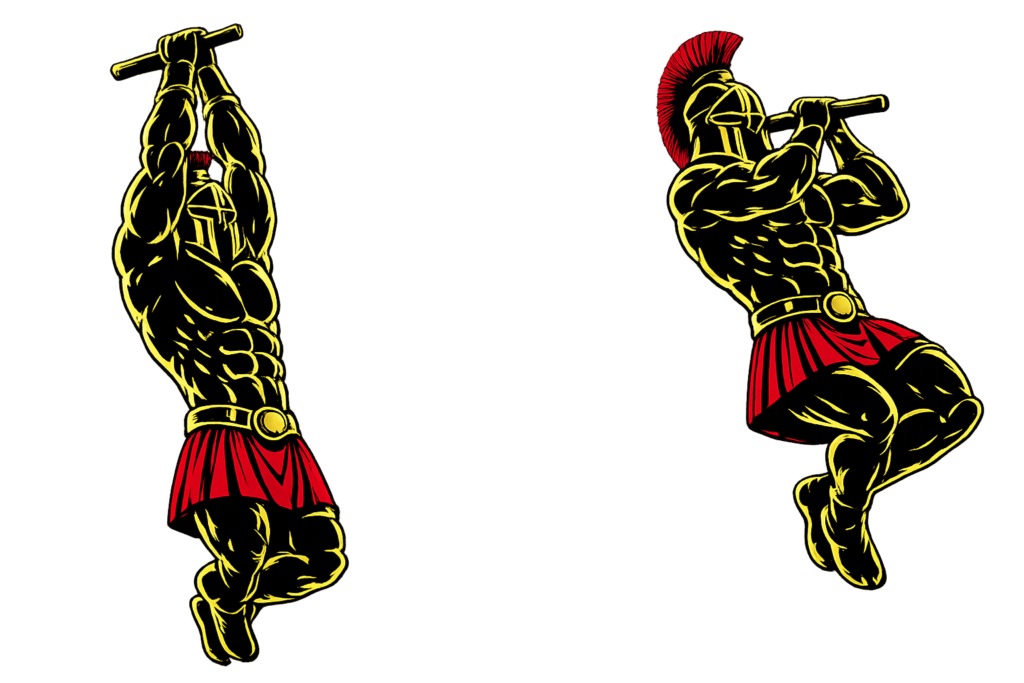
Commando Pull-Up Form Checklist
Use this quick checklist to ensure perfect commando pull-up form.
- Start from a full dead hang
- Keep your core engaged
- Pull your body close to the bar
- Control every repetition
- Alternate head and hand positions evenly
Perfect form builds balanced strength and reduces injury risk.
Common Commando Pull-Up Mistakes
Swinging the Body
Problem: Uses momentum instead of muscular strength.
Fix: Tighten your core and perform slow, controlled repetitions.
Pulling Unevenly
Problem: Overloads one arm and creates muscular imbalances.
Fix: Pull evenly with both arms and alternate hand positions between sets.
Half Repetitions
Problem: Limits strength development.
Fix: Start from a full dead hang and pull until your head clears the bar.
Twisting Excessively
Problem: Places unnecessary stress on the shoulders and spine.
Fix: Keep your torso stable and rotate only as much as needed to clear the bar.
Rushing the Descent
Problem: Reduces muscle activation and control.
Fix: Lower yourself slowly over two to three seconds.
Controlled repetitions always beat rushed ones.
Commando Pull-Up Variations
Once you master the basic commando pull-up, different variations can help increase strength and challenge your pulling ability.
Assisted Commando Pull-Ups
A beginner-friendly variation.
How to Do Assisted Commando Pull-Ups
- Attach a resistance band to the pull-up bar
- Place one foot or knee inside the band
- Perform controlled repetitions
This variation reduces the amount of bodyweight you must lift.
Towel Commando Pull-Ups
Improves grip strength.
How to Do Towel Commando Pull-Ups
- Drape a towel securely over the pull-up bar
- Grip both ends of the towel
- Perform the commando pull-up movement
This variation significantly increases grip demands.
Weighted Commando Pull-Ups
Develops maximum pulling strength.
How to Do Weighted Commando Pull-Ups
- Wear a weighted vest or use a dip belt
- Perform strict repetitions
- Maintain perfect form throughout
This variation builds advanced upper-body strength.
Archer Pull-Ups
An advanced progression.
How to Do Archer Pull-Ups
- Pull primarily with one arm while the opposite arm remains extended
- Alternate sides
- Perform every repetition under control
This variation develops unilateral strength for one-arm pull-up progressions.
Final Thoughts
Commando pull-ups are one of the most challenging and rewarding pull-up variations you can master.
They build:
- Upper-body pulling strength
- Grip endurance
- Core stability
- Shoulder control
- Functional athletic power
Progress may feel slower than with standard pull-ups because commando pull-ups demand greater coordination and stability. However, with consistent practice and proper form, they will significantly improve your overall pulling strength and body control. Learn more about Pull Workouts here.
Master control before chasing more repetitions.
Focus on full range of motion, smooth movement, and balanced strength on both sides.
A warrior adapts to every grip, every angle, and every challenge.
Commando Pull-Up FAQ
Q1: Are commando pull-ups harder than regular pull-ups?
Yes. Commando pull-ups require greater coordination, grip strength, and shoulder stability than standard pull-ups, making them more challenging for most people.
Q2: How many commando pull-ups should I do?
Most intermediate athletes should aim for 5-10 repetitions per side for 2-4 sets while maintaining strict form.
Q3: Do commando pull-ups build bigger arms?
Yes. Commando pull-ups heavily recruit the biceps, brachialis, and forearms while also strengthening the back, making them an excellent exercise for overall upper-body development.