Learn how to do one-arm push-ups with perfect form, avoid common mistakes, and discover the best one-arm push-up variations to build elite pushing strength, improve stability, and master one of calisthenics’ most iconic exercises.
One-arm push-ups are one of the most advanced bodyweight pushing exercises for developing unilateral strength, core stability, and total-body control. Whether you are training for calisthenics, military fitness, martial arts, or functional strength, mastering the one-arm push-up is an outstanding demonstration of upper-body power.
What Is a One-Arm Push-Up?
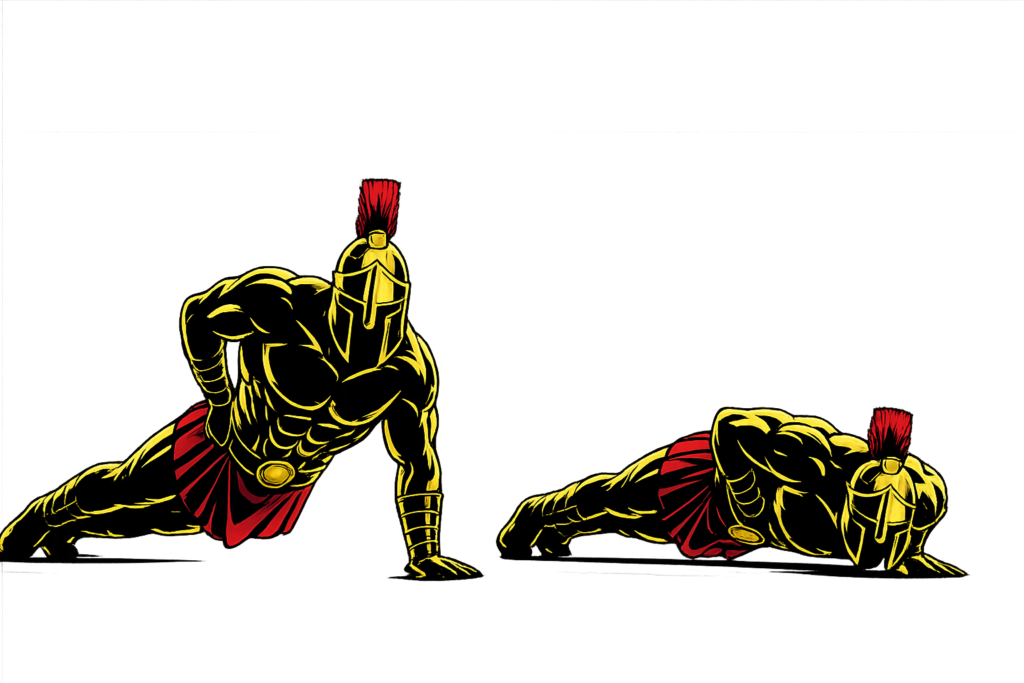
A one-arm push-up is an advanced bodyweight exercise where you perform a full push-up using only one arm while keeping your body as stable and straight as possible. The non-working arm is typically placed behind your back or held at your side to eliminate assistance.
The one-arm push-up is considered one of the best upper-body strength exercises because it develops exceptional pressing power while challenging balance, coordination, and anti-rotational core strength.
One-arm push-ups are commonly used in:
- Advanced calisthenics training
- Military fitness preparation
- Martial arts conditioning
- Functional strength programs
Unlike standard push-ups, one-arm push-ups require one side of the body to generate nearly all of the pushing force while the core prevents rotation.
Benefits of One-Arm Push-Ups
One-arm push-ups are one of the most effective exercises for developing functional upper-body strength.
Benefits include:
- Builds elite unilateral pushing strength
- Develops a powerful chest
- Strengthens the triceps and shoulders
- Improves core stability and anti-rotation strength
- Corrects left-to-right strength imbalances
- Requires no equipment
Few bodyweight exercises challenge upper-body strength and stability as effectively as the one-arm push-up.
Muscles Worked in One-Arm Push-Ups
One-arm push-ups activate numerous muscles throughout the body.
Primary Muscles
- Pectoralis Major
- Triceps Brachii
- Anterior Deltoids
Secondary Muscles
- Rectus Abdominis
- Internal and External Obliques
- Serratus Anterior
- Gluteus Maximus
- Quadriceps
- Forearms
Because of this muscle activation, one-arm push-ups are one of the best exercises for building real-world pushing strength and body control.
How to Do One-Arm Push-Ups (Step-by-Step)
Step 1: Get Into the Starting Position
Begin with:
- Feet wider than shoulder-width apart
- One hand placed directly beneath your working shoulder
- Working arm fully extended
- Non-working arm behind your back or resting along your side
- Core engaged
Tip: A wider stance provides more stability while learning the movement.
Step 2: Brace Your Entire Body
Before lowering:
- Tighten your abdominal muscles
- Squeeze your glutes
- Keep your legs straight
- Maintain a neutral spine
Your body should form a straight line from your head to your heels.
Step 3: Lower Yourself
Slowly bend your working elbow and lower your chest toward the floor.
Focus on:
- Keeping your hips level
- Preventing your torso from rotating
- Keeping your elbow at approximately a 30-45° angle from your body
- Descending under complete control
Lower until your chest is just above the floor.
Step 4: Pause Briefly
At the bottom position:
- Keep your core tight
- Maintain body alignment
- Avoid collapsing onto your shoulders
Pause for a moment while maintaining full control.
Step 5: Push Back Up
Press through your palms to return to the starting position.
Finish with:
- Full elbow extension
- Stable shoulders
- Straight body
- Controlled breathing
Complete all repetitions before switching arms.
One-Arm Push-Up Form Checklist
Use this quick checklist to ensure perfect one-arm push-up form.
- Keep your body straight
- Brace your core throughout
- Prevent your hips from rotating
- Lower under control
- Fully extend your arm at the top
Perfect form builds greater strength while reducing injury risk.
Common One-Arm Push-Up Mistakes
Rotating the Torso
Problem: Reduces stability and places unnecessary stress on the shoulder.
Fix: Brace your core and keep both shoulders as level as possible.
Using a Narrow Foot Position
Problem: Makes balance unnecessarily difficult.
Fix: Start with a wider stance and gradually narrow it as your strength improves.
Letting the Hips Sag
Problem: Places excessive stress on the lower back.
Fix: Squeeze your glutes and keep your core engaged throughout the movement.
Rushing the Descent
Problem: Reduces muscle activation and control.
Fix: Lower yourself slowly over two to three seconds.
Attempting the Exercise Too Soon
Problem: Increases injury risk and leads to poor technique.
Fix: Master strict push-ups and progression exercises before attempting a full one-arm push-up.
Quality repetitions always outperform sloppy repetitions.
One-Arm Push-Up Variations
Once you master standard push-ups, these progressions will help you develop the strength needed for one-arm push-ups.
Incline One-Arm Push-Ups
The easiest progression.
How to Do Incline One-Arm Push-Ups
- Place your working hand on a sturdy bench or elevated surface
- Assume a one-arm push-up position
- Perform controlled repetitions
This variation reduces the amount of bodyweight you must press.
Archer Push-Ups
Builds unilateral strength.
How to Do Archer Push-Ups
- Start in a wide push-up position
- Shift most of your weight onto one arm while the opposite arm remains extended
- Alternate sides
This variation closely mimics the strength demands of a one-arm push-up.
Assisted One-Arm Push-Ups
Develops confidence and stability.
How to Do Assisted One-Arm Push-Ups
- Perform a one-arm push-up while lightly supporting yourself with the fingertips of your opposite hand
- Gradually reduce the amount of assistance over time
This variation helps bridge the gap to the full movement.
Elevated Feet One-Arm Push-Ups
An advanced progression.
How to Do Elevated Feet One-Arm Push-Ups
- Place your feet on an elevated platform
- Perform strict one-arm push-ups
- Maintain complete body control throughout
This variation significantly increases the difficulty by shifting more weight onto the working arm.
Final Thoughts
The one-arm push-up is one of the most impressive bodyweight pushing exercises you can master.
It builds:
- Elite upper-body strength
- Core stability
- Shoulder stability
- Unilateral power
- Functional athletic control
Progress may take months because the one-arm push-up demands exceptional strength, balance, and coordination. Focus on mastering each progression before attempting the full movement. Learn more about Push Workouts here.
Never sacrifice technique for a single repetition.
Focus on controlled movement, total-body tension, and balanced strength on both sides.
A warrior proves his strength one arm at a time.
One-Arm Push-Up FAQ
Q1: Are one-arm push-ups harder than regular push-ups?
Yes. One-arm push-ups are significantly more difficult because a single arm performs nearly all the pressing work while the core must resist rotation and stabilize the entire body.
Q2: What exercises should I master before learning one-arm push-ups?
You should first master strict push-ups, diamond push-ups, decline push-ups, archer push-ups, and assisted one-arm push-ups before attempting the full exercise.
Q3: How many one-arm push-ups should I aim for?
Beginners should focus on achieving one clean repetition per arm. As your strength improves, performing 5-10 strict repetitions per arm is an excellent benchmark of advanced upper-body strength.