Learn how to do bear crawls with perfect form, avoid common mistakes, and discover the best variations to improve strength, coordination, and conditioning.
Bear crawls are one of the most effective full-body bodyweight exercises for developing functional strength, endurance, and athletic movement. Whether you are training for military fitness tests, sports performance, or general fitness, mastering bear crawls is essential.
What Are Bear Crawls?
Bear crawls are a crawling movement where you move on your hands and feet while keeping your knees elevated slightly above the ground.
This exercise challenges strength, coordination, stability, and cardiovascular endurance simultaneously.
Bear crawls are commonly used in:
- Military fitness training
- Athletic conditioning programs
- Functional fitness workouts
- Core and stability training
Unlike isolated exercises, bear crawls train the body to move as a connected unit.
Benefits of Bear Crawls
Bear crawls are one of the best exercises for developing athletic conditioning and total-body control.
Benefits include:
- Builds full-body strength and endurance
- Improves coordination and balance
- Enhances core stability
- Strengthens shoulders and grip
- Develops functional movement ability
- Essential for military and tactical fitness
Few exercises challenge the entire body as effectively as bear crawls.
Muscles Worked in Bear Crawls
Bear crawls activate multiple muscle groups throughout the body.
Primary Muscles
- Shoulders (Deltoids)
- Core Muscles
- Quadriceps
Secondary Muscles
- Chest (Pectorals)
- Triceps
- Glutes
- Hamstrings
- Calves
This makes bear crawls one of the best full-body conditioning exercises.
How to Do Bear Crawls (Step-by-Step)
Step 1: Start on All Fours
Get into a tabletop position on your hands and knees.
- Hands under shoulders
- Knees under hips
- Spine neutral
Tip: Keep your movements controlled from the start.
Step 2: Lift Your Knees Slightly
Raise your knees a few inches off the ground.
- Core engaged
- Back flat
- Neck neutral
Step 3: Move Opposite Hand and Foot
Move one hand and the opposite foot forward simultaneously.
- Take small controlled steps
- Maintain balance and posture
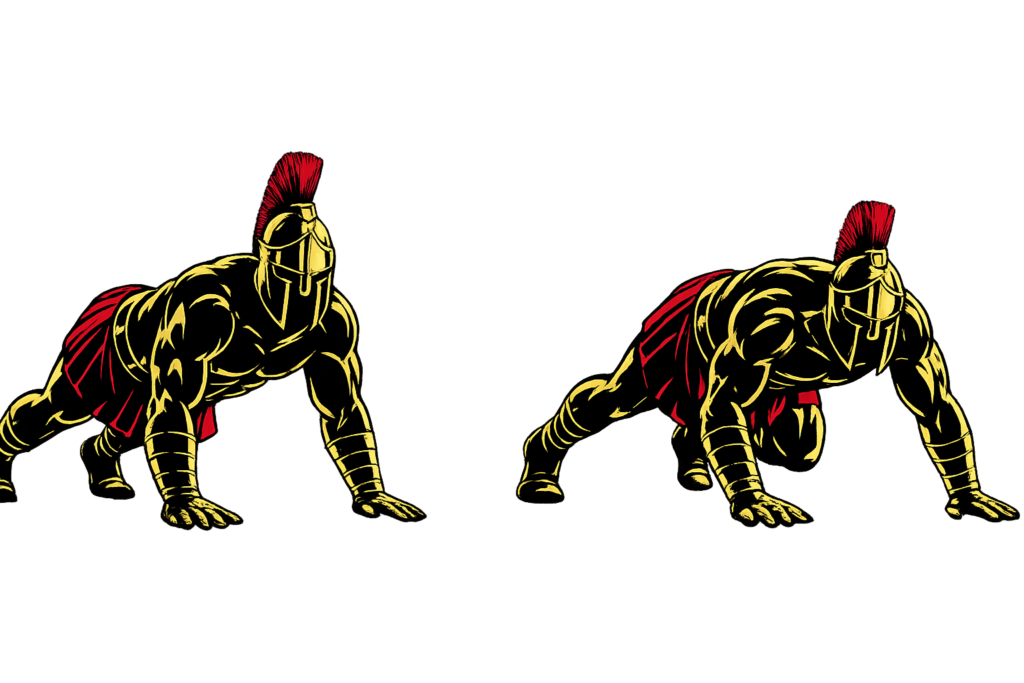
Step 4: Continue Crawling Forward
Alternate sides while moving forward.
- Keep hips stable
- Avoid excessive body rotation
Step 5: Maintain Control
Keep your movements smooth and controlled throughout the crawl.
Avoid rushing or letting your knees touch the ground.
Bear Crawls Form Checklist
Use this checklist to ensure proper form:
- Keep knees slightly elevated
- Maintain a flat back
- Move your opposite hand and foot together
- Keep movements controlled
- Engage your core throughout
Perfect form builds strength and prevents injury.
Common Bear Crawls Mistakes
Hips Too High
Problem: Reduces core activation.
Fix: Keep hips level and controlled.
Knees Touching the Ground
Problem: Reduces exercise difficulty and effectiveness.
Fix: Keep knees hovering slightly above the floor.
Moving Too Fast
Problem: Causes poor coordination.
Fix: Focus on slow, controlled movement first.
Excessive Body Rotation
Problem: Reduces stability.
Fix: Keep your torso stable and core engaged.
Looking Up Excessively
Problem: Creates neck strain.
Fix: Keep your neck neutral and eyes slightly forward.
Bear Crawls Variations
Once you master basic bear crawls, these variations can increase difficulty and effectiveness.
Backward Bear Crawls
Improves coordination and control.
How to Do Backward Bear Crawls
- Crawl backward slowly
- Maintain the same posture and control
- Keep knees elevated
Lateral Bear Crawls
Builds side-to-side coordination.
How to Do Lateral Bear Crawls
- Move sideways while maintaining crawl position
- Keep hips stable
- Move with control
Fast Bear Crawls
Increases conditioning demand.
How to Do Fast Bear Crawls
- Maintain proper form
- Increase crawling speed gradually
- Stay controlled throughout
Weighted Bear Crawls
Adds resistance for advanced training.
How to Do Weighted Bear Crawls
- Wear a weighted vest or backpack
- Perform controlled crawls
- Maintain proper posture
Final Thoughts
Bear crawls are one of the most effective full-body exercises you can master.
They build:
- Functional strength
- Core stability
- Conditioning and endurance
- Coordination and balance
- Mental toughness
Progress may feel challenging at first because bear crawls demand total-body control. However, with consistent training and proper form, your strength and athleticism will improve rapidly. Learn more about Conditioning Exercises here.
Focus on smooth and controlled movement.
A warrior moves with strength — not chaos.
Bear Crawls FAQ
Q1: How far should beginners crawl?
Beginners can start with 10–20 meters or 20–30 seconds per set.
Q2: Are bear crawls good for core strength?
Yes, bear crawls heavily activate the core while also training the entire body.
Q3: How often should I do bear crawls?
You can train bear crawls 2–4 times per week, depending on workout intensity and recovery.