
Learn how to do hanging knee raises with perfect form, avoid common mistakes, and discover the best variations to build real core strength.
Hanging knee raises are one of the most effective bodyweight exercises for developing strong abs, improving hip flexor strength, and building total-body control. Whether you are training for military fitness tests, calisthenics, or athletic performance, mastering the hanging knee raise is essential.
What Are Hanging Knee Raises?
A hanging knee raise is a bodyweight exercise where you hang from a pull-up bar and raise your knees toward your chest before lowering them back down under control.
The hanging knee raise is considered one of the best core exercises because it trains the abdominal muscles while also developing grip strength and shoulder stability.
Hanging knee raises are commonly used in:
- Military fitness training
- Calisthenics programs
- Strength and conditioning routines
- Athletic performance training
Unlike traditional floor exercises, hanging knee raises build functional core strength while improving body control.
Benefits of Hanging Knee Raises
Hanging knee raises are one of the most powerful exercises for developing core strength.
Benefits include:
- Strengthens the lower abdominal muscles
- Improves hip flexor strength
- Builds grip endurance
- Enhances shoulder stability
- Develops body control and coordination
- Essential for advanced calisthenics movements
Few exercises challenge the core as effectively as the hanging knee raise.
Muscles Worked in Hanging Knee Raises
Hanging knee raises activate several major muscle groups simultaneously.
Primary Muscles
- Rectus Abdominis
- Hip Flexors
Secondary Muscles
- Obliques
- Transverse Abdominis
- Forearms and Grip Muscles
- Shoulders (Deltoids)
- Latissimus Dorsi
Because of this muscle activation, hanging knee raises are one of the best exercises for developing a strong and functional core.
How to Do Hanging Knee Raises (Step-by-Step)
Step 1: Grip the Pull-Up Bar
Grab the bar with your palms facing away from you and your hands about shoulder-width apart.
Tip: Use a full grip and squeeze the bar tightly for better stability.
Step 2: Start From a Dead Hang
Begin from a controlled dead hang with:
- Arms fully extended
- Shoulders slightly engaged
- Core tight
- Legs hanging naturally
Avoid excessive swinging.
This position creates a stable foundation.
Step 3: Raise Your Knees Toward Your Chest
Lift your knees upward while keeping the movement smooth and controlled.
Focus on:
- Engaging your abs
- Minimizing body swing
- Bringing your knees toward your chest
Avoid using momentum.
Step 4: Reach the Top Position
At the top of the movement:
- Knees are near chest level
- Core remains tight
- Upper body stays stable
Pause briefly to maximize abdominal activation.
Step 5: Lower With Control
Slowly lower your legs back to the starting position.
Avoid dropping quickly or allowing excessive swinging.
The lowering phase builds significant core strength.
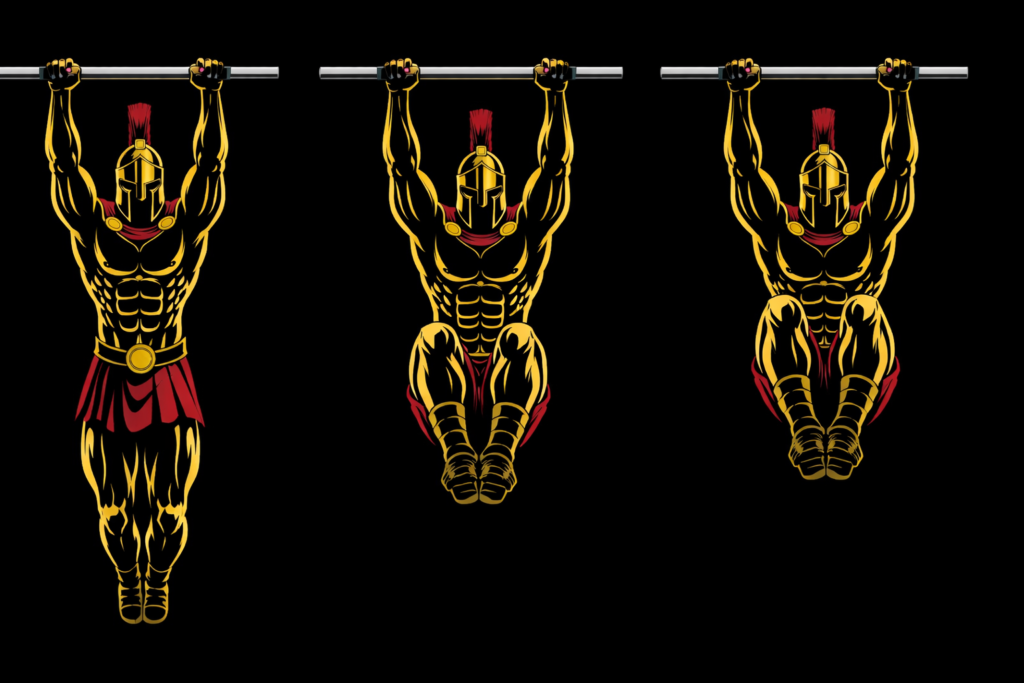
Hanging Knee Raise Form Checklist
Use this quick checklist to ensure perfect hanging knee raise form.
- Start from a controlled dead hang
- Keep your core tight
- Minimize swinging
- Raise your knees under control
- Lower slowly between reps
Perfect form builds strength faster and prevents injury.
Common Hanging Knee Raise Mistakes
Swinging Excessively
Problem: Reduces abdominal activation.
Fix: Tighten your core and control the movement throughout.
Using Momentum
Problem: Makes the exercise easier and less effective.
Fix: Lift your knees slowly instead of kicking them upward.
Shrugging the Shoulders
Problem: Causes unnecessary tension.
Fix: Keep your shoulders active and slightly pulled down.
Partial Repetitions
Problem: Limits strength development.
Fix: Use a full range of motion whenever possible.
Lowering Too Quickly
Problem: Reduces muscle activation.
Fix: Control the negative phase of every repetition.
Clean reps always beat high numbers.
Hanging Knee Raise Variations
Once you master the basic hanging knee raise, different variations can help build strength and increase difficulty.
Bent-Leg Hanging Raises
A beginner-friendly variation.
How to Do Bent-Leg Hanging Raises
- Raise your knees only halfway
- Maintain control throughout the movement
- Lower slowly to the starting position
This variation is ideal for beginners.
Alternating Knee Raises
Improves coordination and oblique activation.
How to Do Alternating Knee Raises
- Raise one knee at a time
- Alternate sides with each repetition
- Keep the body stable
This variation improves balance and rotational strength.
Hanging Leg Raises
A more advanced progression.
How to Do Hanging Leg Raises
- Keep your legs straight throughout the movement
- Raise them until they are parallel to the ground or higher
- Lower under control
This variation develops greater abdominal strength.
Toes-to-Bar
An advanced calisthenics movement.
How to Do Toes-to-Bar
- Raise your feet until they touch the pull-up bar
- Maintain control throughout the movement
- Lower slowly back to the dead hang
This variation builds elite core strength and body control.
Final Thoughts
The hanging knee raise is one of the most effective core exercises you can master.
It builds:
- Abdominal strength
- Hip flexor strength
- Grip endurance
- Shoulder stability
- Functional athletic performance
Progress may feel challenging at first, especially if your grip or core strength is limited. However, with consistent training and proper form, your hanging strength and abdominal control will steadily improve. Learn more about Core Workouts here.
One clean rep is always better than ten sloppy ones.
Focus on quality repetitions, full range of motion, and controlled movement.
A warrior controls his body before he commands his strength.
Essential Gear for Hanging Knee Raises
While hanging knee raises only require a pull-up bar, the right equipment can improve your grip, increase comfort, and help you progress toward more advanced hanging core exercises.
- Pull-Up Bar: The essential piece of equipment for hanging knee raises, providing a sturdy platform to build core strength, grip endurance, and upper-body stability.
- Resistance Bands: Excellent for assisted hanging exercises, improving grip endurance, and progressing toward hanging leg raises and toes-to-bar.
- Exercise Mat: Cushions your landing area and provides a comfortable surface for warm-ups, mobility work, and core exercises before or after hanging knee raises.
- Lifting Straps: Help reduce grip fatigue during high-volume hanging training, allowing you to focus more on your core when appropriate.
- Wrist Wraps: Provide additional wrist support during hanging exercises, helping improve comfort and stability during longer training sessions.
Explore more equipment recommendations in our Equipment Guides to support your core strength and calisthenics training journey.
Hanging Knee Raise FAQ
Q1: Are hanging knee raises good for beginners?
Yes. Hanging knee raises are beginner-friendly and are easier than hanging leg raises. They are an excellent way to build the strength needed for more advanced core exercises.
Q2: What’s the difference between hanging knee raises and hanging leg raises?
Hanging knee raises involve bent knees and are easier to perform, while hanging leg raises require straight legs and greater abdominal strength.
Q3: How often should I do hanging knee raises?
You can train hanging knee raises 2–4 times per week depending on your recovery and overall training volume.
Comments are closed.