Learn how to do face pulls with perfect form, avoid common mistakes, and discover the best face pull variations to build strong shoulders and a healthy upper back.
Face pulls are one of the most effective exercises for developing rear deltoids, strengthening the upper back, and improving shoulder health. Whether you are training for athletic performance, military fitness, or general strength, mastering the face pull is essential.
What Are Face Pulls?
A face pull is a pulling exercise performed using a cable machine or resistance band, where you pull the handles toward your face while externally rotating your shoulders.
The face pull is considered one of the best exercises for shoulder health because it strengthens the muscles that support proper posture and shoulder stability.
Face pulls are commonly used in:
- Strength and conditioning programs
- Athletic performance training
- Bodybuilding routines
- Rehabilitation and injury prevention programs
Unlike many pressing exercises, face pulls help balance the upper body and reduce the risk of shoulder problems.
Benefits of Face Pulls
Face pulls are one of the most effective exercises for developing healthy shoulders.
Benefits include:
- Strengthens the rear deltoids
- Improves posture and shoulder stability
- Builds upper-back strength
- Reduces the risk of shoulder injuries
- Enhances pulling performance
- Counteracts the effects of prolonged sitting
Few exercises target the rear shoulders and upper back as effectively as face pulls.
Muscles Worked in Face Pulls
Face pulls activate several upper-body muscles simultaneously.
Primary Muscles
- Rear Deltoids
- Rhomboids
- Middle Trapezius
Secondary Muscles
- Rotator Cuff Muscles
- Lower Trapezius
- Biceps Brachii
- Forearms and Grip Muscles
Because of this muscle activation, face pulls are one of the best exercises for developing shoulder stability and upper-back strength.
How to Do Face Pulls (Step-by-Step)
Step 1: Set Up the Resistance
Attach a rope handle to a cable machine at upper chest or face height. If using a resistance band, secure it to a sturdy anchor.
Stand with:
- Feet shoulder-width apart
- Chest up
- Core engaged
Tip: Use light resistance to prioritize proper form.
Step 2: Grip the Handles
Grab the rope or band with both hands.
Focus on:
- Keeping your wrists neutral
- Maintaining a firm grip
- Standing tall
This creates a stable starting position.
Step 3: Pull Toward Your Face
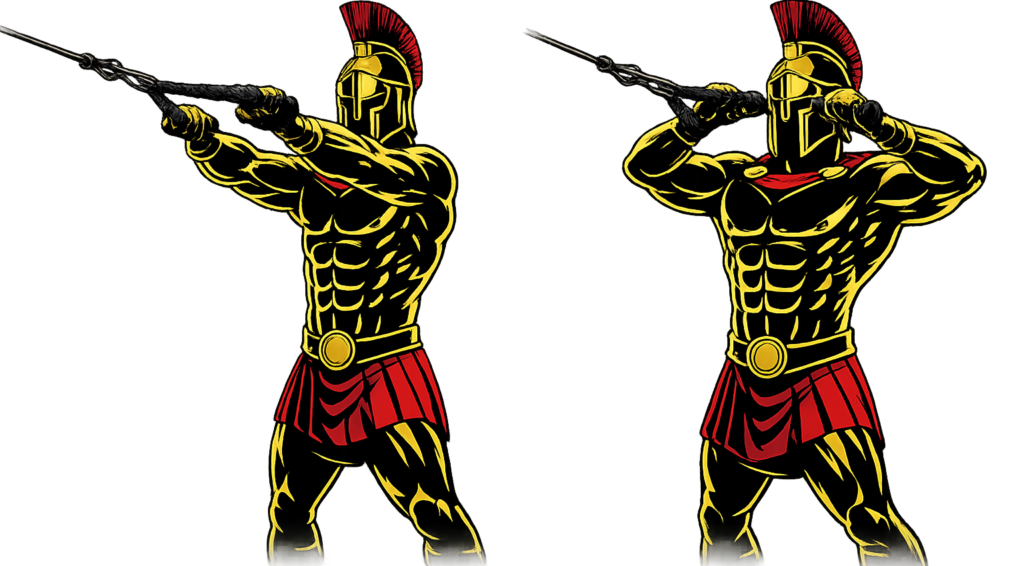
Pull the rope toward your face while driving your elbows outward.
Focus on:
- Leading with the elbows
- Squeezing your shoulder blades together
- Keeping your upper arms parallel to the floor
Avoid shrugging your shoulders.
Step 4: Reach the Top Position
At the top of the movement:
- Hands are near your ears
- Elbows point outward
- Shoulder blades are squeezed together
Pause briefly to maximize muscle activation.
Step 5: Return Under Control
Slowly extend your arms back to the starting position.
Avoid letting the resistance pull you forward.
The negative portion of the movement builds significant shoulder stability.
Face Pull Form Checklist
Use this quick checklist to ensure perfect face pull form.
- Keep your chest up
- Pull with your elbows
- Squeeze your shoulder blades together
- Use controlled repetitions
- Avoid shrugging the shoulders
Perfect form builds strength faster and prevents injury.
Common Face Pull Mistakes
Using Too Much Weight
Problem: Heavy resistance causes poor form.
Fix: Use lighter weight and prioritize controlled movement.
Pulling to the Chest
Problem: Reduces rear deltoid activation.
Fix: Pull toward the face rather than the chest.
Shrugging the Shoulders
Problem: Places excessive stress on the upper traps.
Fix: Keep the shoulders down and relaxed.
Using Momentum
Problem: Reduces muscle activation.
Fix: Perform each repetition slowly and under control.
Failing to Externally Rotate
Problem: Limits shoulder involvement.
Fix: Allow the hands to separate slightly as they approach the face.
Clean reps always beat heavy weights.
Face Pull Variations
Once you master the basic face pull, different variations can help build strength and improve shoulder stability.
Resistance Band Face Pulls
A beginner-friendly option.
How to Do Resistance Band Face Pulls
- Anchor a resistance band securely
- Pull toward your face
- Return under control
This variation is ideal for home workouts.
Cable Face Pulls
The traditional version.
How to Do Cable Face Pulls
- Use a rope attachment
- Pull toward the face
- Squeeze the upper back
This variation provides constant tension.
Single-Arm Face Pulls
Improves muscular balance.
How to Do Single-Arm Face Pulls
- Pull with one arm at a time
- Maintain proper posture
- Alternate sides
This variation helps correct imbalances.
Face Pulls With External Rotation
An advanced variation for shoulder health.
How to Do Face Pulls With External Rotation
- Pull the rope toward your face
- Rotate the hands upward at the top
- Return slowly
This variation maximizes rotator cuff activation.
Final Thoughts
The face pull is one of the most effective exercises you can master for shoulder health and upper-back strength.
It builds:
- Rear deltoid strength
- Upper-back strength
- Shoulder stability
- Postural endurance
- Functional athletic performance
Progress may feel slow because face pulls are usually performed with lighter resistance. However, with consistent training and proper form, your posture and shoulder health will steadily improve. Learn more about Pull Workouts here.
One perfect repetition is always better than ten sloppy ones.
Focus on quality repetitions, controlled movement, and proper technique.
A warrior protects his shoulders as carefully as he builds his strength.
Face Pull FAQ
Q1: Are face pulls good for shoulder health?
Yes. Face pulls are one of the best exercises for improving shoulder stability, strengthening the rotator cuff, and promoting better posture.
Q2: How many face pulls should a beginner do?
Most beginners can start with 12–20 repetitions for 2–4 sets while focusing on perfect form.
Q3: How often should I do face pulls?
You can train face pulls 2–5 times per week depending on your recovery and overall training volume. They are generally low-impact and recover quickly.