Learn how to do archer pull-ups with perfect form, avoid common mistakes, and discover the best archer pull-up variations to build unilateral pulling strength, improve body control, and progress toward the one-arm pull-up.
Archer pull-ups are one of the most effective advanced pull-up variations for developing single-arm strength while maintaining control throughout the movement. By shifting most of your body weight onto one arm, archer pull-ups bridge the gap between standard pull-ups and the elite one-arm pull-up.
Whether you’re training for calisthenics, climbing, obstacle course racing, or functional strength, mastering the archer pull-up will significantly improve your pulling power.
What Are Archer Pull-Ups?
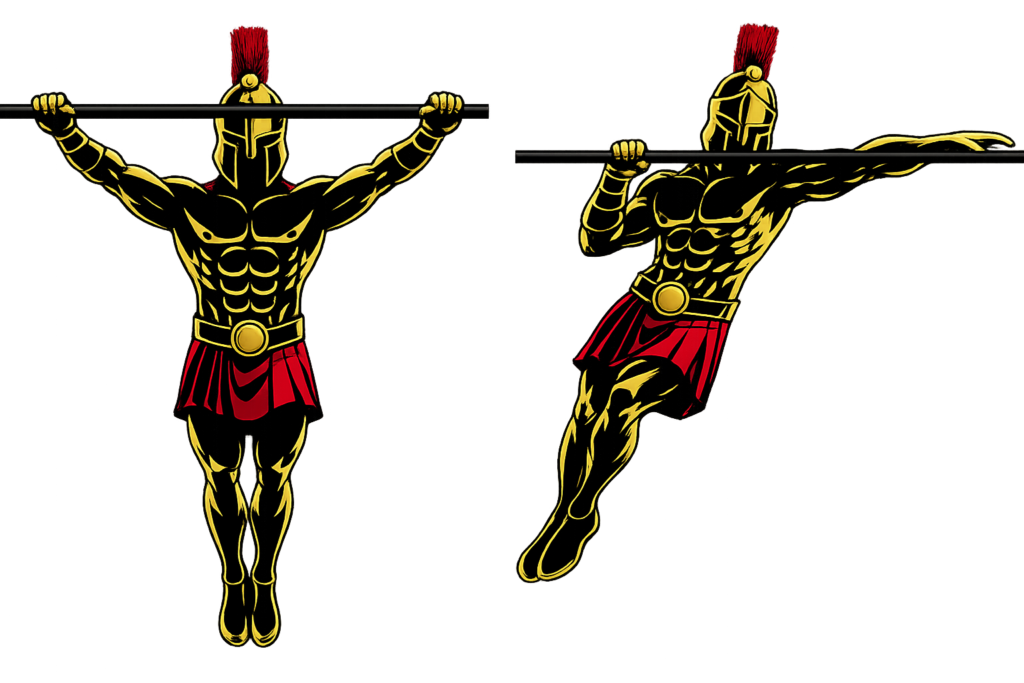
An archer pull-up is an advanced bodyweight exercise performed on a pull-up bar with a wide grip. As you pull upward, one arm performs most of the work while the opposite arm gradually straightens, resembling the position of an archer drawing a bow.
Unlike a standard pull-up, where both arms contribute equally, the archer pull-up shifts the majority of the workload onto one side of the body.
Archer pull-ups are commonly used in:
- Advanced calisthenics training
- One-arm pull-up progressions
- Climbing strength programs
- Functional upper-body training
Because each repetition emphasizes one arm, it’s essential to alternate sides to develop balanced strength.
Benefits of Archer Pull-Ups
Archer pull-ups are one of the best exercises for building unilateral pulling strength.
Benefits include:
- Develops one-arm pulling strength
- Builds a wider, stronger back
- Improves grip strength and endurance
- Increases biceps and forearm strength
- Enhances shoulder stability
- Builds the foundation for one-arm pull-ups
Few bodyweight pulling exercises prepare you for advanced calisthenics skills as effectively as archer pull-ups.
Muscles Worked in Archer Pull-Ups
Archer pull-ups activate nearly every major pulling muscle in the upper body.
Primary Muscles
- Latissimus Dorsi
- Biceps Brachii
- Rhomboids
Secondary Muscles
- Trapezius
- Rear Deltoids
- Brachialis
- Brachioradialis
- Forearm Flexors
- Rotator Cuff Muscles
- Core Muscles
Because of this muscle activation, archer pull-ups are one of the best progressions for developing elite unilateral pulling strength.
How to Do Archer Pull-Ups (Step-by-Step)
Step 1: Take a Wide Grip
Grip the pull-up bar with:
- Hands wider than shoulder-width apart
- Thumbs wrapped securely around the bar
- Palms facing away (overhand grip)
Hang with your arms fully extended.
Tip: The wider your grip, the easier it becomes to shift your weight toward one side.
Step 2: Engage Your Core
Before pulling:
- Brace your abdominal muscles
- Keep your legs together
- Slightly retract your shoulder blades
- Eliminate unnecessary swinging
Your body should remain stable throughout the movement.
Step 3: Pull Toward One Hand
Pull your chest toward one hand while allowing the opposite arm to straighten.
Focus on:
- Driving your working elbow downward
- Keeping the opposite arm nearly straight
- Pulling your chin toward the working hand
- Maintaining full-body tension
Most of your body weight should be supported by the bent arm.
Step 4: Reach the Top Position
At the top:
- Your chin clears the bar near your working hand
- The working arm is deeply bent
- The opposite arm is almost fully extended
- Your shoulders remain level
Pause briefly without losing control.
Step 5: Lower With Control
Slowly lower yourself back to the starting position.
Maintain:
- Full body tension
- A controlled descent
- Straight legs
- Stable shoulders
Complete the desired repetitions before switching to the opposite side.
Archer Pull-Up Form Checklist
Use this quick checklist to ensure perfect archer pull-up form.
- Use a wide overhand grip
- Pull toward one hand
- Keep the opposite arm nearly straight
- Brace your core throughout
- Alternate sides evenly
Perfect form develops balanced strength and prepares you for one-arm pull-ups.
Common Archer Pull-Up Mistakes
Pulling Straight Up
Problem: Turns the exercise into a standard pull-up.
Fix: Intentionally shift your body toward the working arm during every repetition.
Bending Both Arms Equally
Problem: Reduces unilateral strength development.
Fix: Allow the non-working arm to remain almost straight throughout the movement.
Swinging the Body
Problem: Uses momentum instead of muscular strength.
Fix: Perform slow, controlled repetitions while keeping your core tight.
Using a Grip That’s Too Narrow
Problem: Makes it difficult to shift your body weight onto one arm.
Fix: Widen your grip enough to move toward one side comfortably.
Neglecting One Side
Problem: Creates muscular imbalances.
Fix: Perform an equal number of repetitions on both arms.
Strong, controlled repetitions build more strength than fast, uneven ones.
Archer Pull-Up Variations
Once you master the standard archer pull-up, these variations can further develop your pulling strength.
Assisted Archer Pull-Ups
The ideal beginner progression.
How to Do Assisted Archer Pull-Ups
- Loop a resistance band around the pull-up bar
- Place one foot or knee inside the band
- Perform archer pull-ups while maintaining proper technique
This variation reduces the amount of bodyweight you must lift.
Archer Negative Pull-Ups
Builds eccentric strength.
How to Do Archer Negative Pull-Ups
- Jump or step to the top position
- Slowly lower yourself using one arm as the primary working arm
- Alternate sides
This variation develops the strength required for full repetitions.
Typewriter Pull-Ups
Improves lateral control.
How to Do Typewriter Pull-Ups
- Pull yourself to the top of a wide-grip pull-up
- Move your body horizontally from one hand to the other
- Lower under control
This variation strengthens both sides throughout a greater range of motion.
One-Arm Pull-Up
The ultimate progression.
How to Do One-Arm Pull-Ups
- Grip the bar with one hand
- Pull your body until your chin clears the bar
- Lower under complete control
This variation represents one of the highest levels of bodyweight pulling strength.
Final Thoughts
Archer pull-ups are one of the best exercises for developing unilateral pulling power and progressing toward the one-arm pull-up.
They build:
- Elite pulling strength
- Grip endurance
- Back development
- Shoulder stability
- Full-body control
Progress may take several months because archer pull-ups require exceptional strength and coordination. Focus on mastering smooth, controlled repetitions before attempting more advanced one-arm pulling variations. Learn more about Pull Workouts here.
Strength is built one side at a time.
Maintain strict form, train both arms equally, and prioritize quality over quantity.
A warrior conquers impossible strength by mastering each side with equal discipline.
Archer Pull-Up FAQ
Q1: Are archer pull-ups harder than regular pull-ups?
Yes. Archer pull-ups are significantly more difficult because one arm performs most of the pulling work while the opposite arm provides only minimal assistance.
Q2: Can beginners do archer pull-ups?
Most beginners should first master 10-15 strict pull-ups before attempting archer pull-ups. Assisted archer pull-ups with a resistance band are an excellent starting point.
Q3: Do archer pull-ups help you learn one-arm pull-ups?
Yes. Archer pull-ups are one of the best progression exercises for one-arm pull-ups because they develop unilateral strength, grip endurance, shoulder stability, and body control while allowing gradual reductions in assistance.