Learn how to do squats with perfect form, avoid common mistakes, and discover the best squat variations to build real lower-body strength.
Squats are one of the most effective bodyweight exercises for developing powerful legs, strong glutes, and functional athletic strength. Whether you are training for military fitness tests, sports performance, or general fitness, mastering the squat is essential.
What Is a Squat?
A squat is a lower-body exercise where you bend at the hips and knees to lower your body before returning to a standing position.
The squat is considered one of the best exercises because it trains multiple muscle groups simultaneously while improving balance, mobility, and coordination.
Squats are commonly used in:
- Military fitness training
- Strength and conditioning programs
- Athletic performance training
- General fitness routines
Unlike many machine exercises, squats build real-world strength that transfers directly to daily activities and sports.
Benefits of Squats
Squats are one of the most powerful exercises for developing lower-body strength.
Benefits include:
- Builds strong legs and glutes
- Improves athletic performance
- Enhances balance and coordination
- Strengthens the core and lower back
- Increases lower-body endurance
- Essential for military and tactical fitness
Few exercises challenge the lower body as effectively as the squat.
Muscles Worked in Squats
Squats activate several major muscle groups simultaneously.
Primary Muscles
- Quadriceps
- Glutes
- Hamstrings
Secondary Muscles
- Core Muscles (Abdominals and Obliques)
- Calves
- Lower Back (Erector Spinae)
- Hip Stabilizers
Because of this muscle activation, squats are one of the best exercises for developing total lower-body strength.
How to Do Squats (Step-by-Step)
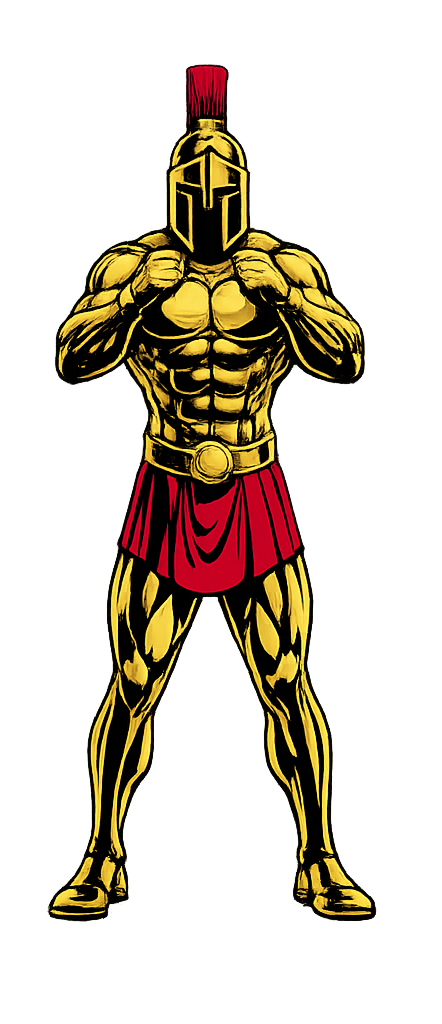
Step 1: Stand With Feet Shoulder-Width Apart
Stand upright with:
- Feet approximately shoulder-width apart
- Toes pointed slightly outward
- Chest up
- Core engaged
Tip: Find a stance that feels natural and comfortable.
Step 2: Initiate the Movement
Begin by pushing your hips backward as if sitting into a chair.
At the same time:
- Bend your knees
- Keep your chest upright
- Maintain a neutral spine
This helps distribute the load properly.
Step 3: Lower Into the Squat
Continue lowering until your thighs are at least parallel to the ground.
Focus on:
- Knees tracking over toes
- Heels staying planted
- Core remaining tight
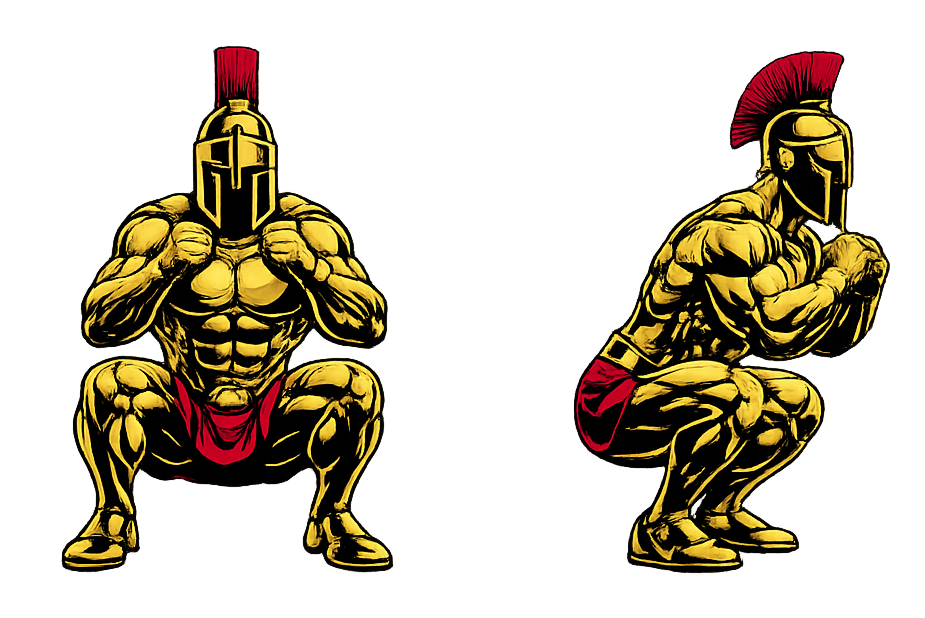
Step 4: Reach the Bottom Position
At the bottom of the squat:
- Chest remains upright
- Heels stay on the floor
- Spine remains neutral
Pause briefly while maintaining control.
Step 5: Drive Back Up
Push through your heels and stand back up.
Focus on:
- Extending hips and knees together
- Maintaining posture
- Finishing in a tall standing position
Repeat for the desired number of repetitions.
Squat Form Checklist
Use this quick checklist to ensure perfect squat form.
- Keep your chest up
- Maintain a neutral spine
- Keep heels planted
- Track knees over toes
- Use a full range of motion
Perfect form builds strength faster and prevents injury.
Common Squat Mistakes
Heels Lifting Off the Ground
Problem: Reduces stability and power.
Fix: Focus on keeping your weight through your heels and midfoot.
Knees Collapsing Inward
Problem: Places stress on the knees.
Fix: Actively push your knees outward in line with your toes.
Rounding the Lower Back
Problem: Increases injury risk.
Fix: Keep your core engaged and chest upright.
Shallow Squats
Problem: Limits muscle development.
Fix: Lower until your thighs reach at least parallel.
Looking Down
Problem: Encourages poor posture.
Fix: Keep your eyes focused straight ahead.
Good squats are built on quality movement, not speed.
Squat Variations
Once you master the basic squat, different variations can help build strength, improve mobility, and increase difficulty.
Half Squats
A beginner-friendly variation that develops confidence and movement mechanics.
How to Do Half Squats
- Lower halfway down
- Maintain proper posture
- Return to standing
This variation is useful for beginners learning squat mechanics.
Jump Squats
Adds explosive power and athletic conditioning.
How to Do Jump Squats
- Perform a standard squat
- Explode upward into a jump
- Land softly and immediately control the next repetition
Jump squats develop lower-body power and athleticism.
Bulgarian Split Squats
Builds unilateral strength and balance.
How to Do Bulgarian Split Squats
- Place one foot behind you on an elevated surface
- Lower into a split squat
- Drive back upward through the front leg
This variation challenges each leg independently.
Pause Squat
An advanced variation of squats.
How to DoPause Squats
- Lower into a squat with full control
- Pause for 2–3 seconds at the bottom
- Maintain tension and balance
- Drive up powerfully to standing
Pistol Squats
An advanced bodyweight squat variation.
How to Do Pistol Squats
- Stand on one leg
- Extend the opposite leg forward
- Lower under control and return to standing
Pistol squats require strength, balance, and mobility.
Goblet Squat
A weighted squat variation.
How to Do Goblet Squats
- Hold a dumbbell or kettlebell close to your chest
- Keep elbows pointing downward
- Squat down while keeping your torso upright
- Lower under control, then push through heels to stand
Best for: Improving depth, posture, and core stability
Barbell Back Squat
A weighted squat variation.
How to Do Barbell Back Squats
- Place the barbell across the upper back (not the neck)
- Brace your core and keep your chest up
- Push your hips back and squat down steadily
- Drive upward through heels to stand tall
Best for: Building leg strength and overall power
Front Squat
A weighted squat variation.
How to Do Front Squats
- Rest the barbell across the front of your shoulders
- Keep elbows high and core tight
- Squat down while maintaining an upright torso
- Push through mid-foot to return to standing
Best for: Quad strength, core engagement, and posture
Final Thoughts
The squat is one of the most powerful lower-body exercises you can master.
It builds:
- Leg strength
- Glute strength
- Core stability
- Athletic performance
- Functional movement ability
Progress may feel slow at first, especially if mobility or strength is limited. However, with consistent training and proper form, your squat strength will steadily improve. Learn more about Leg Workouts here.
One perfect squat is always better than ten sloppy reps.
Focus on quality repetitions, full range of motion, and controlled movement.
A warrior stands strong because his foundation is strong.
Squat FAQ
Q1: How many squats should a beginner do?
Most beginners can start with 10–15 repetitions per set. Focus on perfect form before increasing volume.
Q2: Are squats enough to build strong legs?
Squats are one of the best lower-body exercises, but combining them with lunges, step-ups, and other movements can produce even better results.
Q3: How often should I do squats?
You can train squats 2–4 times per week depending on your recovery, goals, and overall training volume.
Comments are closed.