Home Training Plans: What They Are and What You Need to Get Started

Training Plans at Home

Home training plans are structured workout routines designed to help you build strength, endurance, and overall fitness without going to a gym. Instead of random exercises, a home training plan follows a clear schedule, targets specific muscle groups, and ensures steady progress over time. Whether your goal is muscle gain, fat loss, improved stamina, or military-level fitness, a well-designed plan keeps your training focused, efficient, and consistent.


What a Home Training Plan Includes

A good home training plan is built around three key elements:

1. Clear Goals
Your plan should match your objective—strength, muscle building, weight loss, endurance, or overall fitness. Clear goals help determine exercise selection, intensity, and weekly frequency.

2. Structured Routine
Most effective plans organize workouts by:

  • Muscle groups (push, pull, legs, core)
  • Training days (e.g., 4–6 days per week)
  • Progression (increasing reps, sets, or resistance over time)

3. Consistency and Progression
Progress comes from gradually increasing difficulty—more reps, longer runs, slower tempos, or added weight.


What You Need for Home Training

You don’t need a full gym. Most home training plans require only basic equipment:

  • Bodyweight foundation: Push-ups, squats, lunges, planks, pull-ups
  • Pull-up bar: Essential for back and upper-body strength
  • Resistance bands: Great for assistance and added resistance
  • Weighted backpack or household weights: For progressive overload
  • Open space: For running, conditioning, or mobility work
  • Training schedule or tracker: To monitor progress and stay disciplined

Supporting Factors for Success

  • Proper nutrition to fuel recovery and muscle growth
  • Adequate sleep (7–9 hours)
  • Warm-up and stretching to prevent injuries
  • Discipline and patience for long-term results

Final Thoughts

Home training plans prove that results don’t depend on a gym—only on structure, consistency, and effort. With the right plan and basic tools, you can build strength, endurance, and a warrior-level physique right from home.

    Proper Nutrition for Workouts: Fuel the Warrior Within

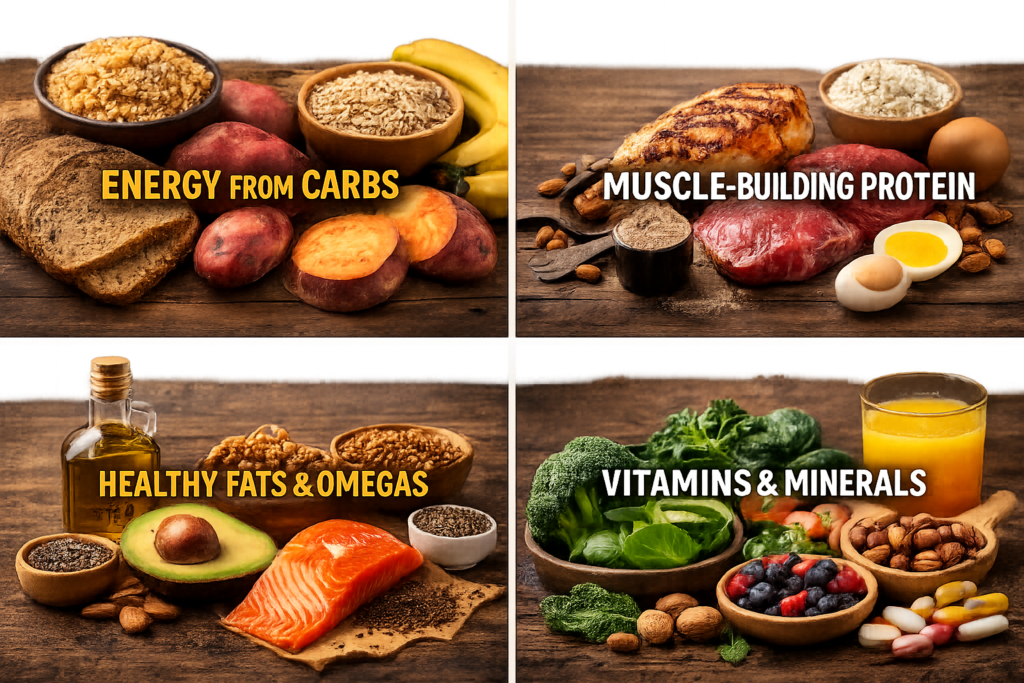
    Training builds the body—but nutrition builds the warrior. Without the right fuel, even the hardest workouts won’t deliver maximum strength, endurance, or recovery. Proper workout nutrition provides the energy to train harder, the nutrients to repair muscles, and the support your body needs to perform at its best.

    Whether your goal is muscle growth, fat loss, endurance, or military-level fitness, a balanced diet of carbohydrates, protein, healthy fats, vitamins, and minerals is essential.


    Why Nutrition Matters for Training

    Good nutrition helps you:

    • Increase strength and endurance
    • Build lean muscle mass
    • Recover faster after workouts
    • Prevent injuries and fatigue
    • Maintain energy throughout the day
    • Support overall health and performance

    A warrior’s performance depends not just on training intensity—but on how well the body is fueled.

    Proper Workout Nutrition

    Carbohydrates: Your Primary Energy Source

    Carbohydrates are the body’s main fuel for physical activity. They are stored as glycogen in muscles and used during intense training.

    Benefits of Carbs for Workouts

    • Provide quick and sustained energy
    • Improve endurance and performance
    • Prevent muscle breakdown during long sessions
    • Help recovery by restoring glycogen stores

    Good Sources

    • Rice, oats, whole wheat bread
    • Potatoes and sweet potatoes
    • Fruits (bananas, apples, dates)
    • Lentils and beans

    Tip: Eat carbs before workouts to maintain energy and avoid early fatigue.


    Protein: Muscle Builder and Repair Agent

    Protein is essential for muscle growth, recovery, and strength development.

    Benefits of Protein

    • Repairs muscle damage after training
    • Supports muscle growth and strength
    • Reduces soreness and speeds recovery
    • Helps maintain lean muscle during fat loss

    Good Sources

    • Eggs
    • Chicken, fish, lean meat
    • Milk, yogurt, cottage cheese
    • Lentils, chickpeas, beans

    Tip: Consume protein after workouts for optimal muscle recovery.


    Healthy Fats: Long-Lasting Energy and Hormone Support

    Fats are important for long-duration energy, joint health, and hormone production.

    Benefits of Healthy Fats

    • Provide sustained energy for endurance activities
    • Support testosterone and muscle-building hormones
    • Improve joint and heart health
    • Help absorb fat-soluble vitamins (A, D, E, K)

    Good Sources

    • Nuts and seeds
    • Olive oil, mustard oil
    • Avocados
    • Egg yolks
    • Fatty fish

    Tip: Don’t avoid fats—include them in moderation for balanced performance.


    Vitamins: Performance and Recovery Boosters

    Vitamins help regulate energy production, immunity, and muscle function.

    Key Vitamins for Warriors

    • Vitamin D – Bone strength and muscle function
    • Vitamin C – Recovery and immune support
    • Vitamin B-Complex – Energy metabolism
    • Vitamin A & E – Tissue repair and antioxidant protection

    Good Sources

    • Fruits and vegetables
    • Sunlight (for Vitamin D)
    • Dairy products
    • Whole grains

    Minerals: Strength, Hydration, and Muscle Function

    Minerals are critical for muscle contraction, hydration, and endurance.

    Important Minerals

    • Calcium – Bone strength and muscle function
    • Magnesium – Muscle relaxation and recovery
    • Iron – Oxygen transport and endurance
    • Potassium & Sodium – Electrolyte balance and hydration
    • Zinc – Recovery and immune health

    Good Sources

    • Milk and dairy products
    • Bananas and leafy greens
    • Nuts and seeds
    • Meat and legumes
    • Salt (in moderate amounts)

    Pre-Workout Nutrition (1–2 Hours Before)

    • Complex carbs + light protein
    • Example: Banana with peanut butter, oats with milk, or rice with eggs
    • Avoid heavy, oily foods

    This ensures steady energy without feeling sluggish.


    Post-Workout Nutrition (Within 30–60 Minutes)

    • Protein + fast-digesting carbs
    • Example: Milk with dates, eggs with toast, yogurt with fruit

    This helps repair muscles and restore energy quickly.


    Hydration: The Forgotten Fuel

    • Drink water throughout the day
    • Hydrate before, during, and after workouts
    • Dehydration reduces strength, endurance, and focus

    Common Nutrition Mistakes to Avoid

    ❌ Skipping meals before training
    ❌ Eating too little protein
    ❌ Avoiding carbs completely
    ❌ Relying on junk or processed foods
    ❌ Not drinking enough water


    Final Thoughts

    Training hard is only half the battle—proper workout nutrition is what turns effort into results. A warrior’s body needs the right balance of carbohydrates for energy, protein for strength, fats for endurance, and vitamins and minerals for recovery and performance.

    Instead of separating nutrients by meals, aim to include a balance of protein, complex carbohydrates, and healthy fats in every meal to support energy, performance, and recovery throughout the day. Eat clean, stay consistent, and fuel your body. When your nutrition matches your training, strength, stamina, and resilience will follow.

      Core Workouts: Building Strength from the Center

      Your core is the foundation of your body. It supports nearly every movement you perform—whether you’re lifting weights, running, maintaining posture, or performing daily activities. Strong core muscles improve balance, stability, and power, and reduce the risk of injuries, especially in the lower back. To train them, you need Core Workouts.

      Core workouts focus on strengthening the muscles around your abdomen, lower back, hips, and pelvis to create a stable and powerful center.


      What is the Core?

      The core is more than just the “abs.” It includes multiple muscles that work together to stabilize the spine and transfer force between the upper and lower body.

      Primary Core Muscles

      • Rectus Abdominis (six-pack muscles)
      • Transverse Abdominis (deep core stabilizer)
      • Internal Obliques
      • External Obliques

      Secondary Core Muscles

      • Erector Spinae (lower back)
      • Multifidus
      • Hip Flexors
      • Glutes
      • Pelvic Floor Muscles

      Benefits of Core Training

      • Improves balance and stability
      • Enhances athletic performance
      • Supports better posture
      • Reduces lower back pain and injury risk
      • Increases strength in compound exercises like squats and deadlifts
      • Improves overall body control and movement efficiency

      Best Core Exercises

      Beginner Exercises

      • Plank (20–30 seconds)
      • Dead Bug
      • Glute Bridge
      • Bird Dog
      • Heel Taps

      Intermediate Exercises

      • Hanging Knee Raises
      • Russian Twists
      • Side Plank
      • Reverse Crunches
      • Mountain Climbers

      Advanced Exercises

      • Hanging Leg Raises
      • Ab Wheel Rollouts
      • Dragon Flags
      • L-Sit Hold
      • Weighted Sit-Ups

      Training Frequency

      Beginners: 2–3 times per week
      Intermediate: 3–4 times per week
      Advanced: 4–5 times per week

      Allow at least 24–48 hours of recovery between intense core sessions.


      Common Core Training Mistakes

      ❌ Using momentum instead of controlled movement
      ❌ Pulling the neck during ab exercises
      ❌ Holding breath instead of controlled breathing
      ❌ Training only abs and ignoring the lower back and hips
      ❌ Rushing reps without proper form


      Tips for Effective Core Workouts

      • Keep your core braced and tight during every exercise
      • Focus on slow, controlled movements
      • Breathe properly—exhale during effort
      • Include both front, side, and posterior core exercises
      • Progress gradually by increasing time, reps, or resistance

      Final Thoughts

      A strong core is essential for strength, performance, and injury prevention. Instead of chasing only visible abs, focus on building a balanced and functional core. Consistent training, proper form, and gradual progression will help you develop a powerful foundation that improves every aspect of your fitness—perfect for building a true warrior body.

        Leg Workouts: Muscles, Benefits, and Best Exercises

        Leg workouts are the foundation of total-body strength. Strong legs improve athletic performance, increase power, support daily movement, and build overall stability. Whether your goal is muscle growth, endurance, or military-level fitness, training your lower body is essential.


        What Are Leg Workouts?

        Leg workouts focus on exercises that train the muscles of the lower body through movements like squatting, lunging, stepping, and hinging. These movements develop strength, balance, mobility, and functional power.

        Most leg exercises fall into two main movement patterns:

        • Squat movements – bending at the hips and knees (e.g., squats, lunges)
        • Hip hinge movements – bending at the hips with minimal knee movement (e.g., deadlifts, hip bridges)

        Training both patterns ensures complete lower-body development.


        Major Muscles Used in Leg Workouts

        Primary Muscles

        • Quadriceps
        • Hamstrings
        • Gluteus Maximus
        • Gluteus Medius

        Secondary Muscles

        • Calves (Gastrocnemius & Soleus)
        • Hip Flexors
        • Adductors (Inner Thigh)
        • Core Muscles
        • Lower Back Stabilizers

        Benefits of Leg Workouts

        • Builds lower-body strength and power
        • Improves running, jumping, and athletic performance
        • Increases balance and stability
        • Supports joint health and injury prevention
        • Boosts overall muscle growth and metabolism
        • Essential for military and functional fitness

        Best Leg Exercises

        Bodyweight Leg Exercises

        • Bodyweight Squats
        • Lunges
        • Step-ups
        • Glute bridges
        • Wall sits
        • Calf raises

        Weighted Leg Exercises

        • Barbell back squat
        • Front squat
        • Romanian deadlift
        • Goblet squat
        • Bulgarian split squat
        • Leg press

        Training Frequency

        • Beginners: 2 times per week
        • Intermediate: 2–3 times per week
        • Allow at least 48 hours of recovery between intense leg sessions.

        Tips for Effective Leg Workouts

        • Focus on proper form before increasing weight to protect your knees and lower back.
        • Prioritize compound movements like squats, lunges, and deadlifts for overall leg development.
        • Maintain a full range of motion to activate muscles completely and improve mobility.
        • Keep your core engaged during exercises for better balance and stability.
        • Control the movement and avoid rushing reps to maximize muscle activation.

        Common Leg Training Mistakes

        ❌ Skipping leg day
        ❌ Using shallow squat depth
        ❌ Letting knees collapse inward
        ❌ Ignoring hamstrings and glutes
        ❌ Rushing reps without control


        Final Thoughts

        Strong legs are the base of a strong body. Leg workouts improve power, endurance, balance, and overall performance. Train your lower body consistently and with proper form to build strength that supports every movement—on the field, in training, and in everyday life.

          Push Workouts: Muscles, Benefits, and Best Exercises

          Push workouts focus on movements that drive weight away from your body, building powerful chest, shoulder, and triceps strength. They are essential for upper-body power, muscle balance, and overall performance.


          What Are Push Workouts?

          Push workouts focus on movements where you push weight away from your body or push your body away from the ground or an object. These exercises develop the muscles responsible for pressing, extending the arms, and stabilizing the shoulders.

          Push training is essential for building upper-body strength, power, and muscular balance. Strong push muscles help in daily activities like pushing doors, lifting objects overhead, getting up from the ground, and improving overall athletic performance.

          Push movements are generally divided into two categories:

          • Horizontal pushing – pushing forward (e.g., push-ups, bench press)
          • Vertical pushing – pushing overhead (e.g., shoulder press, pike push-ups)

          A balanced training routine should include both push and pull workouts to prevent muscle imbalances and reduce injury risk.


          Major Push Muscles

          Primary Muscles

          • Pectoralis Major
          • Anterior Deltoid
          • Triceps Brachii

          Secondary Muscles

          • Lateral Deltoid
          • Serratus Anterior
          • Upper Chest (Clavicular Head)
          • Core Muscles (Rectus Abdominis, Obliques)
          • Rotator Cuff Muscles

          Benefits of Push Workouts

          • Builds strong chest, shoulders, and arms
          • Improves upper-body pushing power
          • Enhances shoulder stability
          • Supports better performance in sports, military training, and daily tasks
          • Creates a balanced physique when paired with pull training

          Best Push Exercises

          Bodyweight Push Exercises

          • Push-ups (standard, incline, decline)
          • Diamond push-ups
          • Pike push-ups
          • Dips
          • Wall push-ups (beginner-friendly)

          Strength Training Push Exercises

          • Bench press (barbell or dumbbell)
          • Incline bench press
          • Overhead shoulder press
          • Dumbbell chest press
          • Lateral raises
          • Triceps extensions
          • Chest flys

          Training Frequency

          Beginners: 1–2 times per week

          Intermediate: 2–3 times per week

          Advanced: 3–4 times per week

          Allow at least 48 hours of recovery between intense push sessions.


          Push Workout Tips

          • Keep your core tight during presses.
          • Avoid flaring elbows too wide during push-ups or bench press.
          • Focus on controlled reps, not speed.
          • Train push muscles 2–3 times per week.
          • Balance with pull workouts for shoulder health.

          Common Mistakes in Push Workouts

          ❌ Using excessive weight that compromises form
          ❌ Flaring the elbows too wide during pressing movements
          ❌ Not using a full range of motion on exercises
          ❌ Overarching the lower back during overhead or bench presses
          ❌ Skipping proper warm-up and shoulder mobility before training


          Final Thoughts

          Push workouts are the foundation of upper-body strength. Whether your goal is building muscle, improving athletic performance, or preparing for military fitness tests, strong push muscles will enhance your power, stability, and overall physique. Combine push training with pull and leg workouts to build a complete warrior body.

            Pull Workouts: Muscles Worked, Benefits, and Best Exercises

            Pull workouts focus on movements where you pull the weight toward your body. These workouts are essential for building a strong back, powerful arms, and balanced upper-body strength. Pull exercises also improve posture, grip strength, and functional power in real-world settings.


            What Are Pull Workouts?

            Pull workouts focus on movements where you pull resistance toward your body or pull your body toward an object. These exercises primarily train the muscles of the back, biceps, rear shoulders, and forearms, which are responsible for pulling, gripping, and stabilizing the upper body.

            In daily life and athletic performance, pull strength is essential for actions like climbing, lifting objects, carrying loads, rope work, and maintaining good posture. For soldiers and athletes—especially for goals like pull-ups, rope climbing, and obstacle courses—strong pulling muscles are critical.

            Pull workouts usually involve two main movement patterns:

            • Vertical pulling – pulling your body upward (e.g., pull-ups, chin-ups, lat pulldowns)
            • Horizontal pulling – pulling weight toward your torso (e.g., rows, inverted rows, resistance band rows)

            A well-balanced fitness routine should include both push and pull workouts to develop strength evenly and prevent muscle imbalances.


            Muscles Used in Pull Workouts

            Primary Muscles

            • Latissimus dorsi (lats) – width and pulling power
            • Trapezius – upper-back strength and posture
            • Rhomboids – shoulder blade control
            • Biceps brachii – elbow flexion
            • Forearms – grip strength

            Secondary Muscles

            • Rear deltoids
            • Core muscles
            • Lower back stabilizers

            A strong pull chain creates balance and protects the shoulders.


            Benefits of Pull Workouts

            • Build a strong, wide back (V-shape)
            • Improve grip strength and arm power
            • Enhance shoulder stability and injury prevention
            • Correct posture by counteracting excessive pushing movements (like push-ups and bench press

            Best Pull Exercises

            Bodyweight Pull Exercises

            • Pull-ups
            • Chin-ups
            • Inverted rows
            • Dead hangs

            Free-Weight Pull Exercises

            • Barbell rows
            • Dumbbell rows
            • Romanian deadlifts
            • Barbell curls

            Machine & Cable Pull Exercises

            • Lat pulldowns
            • Seated cable rows
            • Face pulls
            • Cable curls

            How Often Should You Train Pull Muscles?

            • Beginners: 2 times per week
            • Intermediate: 2–3 times per week
            • Advanced: Based on split and recovery

            Avoid training pull muscles hard on consecutive days.


            Common Pull Workout Mistakes

            ❌ Using momentum instead of controlled pulls
            ❌ Neglecting full range of motion
            ❌ Overtraining arms but ignoring back
            ❌ Poor grip or loose shoulder positioning


            Final Thoughts

            Pull workouts are essential for developing strength, balance, and resilience. A strong pull chain supports posture, protects the shoulders, and improves performance across all sports and daily activities. Train pull movements with intention, control, and consistency to build a true warrior back.

              How to Do Sit-Ups Correctly: Step-by-Step Guide for Beginners

              Learn how to do sit-ups with perfect form, avoid common mistakes, and discover the best sit-up variations to build real core strength and endurance.

              Sit-ups are one of the most effective bodyweight exercises for developing stronger abdominal muscles, improving core stability, and increasing muscular endurance. Whether you are training for military fitness tests, athletic performance, or general fitness, mastering the sit-up is essential.


              What Is a Sit-Up?

              A sit-up is a bodyweight exercise where you lie on your back and raise your upper body toward your knees before lowering yourself back down.

              The sit-up is considered one of the best exercises for developing abdominal strength and endurance because it trains multiple core muscles simultaneously.

              Sit-ups are commonly used in:

              • Military fitness tests
              • Strength and conditioning programs
              • Athletic training routines
              • General fitness workouts

              Unlike machine-based exercises, sit-ups develop functional core strength that transfers directly to sports and everyday activities.

              Benefits of Sit-Ups

              Sit-ups are one of the most effective exercises for developing core strength.

              Benefits include:

              • Strengthens the abdominal muscles
              • Improves core endurance
              • Enhances posture and stability
              • Supports athletic performance
              • Requires no equipment
              • Essential for many military fitness tests

              Few exercises challenge the core as effectively as the sit-up.

              Muscles Worked in Sit-Ups

              Sit-ups activate several major core muscles simultaneously.

              Primary Muscles

              • Rectus Abdominis
              • Hip Flexors

              Secondary Muscles

              • Obliques
              • Transverse Abdominis
              • Lower Back Stabilizers
              • Quadriceps

              Because of this muscle activation, sit-ups are one of the best exercises for developing abdominal endurance.


              How to Do Sit-Ups (Step-by-Step)

              Step 1: Lie Flat on Your Back

              Begin with:

              • Knees bent
              • Feet flat on the floor
              • Arms crossed over your chest or hands lightly touching your temples

              Tip: Avoid pulling on your neck during the movement.

              Step 2: Engage Your Core

              Before lifting:

              • Tighten your abdominal muscles
              • Keep your lower back neutral
              • Maintain relaxed shoulders

              This helps create a strong and stable starting position.

              Step 3: Lift Your Upper Body

              Raise your torso toward your knees.

              Focus on:

              • Leading with your chest
              • Keeping the movement smooth
              • Engaging your abs throughout

              Avoid using momentum.

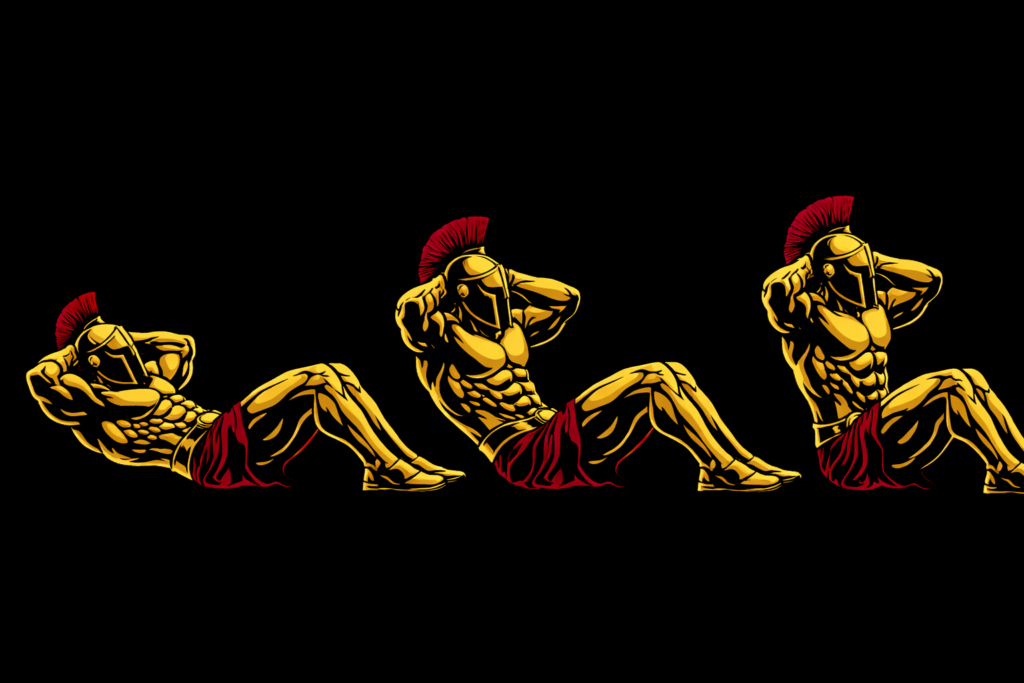
              Warrior showcasing How to do Sit-ups with proper form

              Step 4: Reach the Top Position

              At the top:

              • Your chest approaches your thighs
              • Core remains engaged
              • Neck stays neutral

              Pause briefly while maintaining control.

              Step 5: Lower Yourself Slowly

              Return to the starting position under control.

              Avoid dropping quickly.

              Repeat for the desired number of repetitions.


              Sit-Up Form Checklist

              Use this quick checklist to ensure perfect sit-up form.

              • Keep your core engaged
              • Maintain a neutral neck position
              • Use controlled repetitions
              • Avoid excessive momentum
              • Lower slowly between reps

              Perfect form builds strength faster and prevents injury.


              Common Sit-Up Mistakes

              Pulling on the Neck

              Problem: Causes neck strain.

              Fix: Keep your hands light and focus on lifting with your core.

              Using Momentum

              Problem: Reduces abdominal activation.

              Fix: Perform each repetition slowly and under control.

              Holding Your Breath

              Problem: Reduces endurance and stability.

              Fix: Exhale while sitting up and inhale while lowering.

              Rushing the Movement

              Problem: Limits muscle engagement.

              Fix: Focus on controlled repetitions.

              Partial Repetitions

              Problem: Reduces effectiveness.

              Fix: Use a full range of motion whenever possible.

              Quality reps always beat high numbers.


              Sit-Up Variations

              Once you master the basic sit-up, different variations can help build strength and increase difficulty.

              Crunches

              A beginner-friendly variation.

              How to Do Crunches

              • Lift only your shoulders off the floor
              • Keep your lower back on the ground
              • Lower slowly with control

              Crunches place less stress on the hip flexors.

              Butterfly Sit-Ups

              Improves mobility and range of motion.

              How to Do Butterfly Sit-Ups

              • Bring the soles of your feet together
              • Allow your knees to fall outward
              • Perform the sit-up normally

              This variation is commonly used in functional fitness programs.

              Weighted Sit-Ups

              Adds resistance for greater strength gains.

              How to Do Weighted Sit-Ups

              • Hold a weight plate or medicine ball
              • Perform the movement under control
              • Maintain proper form throughout

              This variation increases core strength.

              V-Ups

              An advanced variation that challenges the entire core.

              How to Do V-Ups

              • Raise your legs and upper body simultaneously
              • Reach toward your feet
              • Lower slowly with control

              This variation develops total abdominal strength.


              Final Thoughts

              The sit-up is one of the most effective exercises you can master to develop a strong, enduring core.

              It builds:

              • Abdominal strength
              • Core endurance
              • Hip flexor strength
              • Postural stability
              • Functional athletic performance

              Progress may feel slow at first, especially for beginners. However, with consistent training and proper form, your core strength and endurance will steadily improve. Learn more about Core Workouts here.

              One controlled repetition is always better than ten sloppy reps.

              Focus on quality repetitions, full range of motion, and controlled movement.

              A warrior’s strength begins at his center.


              Sit-Up FAQ

              Q1: Are sit-ups good for beginners?
              Yes. Sit-ups are beginner-friendly and can be modified to suit different fitness levels.

              Q2: Are sit-ups better than crunches?
              Sit-ups involve a larger range of motion and recruit more muscles, while crunches place greater emphasis on the abdominal muscles with less hip flexor involvement.

              Q3: How often should I do sit-ups?
              You can train sit-ups 2–5 times per week depending on your recovery and overall training volume.

                How to Do Squats Correctly: Step-by-Step Guide for Beginners

                Learn how to do squats with perfect form, avoid common mistakes, and discover the best squat variations to build real lower-body strength.

                Squats are one of the most effective bodyweight exercises for developing powerful legs, strong glutes, and functional athletic strength. Whether you are training for military fitness tests, sports performance, or general fitness, mastering the squat is essential.


                What Is a Squat?

                A squat is a lower-body exercise where you bend at the hips and knees to lower your body before returning to a standing position.

                The squat is considered one of the best exercises because it trains multiple muscle groups simultaneously while improving balance, mobility, and coordination.

                Squats are commonly used in:

                • Military fitness training
                • Strength and conditioning programs
                • Athletic performance training
                • General fitness routines

                Unlike many machine exercises, squats build real-world strength that transfers directly to daily activities and sports.

                Benefits of Squats

                Squats are one of the most powerful exercises for developing lower-body strength.

                Benefits include:

                • Builds strong legs and glutes
                • Improves athletic performance
                • Enhances balance and coordination
                • Strengthens the core and lower back
                • Increases lower-body endurance
                • Essential for military and tactical fitness

                Few exercises challenge the lower body as effectively as the squat.

                Muscles Worked in Squats

                Squats activate several major muscle groups simultaneously.

                Primary Muscles

                • Quadriceps
                • Glutes
                • Hamstrings

                Secondary Muscles

                • Core Muscles (Abdominals and Obliques)
                • Calves
                • Lower Back (Erector Spinae)
                • Hip Stabilizers

                Because of this muscle activation, squats are one of the best exercises for developing total lower-body strength.


                How to Do Squats (Step-by-Step)

                Step 1: Stand With Feet Shoulder-Width Apart

                Stand upright with:

                • Feet approximately shoulder-width apart
                • Toes pointed slightly outward
                • Chest up
                • Core engaged

                Tip: Find a stance that feels natural and comfortable.

                Step 2: Initiate the Movement

                Begin by pushing your hips backward as if sitting into a chair.

                At the same time:

                • Bend your knees
                • Keep your chest upright
                • Maintain a neutral spine

                This helps distribute the load properly.

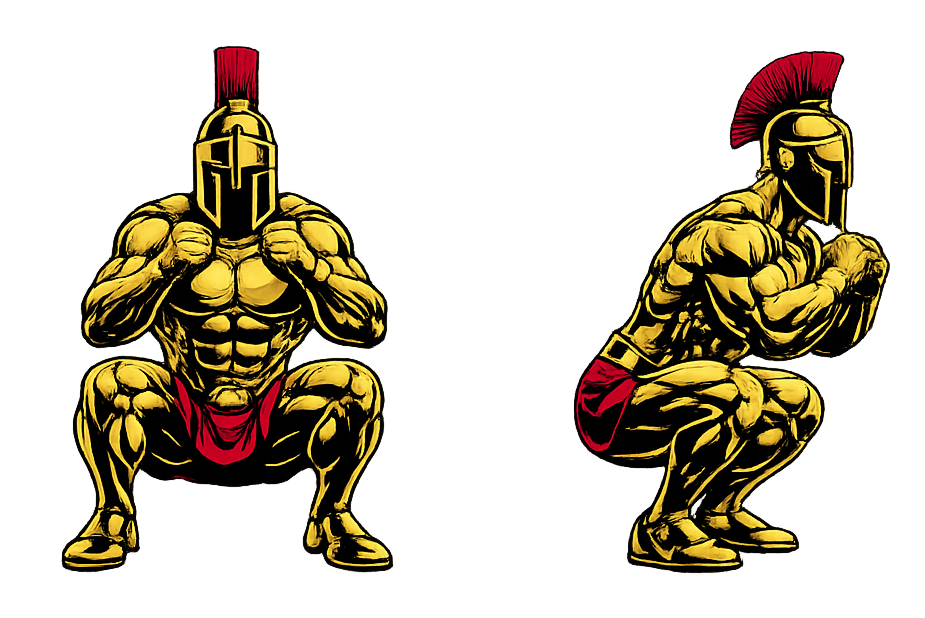
                Warrior showing How to do Squats with proper form

                Step 3: Lower Into the Squat

                Continue lowering until your thighs are at least parallel to the ground.

                Focus on:

                • Knees tracking over toes
                • Heels staying planted
                • Core remaining tight

                Step 4: Reach the Bottom Position

                At the bottom of the squat:

                • Chest remains upright
                • Heels stay on the floor
                • Spine remains neutral

                Pause briefly while maintaining control.

                Warrior showing How to do Squats with proper form

                Step 5: Drive Back Up

                Push through your heels and stand back up.

                Focus on:

                • Extending hips and knees together
                • Maintaining posture
                • Finishing in a tall standing position

                Repeat for the desired number of repetitions.


                Squat Form Checklist

                Use this quick checklist to ensure perfect squat form.

                • Keep your chest up
                • Maintain a neutral spine
                • Keep heels planted
                • Track knees over toes
                • Use a full range of motion

                Perfect form builds strength faster and prevents injury.


                Common Squat Mistakes

                Heels Lifting Off the Ground

                Problem: Reduces stability and power.

                Fix: Focus on keeping your weight through your heels and midfoot.

                Knees Collapsing Inward

                Problem: Places stress on the knees.

                Fix: Actively push your knees outward in line with your toes.

                Rounding the Lower Back

                Problem: Increases injury risk.

                Fix: Keep your core engaged and chest upright.

                Shallow Squats

                Problem: Limits muscle development.

                Fix: Lower until your thighs reach at least parallel.

                Looking Down

                Problem: Encourages poor posture.

                Fix: Keep your eyes focused straight ahead.

                Good squats are built on quality movement, not speed.


                Squat Variations

                Once you master the basic squat, different variations can help build strength, improve mobility, and increase difficulty.

                Half Squats

                A beginner-friendly variation that develops confidence and movement mechanics.

                How to Do Half Squats

                • Lower halfway down
                • Maintain proper posture
                • Return to standing

                This variation is useful for beginners learning squat mechanics.

                Jump Squats

                Adds explosive power and athletic conditioning.

                How to Do Jump Squats

                • Perform a standard squat
                • Explode upward into a jump
                • Land softly and immediately control the next repetition

                Jump squats develop lower-body power and athleticism.

                Bulgarian Split Squats

                Builds unilateral strength and balance.

                How to Do Bulgarian Split Squats

                • Place one foot behind you on an elevated surface
                • Lower into a split squat
                • Drive back upward through the front leg

                This variation challenges each leg independently.

                Pause Squat

                An advanced variation of squats.

                How to DoPause Squats

                • Lower into a squat with full control
                • Pause for 2–3 seconds at the bottom
                • Maintain tension and balance
                • Drive up powerfully to standing

                Pistol Squats

                An advanced bodyweight squat variation.

                How to Do Pistol Squats

                • Stand on one leg
                • Extend the opposite leg forward
                • Lower under control and return to standing

                Pistol squats require strength, balance, and mobility.

                Goblet Squat

                A weighted squat variation.

                How to Do Goblet Squats

                • Hold a dumbbell or kettlebell close to your chest
                • Keep elbows pointing downward
                • Squat down while keeping your torso upright
                • Lower under control, then push through heels to stand

                Best for: Improving depth, posture, and core stability

                Barbell Back Squat

                A weighted squat variation.

                How to Do Barbell Back Squats

                • Place the barbell across the upper back (not the neck)
                • Brace your core and keep your chest up
                • Push your hips back and squat down steadily
                • Drive upward through heels to stand tall

                Best for: Building leg strength and overall power

                Front Squat

                A weighted squat variation.

                How to Do Front Squats

                • Rest the barbell across the front of your shoulders
                • Keep elbows high and core tight
                • Squat down while maintaining an upright torso
                • Push through mid-foot to return to standing

                Best for: Quad strength, core engagement, and posture


                Final Thoughts

                The squat is one of the most powerful lower-body exercises you can master.

                It builds:

                • Leg strength
                • Glute strength
                • Core stability
                • Athletic performance
                • Functional movement ability

                Progress may feel slow at first, especially if mobility or strength is limited. However, with consistent training and proper form, your squat strength will steadily improve. Learn more about Leg Workouts here.

                One perfect squat is always better than ten sloppy reps.

                Focus on quality repetitions, full range of motion, and controlled movement.

                A warrior stands strong because his foundation is strong.


                Squat FAQ

                Q1: How many squats should a beginner do?
                Most beginners can start with 10–15 repetitions per set. Focus on perfect form before increasing volume.

                Q2: Are squats enough to build strong legs?
                Squats are one of the best lower-body exercises, but combining them with lunges, step-ups, and other movements can produce even better results.

                Q3: How often should I do squats?
                You can train squats 2–4 times per week depending on your recovery, goals, and overall training volume.
                  How to Do a Pull-Up Correctly: Step-by-Step Guide for Beginners

                  Learn how to do a pull-up with perfect form, avoid common mistakes, and discover the best pull-up variations to build real upper-body strength.

                  Pull-ups are one of the most effective bodyweight exercises for developing a strong back, powerful arms, and elite functional strength. Whether you are training for military fitness tests, calisthenics, or athletic performance, mastering the pull-up is essential.


                  What Is a Pull-Up?

                  A pull-up is a bodyweight exercise where you hang from a bar with your palms facing away from you, then pull your body upward until your chin clears the bar.

                  The pull-up is considered one of the best upper-body exercises because it trains multiple muscle groups at once while developing true body control.

                  Pull-ups are commonly used in:

                  • Military fitness tests
                  • Calisthenics training
                  • Strength and conditioning programs
                  • Athletic performance training

                  Unlike many gym machines, pull-ups build real-world strength that translates directly into athletic ability.

                  Benefits of Pull-Ups

                  Pull-ups are one of the most powerful exercises for building functional upper-body strength.

                  Benefits include:

                  • Builds a wide and powerful back
                  • Increases grip strength
                  • Improves posture and shoulder health
                  • Develops functional pulling strength
                  • Strengthens arms, shoulders, and core
                  • Essential for military and tactical fitness tests

                  Few exercises challenge the upper body as effectively as the pull-up.

                  Muscles Worked in Pull-Ups

                  Pull-ups activate several major upper-body muscle groups simultaneously.

                  Primary Muscles
                  • Latissimus Dorsi (Lats)
                  • Biceps Brachii
                  • Rhomboids
                  • Middle Trapezius
                  Secondary Muscles
                  • Rear Deltoids
                  • Forearms and Grip Muscles
                  • Lower Trapezius
                  • Teres Major
                  • Core Muscles (Abdominals and Obliques)

                  Because of this muscle activation, pull-ups are one of the best exercises for developing a strong V-shaped back.


                  How to Do a Pull-Up (Step-by-Step)

                  Step 1: Grip the Pull-Up Bar

                  Grab the bar with your palms facing away from you and hands about shoulder-width apart.

                  Tip: Squeeze the bar tightly to activate your forearms and upper back.

                  Step 2: Start in a Dead Hang

                  Begin from a full dead hang with:

                  • Arms fully extended
                  • Shoulders pulled slightly down
                  • Core tight
                  • Legs still with no swinging

                  This position ensures a full range of motion.

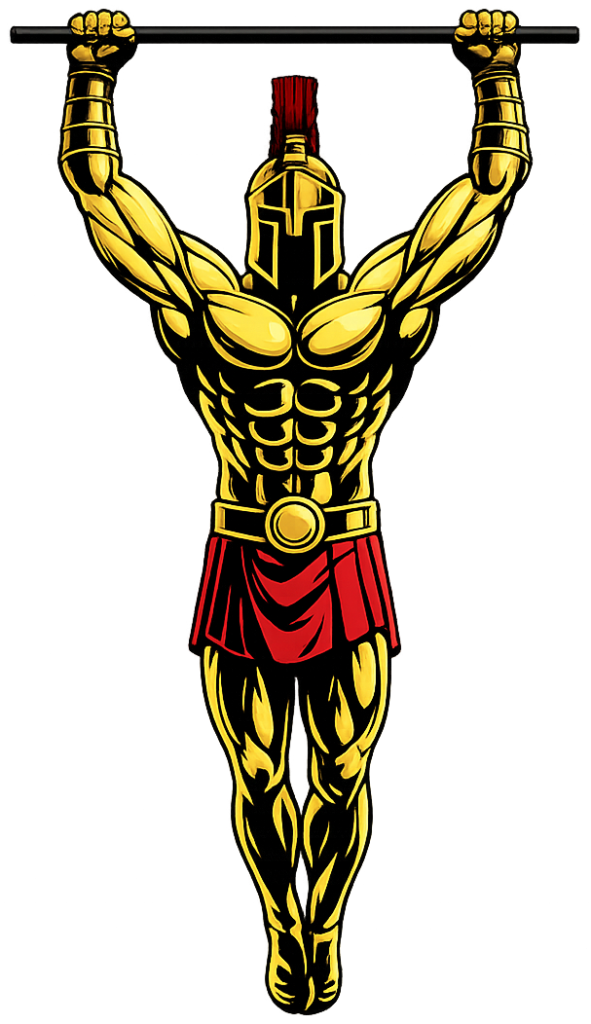
                  Warrior showing How to do a Pull-Up

                  Step 3: Pull Your Chest Toward the Bar

                  Pull yourself upward by driving your elbows down and back.

                  Focus on pulling your chest toward the bar, not just lifting your chin.

                  Step 4: Chin Over the Bar

                  At the top of the pull-up:

                  • Chin clears the bar
                  • Chest stays open
                  • Core remains tight

                  Pause briefly to maintain control.

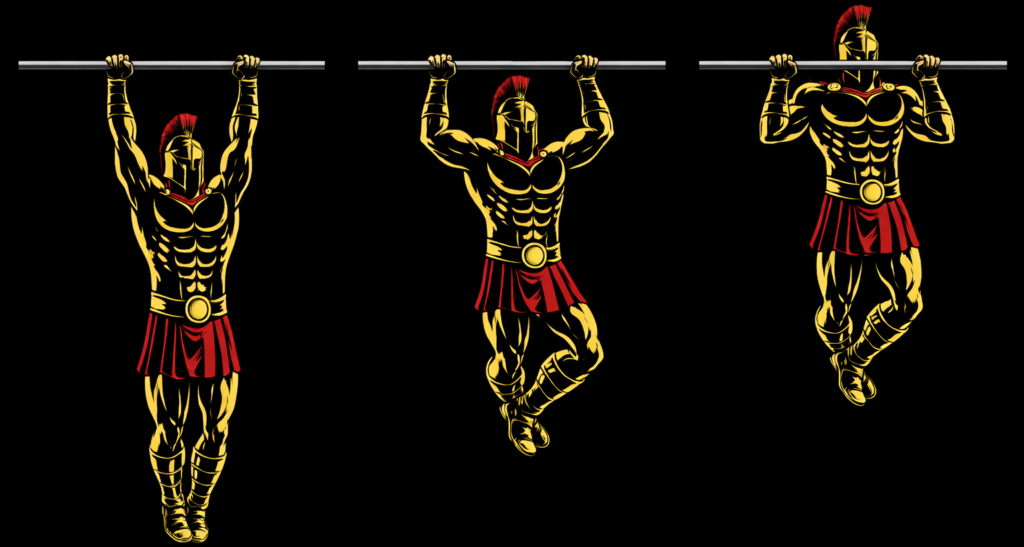
                  Warrior Showcasing How to do a Pull-up Progressively

                  Step 5: Lower With Control

                  Slowly lower yourself back to the dead hang position.

                  Avoid dropping quickly. The negative portion of the pull-up builds significant strength.


                  Pull-Up Form Checklist

                  Use this quick checklist to ensure perfect pull-up form.

                  • Start from an active hang
                  • Keep your core tight and body straight
                  • Pull your chest toward the bar
                  • Use a full range of motion
                  • Control every rep

                  Perfect form builds strength faster and prevents injury.


                  Common Pull-Up Mistakes

                  Swinging or Kipping

                  Problem: Using momentum reduces strength development.

                  Fix: Keep your core tight and body stable during each rep.

                  Half Reps

                  Problem: Not fully extending the arms at the bottom.

                  Fix: Lower completely until arms are straight.

                  Pulling With Arms Only

                  Problem: Overusing the biceps.

                  Fix: Start each rep by pulling your shoulder blades down and back.

                  Rushing the Movement

                  Problem: Fast reps reduce muscle activation.

                  Fix: Use a controlled tempo:

                  • 1–2 seconds up
                  • 2–3 seconds down

                  Clean reps always beat high numbers.


                  Pull-Up Variations

                  Once you master the basic pull-up, different variations can help build strength, target new muscles, and increase difficulty.

                  Assisted Pull-Ups (Beginner Variation)

                  Assisted pull-ups help beginners build strength until they can perform strict pull-ups.

                  How to Do Assisted Pull-Ups

                  • Attach a resistance band to the bar
                  • Place your foot or knee inside the band
                  • Perform the pull-up while the band assists your upward movement

                  This is one of the best ways to progress toward your first strict pull-up.

                  Negative Pull-Ups (Eccentric Reps)

                  Negative reps focus on the lowering (eccentric) phase of the pull-up, which is one of the most effective ways to build strength if you can’t yet perform full reps.

                  How to Do Negative Pull-Ups

                  • Jump or step up to the top position with your chin above the bar
                  • Hold briefly, then lower yourself as slowly as possible
                  • Reset and repeat, maintaining control on every descent

                  Negative pull-ups are one of the fastest ways to build the strength needed for your first strict pull-up and improve overall control.

                  Chin-Ups

                  Chin-ups are similar to pull-ups but use an underhand grip, which increases bicep involvement.

                  How to Do Chin-Ups

                  • Grab the bar with palms facing toward you
                  • Pull your chest upward while keeping your elbows close to your body
                  • Lower yourself slowly back to the dead hang

                  Chin-ups are often easier for beginners and great for building pulling strength.

                  Wide-Grip Pull-Ups

                  Wide-grip pull-ups emphasize the lats and upper back, helping build a wider back.

                  How to Do Wide-Grip Pull-Ups

                  • Grip the bar wider than shoulder width
                  • Pull your chest upward while keeping your body straight
                  • Lower yourself slowly with full control

                  This variation reduces bicep assistance and increases lat activation.

                  Close-Grip Pull-Ups

                  Close-grip pull-ups place more emphasis on the arms and lower lats.

                  How to Do Close-Grip Pull-Ups

                  • Grab the bar with hands closer than shoulder width
                  • Pull upward while keeping elbows close to your torso
                  • Lower slowly back to the starting position

                  Final Thoughts

                  The pull-up is one of the most powerful bodyweight strength exercises you can master.

                  It builds:

                  • Back strength
                  • Arm strength
                  • Grip strength
                  • Core stability
                  • Functional athletic power

                  Progress may feel slow at first, especially for beginners. However, with consistent training, proper form, and progressive variations, your pull-up strength will steadily improve. One clean rep is always better than ten sloppy ones. Learn more about Pull Workoutshere.

                  Focus on quality repetitions, full range of motion, and controlled movement.

                  A warrior lifts his body with control — never with shortcuts.


                  Pull-Up FAQ

                  Q1: How many pull-ups should a beginner aim for?
                  Most beginners start with 0–3 pull-ups. Focus on assisted pull-ups, dead hangs, and negatives. With consistent training, reaching 5–8 clean reps is a solid early goal.

                  Q2: Are pull-ups better than lat pulldowns?
                  Pull-ups are generally more effective because they train real bodyweight strength, grip, and core stability. Lat pulldowns can help beginners build strength, but pull-ups offer superior functional carryover.

                  Q3: How often should I do pull-ups to improve?
                  You can train Pull-ups 2–4 times per week, depending on recovery. Avoid daily max-effort attempts; instead, use submaximal sets and proper rest to build strength safely.

                    How to Do a Push-Up Correctly: Step-by-Step Guide for Beginners

                    Learn how to do a push-up with perfect form, avoid common mistakes, and discover the best push-up variations to build real upper-body strength.

                    The push-up is one of the most effective bodyweight exercises ever created. It builds strength in the chest, shoulders, triceps, and core while improving endurance and full-body stability.

                    Whether you’re training for military fitness tests, calisthenics, or general strength, mastering the push-up is a fundamental step in building functional power.


                    What Is a Push-Up?

                    A push-up is a classic bodyweight exercise in which you lower your body toward the ground and push back up while maintaining a straight plank position.

                    Push-ups train multiple muscle groups simultaneously and require no equipment, making them one of the most accessible strength exercises.

                    They are widely used in:

                    • Military fitness training
                    • Calisthenics programs
                    • Athletic conditioning
                    • Home workouts

                    Although push-ups appear simple, proper push-up form is essential. Many beginners struggle not because of weakness, but because of incorrect technique.

                    Learning proper push-up form will help you build strength faster, prevent injury, and progress to more advanced variations.

                    Remember: Form builds muscle, not reps.


                    Benefits of Push-Ups

                    Push-ups are a foundational exercise for developing upper-body strength and endurance.

                    Key benefits include:

                    • Builds chest, shoulder, and triceps strength
                    • Improves posture and shoulder stability
                    • Strengthens the core and lower back
                    • Requires no equipment
                    • Can be performed anywhere
                    • Develops functional upper-body power

                    Because of their effectiveness, push-ups are a core exercise in military and tactical fitness training.

                    Muscles Worked in Push-Ups

                    Push-ups train multiple upper-body and core muscles at once.

                    Primary Muscles
                    • Chest (Pectoralis Major)
                    • Shoulders (Anterior Deltoids)
                    • Triceps
                    Secondary Muscles
                    • Core (Abdominals and Obliques)
                    • Lower Back
                    • Glutes
                    • Serratus Anterior

                    This makes push-ups one of the best compound bodyweight exercises for building total upper-body strength.


                    How to Do a Push-Up Correctly (Step-by-Step)

                    Step 1: Get Into the Starting Position

                    Place your hands slightly wider than shoulder-width apart.

                    • Fingers pointing forward
                    • Feet together or slightly apart
                    • Body in a straight line from head to heels

                    Imagine your body forming a solid plank.

                    Step 2: Brace Your Core

                    Before lowering your body:

                    • Tighten your abdominal muscles
                    • Squeeze your glutes
                    • Keep your spine neutral

                    A strong core prevents your hips from sagging or rising.

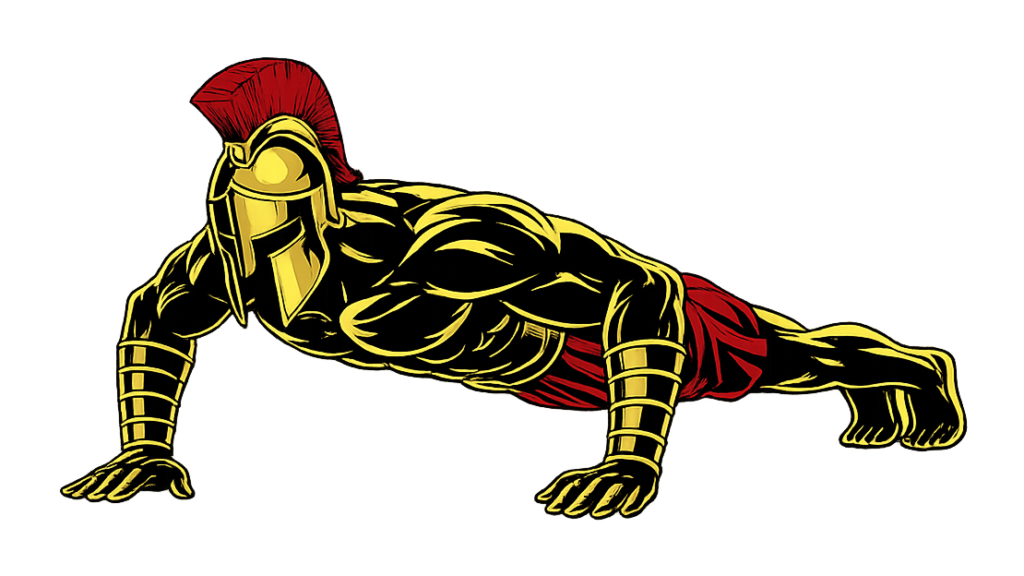
                    Warrior Showcasing How to do a Push-Up properly

                    Step 3: Lower Your Body

                    Bend your elbows and lower your chest toward the floor.

                    • Keep elbows at a 30–45° angle
                    • Maintain a straight body line
                    • Keep your neck neutral

                    Lower until your chest is just above the floor.

                    Step 4: Push Back Up

                    Push through your palms and extend your arms.

                    • Keep your body straight
                    • Engage your chest and triceps
                    • Lock out your arms at the top

                    This completes one perfect push-up repetition.

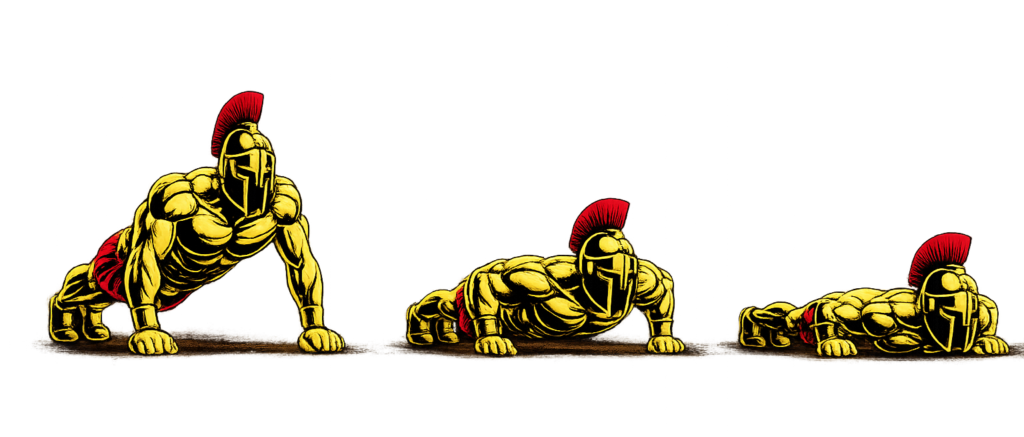
                    Warrior showing How to do a Push-Up progressively

                    Push-Up Proper Form Checklist

                    Use this checklist to ensure perfect push-up technique.

                    • Maintain a straight body line
                    • Keep your core and glutes tight
                    • Lower your chest close to the floor
                    • Keep elbows slightly tucked
                    • Move with controlled tempo

                    Quality always beats quantity.


                    Common Push-Up Mistakes (And How to Fix Them)

                    Sagging Hips

                    Problem: Weak core causes hips to drop.

                    Fix: Tighten your abs and glutes to maintain a plank position.

                    Flared Elbows

                    Problem: Elbows pointing outward increases shoulder stress.

                    Fix: Keep elbows at 30–45° from your torso.

                    Half Reps

                    Problem: Not lowering fully reduces muscle activation.

                    Fix: Lower until your chest is just above the ground.

                    Dropping the Head

                    Problem: Looking upward strains the neck.

                    Fix: Keep your neck neutral and gaze slightly forward.

                    Rushing the Movement

                    Problem: Fast reps reduce strength development.

                    Fix: Use a controlled tempo:

                    • 2 seconds down
                    • 1 second up

                    Push-Up Variations

                    Once you master the basic push-up, different variations can help you build strength and target different muscle groups.

                    Knee Push-Ups (Beginner)

                    Knee push-ups reduce bodyweight load and are perfect for beginners.

                    How to Do Knee Push-Ups

                    • Start in a push-up position with knees on the ground
                    • Keep your body straight from knees to head
                    • Lower your chest and push back up

                    Incline Push-Ups

                    Incline push-ups reduce difficulty by elevating your hands.

                    How to Do Incline Push-Ups

                    • Place hands on a bench, chair, or wall
                    • Keep your body straight
                    • Lower your chest toward the surface and push back up

                    This variation is excellent for beginners and for building strength.

                    Decline Push-Ups

                    Decline push-ups increase difficulty and emphasize the upper chest and shoulders.

                    How to Do Decline Push-Ups

                    • Place your feet on a bench or elevated surface
                    • Hands remain on the floor
                    • Lower your chest and push back up

                    Diamond Push-Ups

                    Diamond push-ups focus heavily on the triceps.

                    How to Do Diamond Push-Ups

                    • Place hands close together, forming a diamond shape
                    • Keep elbows close to your body
                    • Lower your chest and push upward

                    Wide Push-Ups

                    Wide push-ups increase chest activation.

                    How to Do Wide Push-Ups

                    • Place hands wider than shoulder-width
                    • Lower your chest while keeping your body straight
                    • Push back up with control

                    Weighted Push-Ups

                    An advanced push-up variation that increases resistance by adding extra weight to your back.

                    How to Do Weighted Push-Ups

                    • Place a weighted backpack or weight plate securely on your upper back.
                    • Perform a standard push-up while keeping your core tight and body in a straight line.
                    • Lower your chest close to the floor, then push back up with full control.

                    Explosive Push-Ups

                    Explosive push-ups develop power and athletic performance.

                    How to Do Explosive Push-Ups

                    • Lower your chest toward the floor
                    • Push upward as fast as possible
                    • Hands may briefly leave the ground

                    Final Thoughts

                    The push-up is one of the most effective bodyweight exercises for building upper-body strength, endurance, and core stability.

                    With proper form and consistent practice, push-ups will strengthen:

                    • Chest
                    • Shoulders
                    • Triceps
                    • Core

                    Progress takes time, but small improvements in technique and strength add up quickly. Learn more about Push Workouts here.

                    Focus on clean repetitions, full range of motion, and disciplined training.

                    Master the push-up, and you build the foundation for advanced calisthenics and true functional strength.


                    FAQ

                    Q1. How many push-ups should a beginner do?
                    Start with 2–3 sets of 8–12 reps, focusing on proper form rather than high numbers.

                    Q2. Can I do push-ups every day?
                    Yes, but beginners should train them 3–5 times per week and allow rest if muscles feel overly sore.

                    Q3. What if I can’t do a full push-up yet?
                    Begin with incline push-ups or knee push-ups and gradually progress to full push-ups as your strength improves.