Fat-Loss Nutrition: What, How & When to Eat for Maximum Results

Fuel Like a Warrior. Burn Fat. Build Strength.


Introduction

Training is only half the battle.
If your nutrition is weak, your results will be weak.

Fat loss doesn’t come from starving yourself—it comes from strategic fueling that forces your body to burn fat while preserving (and even building) muscle.

This is your complete guide to eating like a warrior.


1. The Golden Rule of Fat Loss

To lose fat, you must be in a calorie deficit.

That means:

  • You burn more calories than you consume

But here’s where most people fail…

They cut calories too aggressively → lose muscle → slow metabolism → look worse.

Warrior Rule:
Lose fat. Keep muscle. Stay strong.


2. What to Eat

Protein (Your #1 Weapon)

Protein preserves muscle and increases fat loss.

Best Sources:

  • Eggs
  • Chicken
  • Beef
  • Fish
  • Daal (lentils)
  • Yogurt

Target:
1.6 – 2.2g per kg bodyweight daily

Carbohydrates (Fuel for Performance)

Carbs are NOT the enemy—they fuel your workouts.

Best Sources:

  • Rice
  • Roti
  • Oats
  • Potatoes
  • Fruits

Rule:
Eat carbs around training, not all day.

Fats (Hormone Control)

Healthy fats keep your body functioning properly.

Sources:

  • Nuts
  • Olive oil
  • Egg yolks

Keep moderate—not excessive.


3. How to Eat (Structure & Strategy)

The Perfect Plate Method

Each meal should look like:

  • 40% Protein
  • 30% Carbs
  • 30% Vegetables/Fats

Meal Frequency

You don’t need 6 meals a day.

3–4 solid meals are enough

Consistency matters more than timing.

Hydration Rule

  • 3–4 liters of water daily
  • More if you train hard

Dehydration slows fat loss.


4. Whento Eat (Timing for Maximum Fat Loss)

Pre-Workout (1–2 Hours Before)

  • Protein + Carbs
  • Example: Eggs + roti OR chicken + rice

Fuel your battle.

Post-Workout (Within 1 Hour)

  • Protein + fast-digesting carbs

Example:

  • Chicken + rice
  • Eggs + toast

Recover and rebuild.

Night Eating

  • Light protein-based meal
  • Avoid heavy carbs late at night

5. Fat-Loss Mistakes (Avoid These)

❌ Starving yourself
❌ Skipping protein
❌ Drinking calories (soft drinks, juices)
❌ Eating junk “in moderation” (it adds up)
❌ No consistency


6. Sample Fat-Loss Diet Plan

Meal 1 (Breakfast)

  • 3 Eggs
  • 1 Roti
  • Tea (no sugar)

Meal 2 (Lunch)

  • Chicken + Rice
  • Salad

Meal 3 (Pre/Post Workout)

  • Banana
  • Yogurt OR Eggs

Meal 4 (Dinner)

  • Chicken or Daal
  • Vegetables

7. Supplements (Optional, Not Required)

  • Whey Protein (only if needed)
  • Black Coffee (pre-workout boost)

Supplements don’t replace discipline.


8. The Warrior Formula

Fat loss comes down to:

  • Calorie deficit
  • High protein
  • Consistent training
  • Discipline

No shortcuts. No magic pills.


Final Word

Anyone can train hard.
Few can eat with discipline.

That’s why most people stay the same.

Control your diet… and you control your body. Learn more about Nutritionhere.
Post Workout Nutrition: What to Eat After Training for Maximum Recovery

Post-workout nutrition is one of the most important factors for muscle growth, strength development, and recovery. What you eat after training determines how well your body repairs muscle tissue, restores energy, and prepares for the next session.

If you want faster recovery, better muscle growth, and consistent performance, understanding post-workout nutrition is essential.


What Is Post-Workout Nutrition?

Post-workout nutrition refers to the food and nutrients consumed after exercise to:

  • Replenish glycogen (stored energy)
  • Repair muscle tissue
  • Reduce muscle soreness
  • Support muscle growth
  • Improve recovery speed

After intense training, your body enters a recovery phase. This is when it is most responsive to nutrients.

Benefits of Proper Post-Workout Nutrition

1. Faster Muscle Recovery

Protein provides amino acids that repair damaged muscle fibers.

2. Increased Muscle Growth

Combining protein and carbohydrates stimulates muscle protein synthesis.

3. Glycogen Replenishment

Carbohydrates restore depleted muscle energy stores.

4. Reduced Muscle Soreness

Proper nutrition reduces excessive muscle breakdown and inflammation.

5. Better Performance in Future Workouts

Well-fed muscles recover faster and perform stronger next time.


Key Nutrients for Post-Workout Recovery

1️⃣ Protein (Most Important)

Protein is critical after training.

Good Protein Sources:

  • Whey protein shake
  • Eggs
  • Chicken breast
  • Fish
  • Greek yogurt
  • Lean beef

Recommended amount: 20–40 grams depending on body size.


2️⃣ Carbohydrates (Energy Replenishment)

Carbs refill glycogen stores depleted during training.

Good Carb Sources:

  • Rice
  • Potatoes
  • Oats
  • Bananas
  • Honey
  • Whole-grain bread

Faster-digesting carbs are ideal immediately after intense training.


3️⃣ Fluids & Electrolytes

Sweat causes fluid and mineral loss.

  • Drink water immediately after training
  • Add electrolytes if training was intense or long

Hydration supports muscle function and recovery.


4️⃣ Healthy Fats (Moderate Amounts)

Fats are not urgent post-workout but can be included in balanced meals.

Healthy Fat Sources:

  • Avocado
  • Olive oil
  • Nuts
  • Seeds

Keep fats moderate immediately after training to allow faster digestion.


When Should You Eat After a Workout?

Within 30–60 Minutes (Ideal Window)

Consume protein and carbs to kickstart recovery.

Within 2 Hours

Have a full, balanced meal including:

  • Lean protein
  • Complex carbs
  • Vegetables
  • Moderate healthy fats

The “anabolic window” isn’t extremely small, but earlier nutrition supports faster recovery.


Sample Post-Workout Meal Ideas

Option 1 – Quick Recovery

  • Whey protein shake
  • Banana

Option 2 – Balanced Meal

  • Grilled chicken
  • White rice
  • Steamed vegetables

Option 3 – Morning Workout

  • Scrambled eggs
  • Toast
  • Fruit

Should You Use Post-Workout Supplements?

Common post-workout supplements include:

  • Whey protein
  • Creatine
  • Electrolyte drinks

Supplements are convenient but not mandatory. Whole foods can provide everything your body needs.


Common Post-Workout Nutrition Mistakes

❌ Skipping post-workout meals
❌ Eating only protein without carbs
❌ Overeating junk food
❌ Not hydrating properly
❌ Waiting too long to eat


Final Thoughts

Post-workout nutrition is not optional if your goal is muscle growth and strength development. Training breaks muscle down — recovery builds it back stronger.

Fuel your body with protein, replenish energy with carbohydrates, hydrate properly, and stay consistent. Learn more about Workout Nutrition here.

Train hard. Recover harder. Grow stronger.


FAQ

Q1. Do I need a protein shake after every workout?
No, whole food protein works just as well.

Q2. How much protein do I need after training?
20–40 grams is ideal for most people.

Q3. Are carbs necessary after lifting?
Yes, they help restore glycogen and improve recovery.

Pre-Workout Nutrition: What to Eat Before Training for Maximum Performance

Pre-workout nutrition can make the difference between an average workout and a powerful, high-performance session. Eating the right foods before training fuels your muscles, boosts endurance, improves strength output, and helps you recover faster.

If you want better pumps, more reps, and sustained energy, understanding pre-workout nutrition is essential.


What Is Pre-Workout Nutrition?

Pre-workout nutrition refers to the food and nutrients consumed before exercise to enhance performance, energy levels, and muscle endurance.

  • The goal is simple:
  • Provide fuel
  • Improve strength and focus
  • Prevent fatigue
  • Support muscle preservation

Benefits of Proper Pre-Workout Nutrition

Pre-workout nutrition directly impacts your energy, strength output, endurance, and overall training quality. Fueling your body properly before exercise helps you perform better and recover faster.

1. Increased Energy Levels

Carbohydrates provide glycogen, your body’s primary fuel source during resistance training and high-intensity workouts.

2. Improved Strength & Performance

Proper fueling allows you to lift heavier, perform more reps, and maintain intensity throughout your session.

3. Enhanced Muscle Pump

Carbohydrates and hydration improve blood flow, increasing muscle fullness and performance.

4. Reduced Muscle Breakdown

Consuming protein before training supports muscle repair and minimizes muscle breakdown during exercise.

5. Better Focus & Mental Drive

Nutrients like caffeine can enhance concentration, reaction time, and training intensity.


Key Nutrients for Pre-Workout

1. Carbohydrates (Primary Fuel Source)

Carbs are the most important macronutrient before training.

Good Carb Sources:

  • Oats
  • Rice
  • Bananas
  • Potatoes
  • Whole-grain bread
  • Honey

Fast-digesting carbs work well 30–60 minutes before training, while complex carbs are better 1.5–3 hours before.

2. Protein (Muscle Support)

Protein helps preserve muscle and improve recovery.

Good Protein Sources:

  • Eggs
  • Greek yogurt
  • Chicken breast
  • Protein shake
  • Cottage cheese

Aim for 20–30 grams before training.

3. Healthy Fats (Use Sparingly)

Fats slow digestion, so they should be limited right before workouts.

Healthy Fat Sources:

  • Peanut butter
  • Nuts
  • Avocado
  • Olive oil

Best consumed in meals 2–3 hours before training.

4. Hydration (Often Overlooked)

Even mild dehydration reduces performance.

  • Drink 400–600 ml of water 1–2 hours before training
  • Add electrolytes if training intensely

When to Eat Before a Workout

2–3 Hours Before Training:

  • Balanced meal with carbs, protein, and moderate fats
  • Example: Rice + chicken + vegetables

30–60 Minutes Before Training:

  • Light, fast-digesting carbs + protein
  • Example: Banana + protein shake

Sample Pre-Workout Meal Ideas

Option 1 (Full Meal)

  • Grilled chicken
  • White rice
  • Small portion of vegetables

Option 2 (Quick Snack)

  • Banana
  • Whey protein shake

Option 3 (Early Morning Training)

  • Toast with honey
  • Black coffee

Should You Use Pre-Workout Supplements?

Pre-workout supplements typically contain:

  • Caffeine
  • Beta-alanine
  • Citrulline
  • Creatine

They can enhance focus and endurance, but they are not necessary if your nutrition is solid.

Whole food always comes first.


Common Pre-Workout Nutrition Mistakes

❌ Training completely fasted (without purpose)
❌ Eating a heavy fatty meal right before training
❌ Overusing caffeine
❌ Not drinking enough water
❌ Trying new foods right before intense sessions


Final Thoughts

Pre-workout nutrition is about preparation. When you fuel your body correctly, you lift stronger, train longer, and recover faster.

You don’t need complicated supplements — you need proper timing, quality carbohydrates, adequate protein, and hydration.

Eat with purpose. Train with intensity. Recover with discipline. Learn more about Workout Nutrition here.


FAQ

Q1. Should I eat before every workout?
Yes, unless you are intentionally training fasted for a specific goal.

Q2. Is fasted training bad?
Not necessarily, but performance may decrease for strength training.

Q3. How much caffeine is safe?
Around 100–200 mg for most people is effective and safe.

Proper Nutrition for Workouts: Fuel the Warrior Within

Training builds the body—but nutrition builds the warrior. Without the right fuel, even the hardest workouts won’t deliver maximum strength, endurance, or recovery. Proper workout nutrition provides the energy to train harder, the nutrients to repair muscles, and the support your body needs to perform at its best.

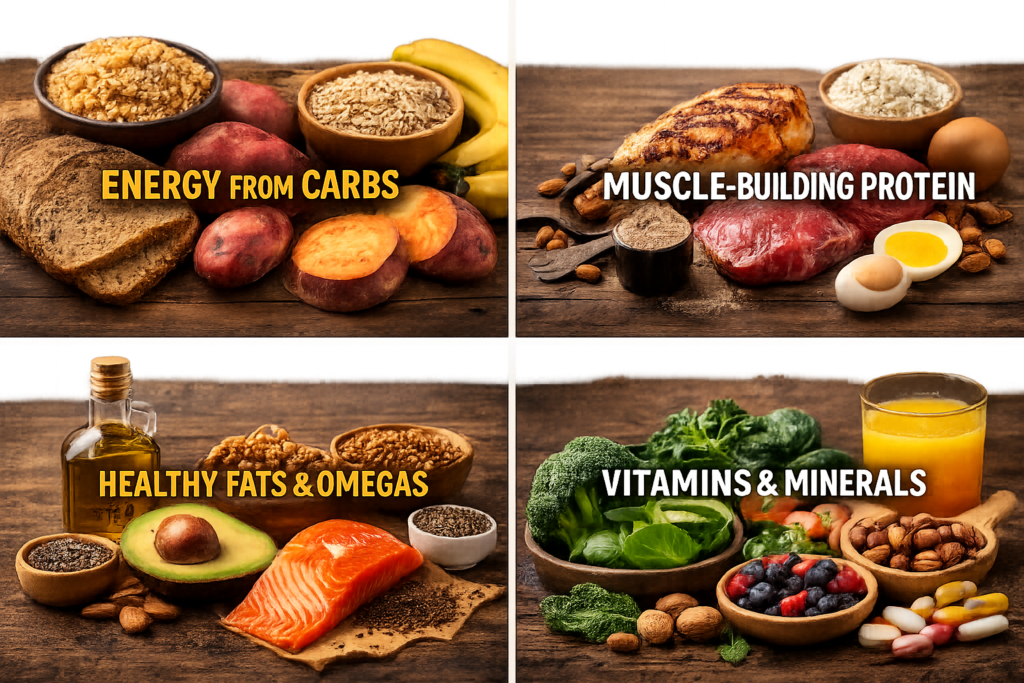
Whether your goal is muscle growth, fat loss, endurance, or military-level fitness, a balanced diet of carbohydrates, protein, healthy fats, vitamins, and minerals is essential.


Why Nutrition Matters for Training

Good nutrition helps you:

  • Increase strength and endurance
  • Build lean muscle mass
  • Recover faster after workouts
  • Prevent injuries and fatigue
  • Maintain energy throughout the day
  • Support overall health and performance

A warrior’s performance depends not just on training intensity—but on how well the body is fueled.

Proper Workout Nutrition

Carbohydrates: Your Primary Energy Source

Carbohydrates are the body’s main fuel for physical activity. They are stored as glycogen in muscles and used during intense training.

Benefits of Carbs for Workouts

  • Provide quick and sustained energy
  • Improve endurance and performance
  • Prevent muscle breakdown during long sessions
  • Help recovery by restoring glycogen stores

Good Sources

  • Rice, oats, whole wheat bread
  • Potatoes and sweet potatoes
  • Fruits (bananas, apples, dates)
  • Lentils and beans

Tip: Eat carbs before workouts to maintain energy and avoid early fatigue.


Protein: Muscle Builder and Repair Agent

Protein is essential for muscle growth, recovery, and strength development.

Benefits of Protein

  • Repairs muscle damage after training
  • Supports muscle growth and strength
  • Reduces soreness and speeds recovery
  • Helps maintain lean muscle during fat loss

Good Sources

  • Eggs
  • Chicken, fish, lean meat
  • Milk, yogurt, cottage cheese
  • Lentils, chickpeas, beans

Tip: Consume protein after workouts for optimal muscle recovery.


Healthy Fats: Long-Lasting Energy and Hormone Support

Fats are important for long-duration energy, joint health, and hormone production.

Benefits of Healthy Fats

  • Provide sustained energy for endurance activities
  • Support testosterone and muscle-building hormones
  • Improve joint and heart health
  • Help absorb fat-soluble vitamins (A, D, E, K)

Good Sources

  • Nuts and seeds
  • Olive oil, mustard oil
  • Avocados
  • Egg yolks
  • Fatty fish

Tip: Don’t avoid fats—include them in moderation for balanced performance.


Vitamins: Performance and Recovery Boosters

Vitamins help regulate energy production, immunity, and muscle function.

Key Vitamins for Warriors

  • Vitamin D – Bone strength and muscle function
  • Vitamin C – Recovery and immune support
  • Vitamin B-Complex – Energy metabolism
  • Vitamin A & E – Tissue repair and antioxidant protection

Good Sources

  • Fruits and vegetables
  • Sunlight (for Vitamin D)
  • Dairy products
  • Whole grains

Minerals: Strength, Hydration, and Muscle Function

Minerals are critical for muscle contraction, hydration, and endurance.

Important Minerals

  • Calcium – Bone strength and muscle function
  • Magnesium – Muscle relaxation and recovery
  • Iron – Oxygen transport and endurance
  • Potassium & Sodium – Electrolyte balance and hydration
  • Zinc – Recovery and immune health

Good Sources

  • Milk and dairy products
  • Bananas and leafy greens
  • Nuts and seeds
  • Meat and legumes
  • Salt (in moderate amounts)

Pre-Workout Nutrition (1–2 Hours Before)

  • Complex carbs + light protein
  • Example: Banana with peanut butter, oats with milk, or rice with eggs
  • Avoid heavy, oily foods

This ensures steady energy without feeling sluggish.


Post-Workout Nutrition (Within 30–60 Minutes)

  • Protein + fast-digesting carbs
  • Example: Milk with dates, eggs with toast, yogurt with fruit

This helps repair muscles and restore energy quickly.


Hydration: The Forgotten Fuel

  • Drink water throughout the day
  • Hydrate before, during, and after workouts
  • Dehydration reduces strength, endurance, and focus

Common Nutrition Mistakes to Avoid

❌ Skipping meals before training
❌ Eating too little protein
❌ Avoiding carbs completely
❌ Relying on junk or processed foods
❌ Not drinking enough water


Final Thoughts

Training hard is only half the battle—proper workout nutrition is what turns effort into results. A warrior’s body needs the right balance of carbohydrates for energy, protein for strength, fats for endurance, and vitamins and minerals for recovery and performance.

Instead of separating nutrients by meals, aim to include a balance of protein, complex carbohydrates, and healthy fats in every meal to support energy, performance, and recovery throughout the day. Eat clean, stay consistent, and fuel your body. When your nutrition matches your training, strength, stamina, and resilience will follow.