Jumping jacks are commonly used in warm-ups, military training, sports conditioning, and calisthenics workouts because they quickly raise your heart rate and activate multiple muscle groups.
What Are Jumping Jacks?
Jumping jacks are a classic bodyweight exercise that combines cardio and full-body movement. The exercise involves jumping while spreading your legs and raising your arms overhead, then returning to the starting position.
Since they require no equipment, jumping jacks are perfect for home workouts, warm-ups, and conditioning routines.
Benefits of Jumping Jacks
Jumping jacks offer many fitness benefits when included in your routine.
1. Improves Cardiovascular Fitness
Jumping jacks quickly increase your heart rate, helping improve cardiovascular endurance.
2. Burns Calories
Because they involve continuous movement, jumping jacks help burn calories and support fat loss.
3. Activates the Entire Body
Jumping jacks engage both the upper and lower body, making them an efficient full-body exercise.
4. Improves Coordination
The synchronized movement of arms and legs improves body coordination.
5. Excellent Warm-Up Exercise
Jumping jacks prepare the body for intense workouts by increasing blood flow and muscle activation.
Muscles Worked During Jumping Jacks
Jumping jacks engage several muscle groups throughout the body.
Primary Muscles
- Quadriceps
- Glutes
- Calves
Secondary Muscles
- Deltoids (shoulders)
- Hip abductors
- Core muscles
- Hamstrings
These muscles work together to produce explosive movement and maintain balance during the exercise.
How to Do Jumping Jacks Properly
Step-by-Step Instructions
- Stand upright with your feet together and arms resting by your sides.
- Slightly bend your knees and prepare to jump.
- Jump upward while spreading your legs shoulder-width apart.
- At the same time, raise your arms overhead until your hands nearly touch.
- Jump again to return to the starting position with your feet together and arms at your sides.
- Repeat the movement in a smooth and rhythmic motion.
Focus on controlled and consistent jumps rather than rushing the exercise.
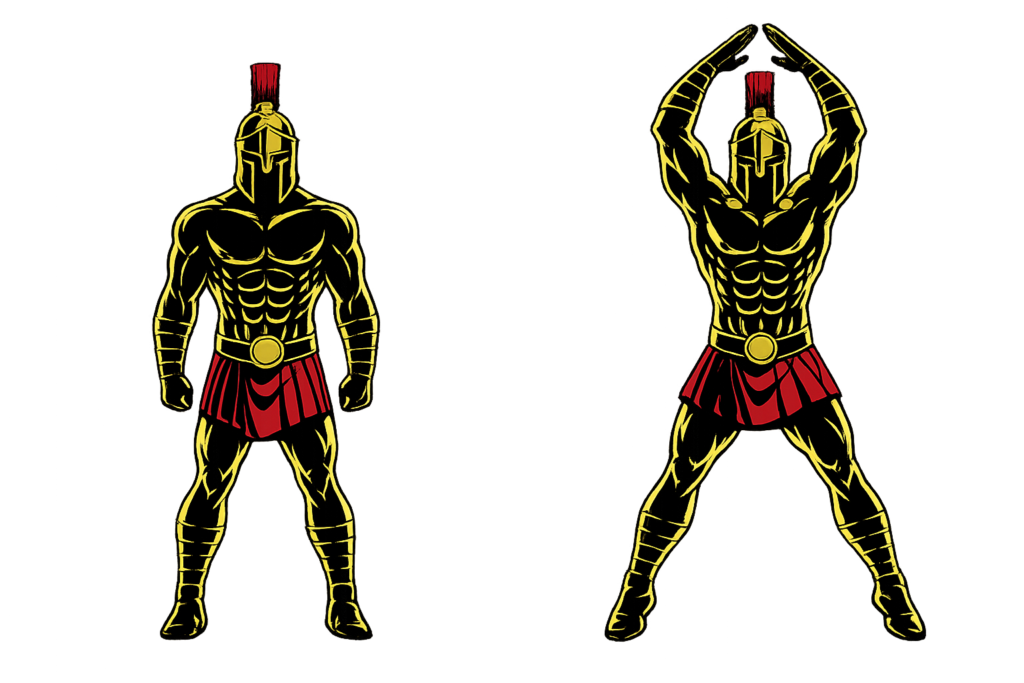
Jumping Jack Movement Breakdown
Understanding the two phases of the movement can help improve your technique.
Expansion Phase
During this phase:
- You jump and spread your legs outward
- Your arms move upward above your head
This phase activates the shoulders, legs, and core muscles.
Return Phase
In this phase:
- You jump again and bring your legs together
- Your arms return to your sides
This completes one full repetition.
Common Mistakes to Avoid
1. Landing Too Hard
Land softly on the balls of your feet to reduce stress on your joints.
2. Poor Arm Movement
Raise your arms fully overhead instead of halfway.
3. Moving Too Fast
Maintain a steady rhythm rather than rushing the exercise.
4. Poor Posture
Keep your chest up and core engaged during the movement.
Final Thoughts
Jumping jacks are one of the most effective bodyweight exercises for improving cardiovascular fitness and warming up the entire body.
By performing jumping jacks with proper form and controlled movements, you can boost endurance, activate muscles, and prepare your body for more intense workouts. Learn more about Stretching Here.
Adding jumping jacks to your warm-up routine takes less than a minute, but it can significantly improve your workout performance.
FAQ
Q1. Do jumping jacks burn calories?
Yes, jumping jacks burn calories because they are a high-energy cardiovascular exercise.
Q2. Do jumping jacks improve endurance?
Yes, regular jumping jacks help improve cardiovascular endurance and stamina.
Q3. Can jumping jacks help with weight loss?
Yes, jumping jacks can support weight loss when combined with a balanced workout routine and a healthy diet.