Dips are one of the most powerful bodyweight exercises for building upper-body strength. When performed correctly, they develop your chest, triceps, and shoulders while improving overall pushing power. That is why it is necessary to learn how to do dips properly.
If you want stronger arms, a bigger chest, and serious upper-body control, mastering proper dip form is essential.
What Are Dips?
Dips are a compound upper-body exercise performed on parallel bars or dip bars. The movement involves lowering your body by bending your elbows and then pressing yourself back up.
They primarily target the triceps and chest while also engaging the shoulders and core for stability.
Benefits of Dips
- Builds powerful triceps
- Increases chest thickness
- Improves pushing strength
- Enhances shoulder stability
- Transfers to push-ups and bench press
Muscles Worked
Primary Muscles
- Triceps
- Chest (Pectoralis Major)
Secondary Muscles
- Anterior Deltoids (Front Shoulders)
- Core Muscles
- Serratus Anterior
How to Do Dips Properly (Step-by-Step)
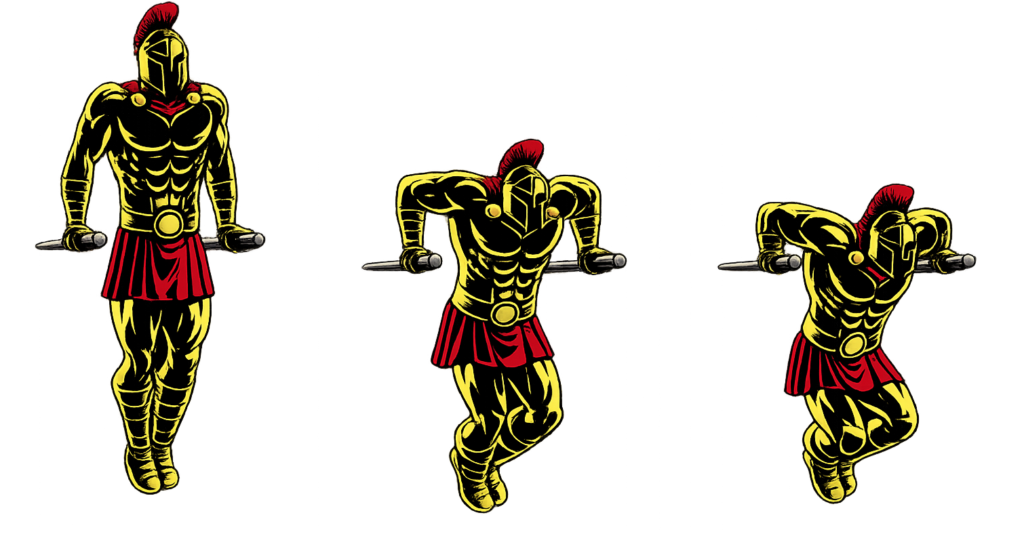
Step 1: Set Up Position
- Grip the parallel bars firmly.
- Press yourself up until your arms are fully extended.
- Keep shoulders down and away from ears.
Step 2: Lean Slightly Forward
- A slight forward lean increases chest engagement.
- Keep your chest open and core tight.
Step 3: Lower With Control
- Bend your elbows and lower your body slowly.
- Keep elbows at about a 45-degree angle (not flared wide).
- Descend until your upper arms are at least parallel to the ground.
Step 4: Press Back Up
- Drive through your palms.
- Extend your elbows fully at the top.
- Maintain control—avoid locking out aggressively.
Proper Form Checklist
- Full arm extension at the top
- Controlled descent (2–3 seconds down)
- Slight forward lean
- Elbows at 30–45 degrees
- Core tight and legs stable
Common Dips Mistakes (And How to Fix Them)
❌ Flaring elbows too wide
Fix: Keep elbows tucked at a 30–45 degree angle.
❌ Dropping too fast
Fix: Lower slowly and control the movement.
❌ Partial range of motion
Fix: Lower until the upper arms reach parallel or slightly below.
❌ Shrugging shoulders
Fix: Keep shoulders depressed and stable.
❌ Swinging legs
Fix: Keep legs still and core engaged throughout.
Beginner Tips
- Use assisted dip machines if full bodyweight is too difficult.
- Start with bench dips if necessary, but progress to parallel bar dips.
- Train dips 1–2 times per week.
- Aim for 3 sets of 6–10 reps as a beginner.
Final Thoughts
Dips are a foundational upper-body exercise that builds real strength and muscle. When performed with proper control, a full range of motion, and consistent progression, they can dramatically improve your chest and arm development. Learning how to do Dips properly can aid you greatly in your fitness journey.
Focus on quality reps, not ego reps. Master bodyweight first — then add weight gradually.
Train with control. Press with power. Build strength that shows.
FAQ – Dips
1. Are dips better than push-ups?
Dips generally place more load on the triceps and chest than standard push-ups.
2. Do dips build chest or triceps more?
Both, but leaning forward emphasizes the chest while staying upright emphasizes triceps.
3. Should I go below parallel?
Only if you have shoulder mobility and can control the movement safely.