Bicep curls are one of the most effective exercises for building stronger, more defined arms. Whether you train at home or in the gym, this simple movement targets the front of your upper arm and helps improve pulling strength for exercises like pull-ups, rows, and everyday lifting.
In this guide, you’ll learn how to perform bicep curls with proper form, avoid common mistakes, and explore different variations you can do with minimal equipment.
What Are Bicep Curls?
Bicep curls are a strength-training exercise that involves bending your elbows to lift a weight toward your shoulders. The movement primarily targets the biceps brachii, while also engaging the forearms and stabilizing muscles in the shoulders. Bicep curls are beginner-friendly, require little equipment, and can be performed almost anywhere.
Benefits of Bicep Curls
- Builds stronger and more defined arms
- Improves pulling strength for pull-ups and rows
- Enhances grip and forearm endurance
- Supports functional strength for daily tasks
- Easy to perform at home or in the gym
Muscles Worked
Primary Muscles
- Biceps brachii
Secondary Muscles
- Brachialis
- Brachioradialis (forearms)
- Anterior deltoids (front shoulders)
- Core (for stability)
How to Do a Standard Bicep Curl (Step-by-Step)
1. Starting Position
- Stand tall with feet shoulder-width apart.
- Hold a weight in each hand (dumbbells, bands, or a backpack).
- Keep your arms fully extended and palms facing forward.
- Keep your shoulders relaxed and chest up.
2. Brace Your Core
- Tighten your abs to prevent swinging.
- Keep your elbows close to your sides.
- Avoid leaning backward.
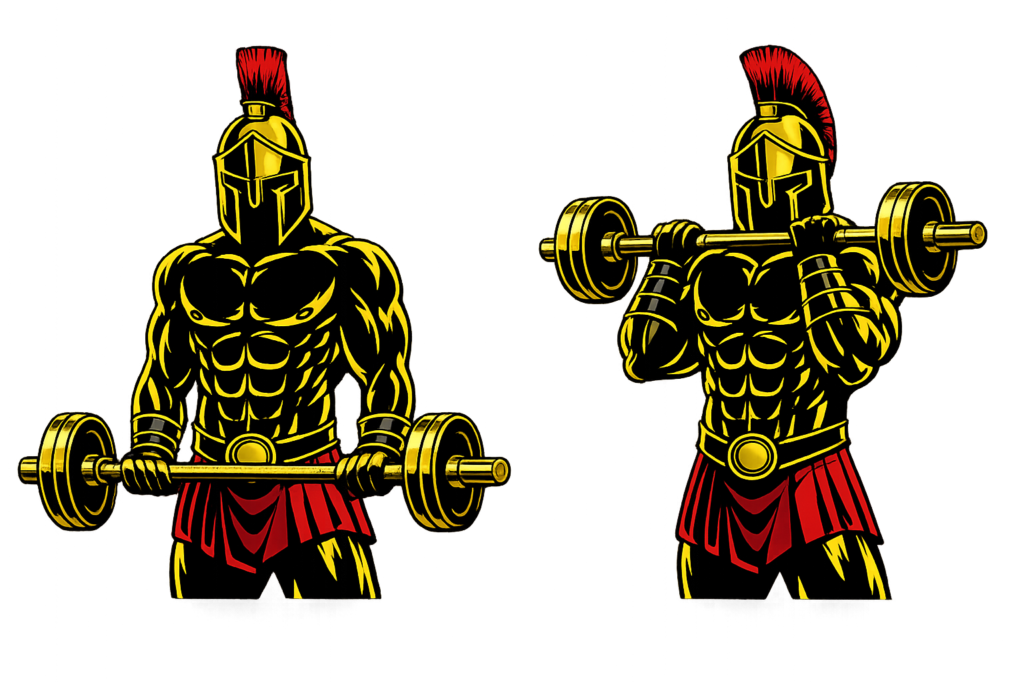
3. Curl the Weight Up
- Bend your elbows and lift the weight toward your shoulders.
- Keep the movement controlled and smooth.
- Focus on squeezing your biceps as the weight rises.
4. Squeeze at the Top
- Pause briefly when the weight reaches shoulder height.
- Fully contract your biceps without lifting your elbows forward.
5. Lower With Control
- Slowly lower the weight back to the starting position.
- Do not drop the weight or rush the movement.
- Repeat for the desired number of reps.
Recommended: 3 sets of 8–15 reps.
Proper Form Checklist
- Stand tall with core engaged
- Keep your elbows close to your sides
- Use a full range of motion
- Move slowly and with control
- Squeeze the biceps at the top
Common Bicep Curl Mistakes (And How to Fix Them)
❌ Swinging the body
Fix: Keep your core tight and reduce the weight.
❌ Elbows moving forward
Fix: Keep elbows pinned to your sides throughout the movement.
❌ Using momentum
Fix: Lift and lower slowly with full control.
❌ Half reps
Fix: Fully extend your arms at the bottom and curl all the way up.
❌ Leaning backward
Fix: Stand tall and keep your torso upright.
Variations You Can Do Anywhere
1. Dumbbell Curls
This classic version is performed with dumbbells. Allows balanced strength development and a full range of motion.
2. Resistance Band Curls
- Stand on the band and hold the handles.
- Curl upward just like a dumbbell curl.
- Great for home workouts and joint-friendly resistance.
3. Backpack Curls
- Fill a backpack with books or bricks.
- Hold the straps or sides and perform curls.
- Ideal for home training with limited equipment.
4. Single-Arm Curls
- Curl one arm at a time.
- Helps improve focus, control, and muscle balance.
5. Hammer Curls (Optional)
- Keep palms facing each other.
- Targets the forearms and brachialis for thicker arms.
Final Thoughts
Bicep curls may be simple, but when performed with proper form and control, they are highly effective for building arm strength and muscle. Focus on slow, controlled reps rather than heavy weight, and stay consistent with your training. Whether you’re using dumbbells, bands, or a backpack, disciplined execution will help you develop stronger arms and better overall pulling performance—the warrior way. Learn more aboutPull Workoutshere.
FAQ
1. Should I lift heavy or light for bicep curls?
Use a weight that challenges you while allowing strict form and controlled movement.
2. Why do my shoulders get involved during curls?
This usually happens when the weight is too heavy or your elbows move forward.
3. Is it better to curl one arm at a time or both together?
Both work well, but single-arm curls help fix strength imbalances.