The squat is one of the most powerful compound exercises you can do. This guide breaks down exact squat form, common mistakes, and tips to help you squat safely and effectively.
What Is a Squat?
A squat is a fundamental lower-body exercise that involves lowering your hips from a standing position and then returning to standing by driving through your feet. It is one of the most effective compound movements, working multiple muscle groups simultaneously to build strength, stability, and endurance.
Squats primarily target the quadriceps and glutes, while also engaging the hamstrings, calves, core, and lower back to maintain balance and proper posture. Because the movement mimics everyday actions like sitting and standing, squats help improve functional strength, mobility, and overall athletic performance.
Benefits of Squats
- Builds strong quadriceps, glutes, and hamstrings
- Improves lower-body strength and endurance
- Enhances core stability and posture
- Increases balance and coordination
- Boosts athletic performance for running, jumping, and lifting
- Supports functional strength for everyday movements like sitting and standing
- Helps improve mobility and joint health in the hips, knees, and ankles
- Can be done anywhere with bodyweight or progressed with added resistance
Muscles Worked
Primary Muscles
- Quadriceps
- Glutes
Secondary Muscles
- Hamstrings
- Calves
- Core (abs and lower back)
- Hip adductors (inner thighs)
- Erector spinae (lower back stabilizers)
Squats are a full-body strength builder when done right.
How to Do a Squat Properly (Perfect Form)
1. Starting Position
- Spine neutral (no rounding)
- Stand with feet shoulder-width apart
- Toes slightly turned outward
- Chest up, core braced
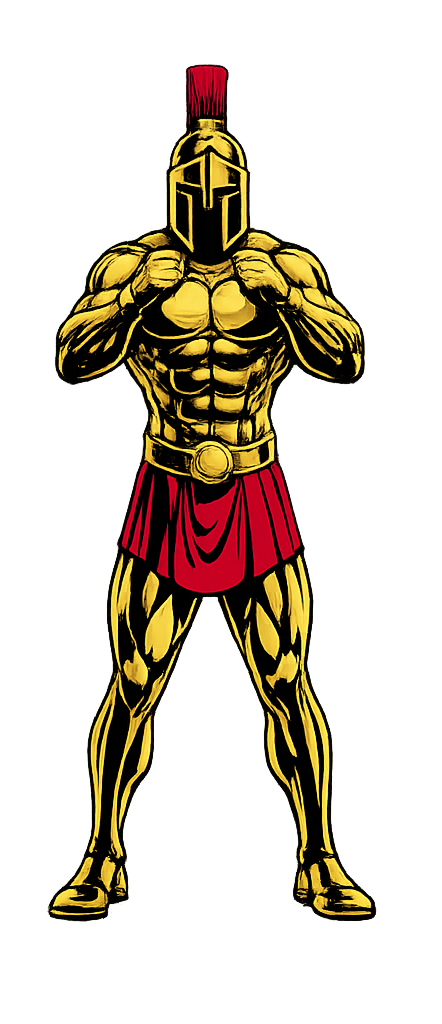
2. The Descent
- Push your hips back first
- Bend your knees and lower your body
- Keep your weight on your mid-foot and heels
- Knees track in line with your toes
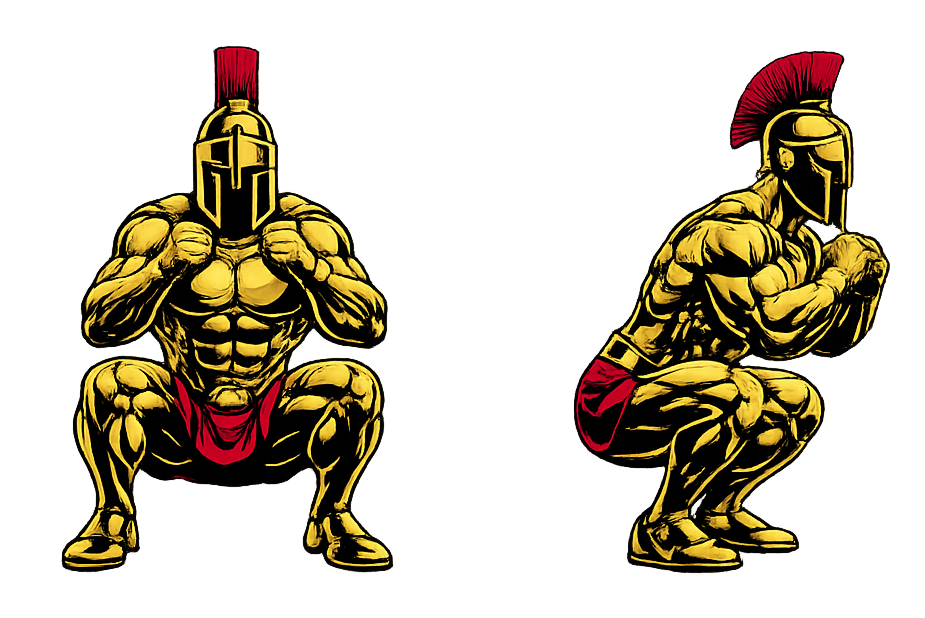
Lower yourself until:
Thighs are parallel to the ground (or lower if mobility allows)
3. The Ascent
- Drive through your heels
- Push the floor away
- Squeeze your glutes at the top
- Stand tall without locking your knees
Breathing Technique
- Inhale before descending
- Hold your breath briefly for stability
- Exhale as you push up
This helps maintain core tension and protect your spine.
Squat Proper Form Checklist
- Feet Shoulder-Width Apart – Stand with feet slightly turned out for natural hip alignment.
- Chest Up, Spine Neutral – Keep your back straight and avoid rounding your lower back.
- Knees Track Over Toes – Push your knees outward to keep them aligned with your toes.
- Weight Through Heels – Keep your heels flat and distribute weight across your mid-foot.
- Full Depth with Control – Lower until thighs are at least parallel, then drive up smoothly.
Strong squats come from control and stability—move with purpose, not speed.
Common Squat Mistakes (And How to Fix Them)
❌ Knees caving inward
Fix: Actively push your knees outward in line with your toes as you descend.
❌ Heels lifting off the ground
Fix: Sit your hips back and keep your weight through your mid-foot and heels.
❌ Rounding the lower back
Fix: Brace your core and maintain a neutral spine throughout the movement.
❌ Leaning too far forward
Fix: Keep your chest up and drive your elbows slightly forward to maintain an upright torso.
❌ Cutting depth is short
Fix: Lower until your thighs are at least parallel to the ground while keeping proper form.
Fixing these improves strength and reduces injury risk.
Squat Variations for Beginners
1. Bodyweight Squat (Beginner-Friendly)
- Stand with feet shoulder-width apart
- Keep your chest up and core engaged
- Push hips back and bend knees
- Lower until thighs are parallel to the floor
- Drive through heels to return to standing
Best for: Beginners, mobility, and learning correct squat mechanics
2. Goblet Squat
- Hold a dumbbell or kettlebell close to your chest
- Keep elbows pointing downward
- Squat down while keeping your torso upright
- Lower under control, then push through heels to stand
Best for: Improving depth, posture, and core stability
3. Barbell Back Squat
- Place the barbell across the upper back (not the neck)
- Brace your core and keep your chest up
- Push your hips back and squat down steadily
- Drive upward through heels to stand tall
Best for: Building leg strength and overall power
4. Front Squat
- Rest the barbell across the front of your shoulders
- Keep elbows high and core tight
- Squat down while maintaining an upright torso
- Push through mid-foot to return to standing
Best for: Quad strength, core engagement, and posture
5. Pause Squat
- Lower into a squat with full control
- Pause for 2–3 seconds at the bottom
- Maintain tension and balance
- Drive up powerfully to standing
Best for: Strength off the bottom, control, and fixing weak points
Final Thoughts
Squats are one of the most powerful and essential exercises for building lower-body strength, stability, and athletic performance. When performed with proper form and full range of motion, they develop the quadriceps, glutes, and core while improving balance and mobility. Whether you train at home or in the gym, mastering the squat builds a strong foundation for nearly every movement—running, jumping, lifting, and even daily activities.
Focus on controlled reps, proper alignment, and steady progression rather than rushing for heavier loads or higher reps. Strong legs are built through discipline and consistency. Perfect the basics, and your strength will grow with every session. Learn more about Leg Workouts here.
FAQ
1. How low should I squat for proper form?
Ideally, squat until your thighs are at least parallel to the ground. If mobility allows, going slightly below parallel is fine as long as your heels stay down and your spine stays neutral.
2. Are squats bad for the knees?
No, properly performed squats strengthen the knees. Problems usually come from poor form, excessive weight, or lack of mobility. Keep your knees tracking over your toes and control the descent.
3. How often should I do squats?
You can squat 2–4 times per week, depending on intensity and recovery. Beginners can start with bodyweight squats, while advanced lifters should allow rest between heavy sessions.