The row is one of the most important pulling exercises for building a strong, thick back. Whether you are using a barbell, dumbbells, cables, or resistance bands, mastering proper row form improves posture, increases strength, and develops balanced upper-body muscles. Thence Learning How to do a Row Properly is essential.
If you want a wider back, stronger biceps, and better pulling power, learning how to do a row properly is essential.
What Is a Row Exercise?
A row is a compound pulling movement where you pull resistance toward your torso while keeping your spine neutral and core engaged. The exercise targets the back muscles primarily and also engages the biceps and rear shoulders.
Rows are fundamental for correcting poor posture and balancing pushing exercises like bench press and push-ups.
Benefits of Row Exercises
- Builds a thicker, stronger back
- Improves posture
- Balances chest and pushing exercises
- Increases pulling strength
- Supports deadlifts and pull-ups
Muscles Worked
Primary Muscles
- Latissimus Dorsi (Lats)
- Rhomboids
- Middle Trapezius
Secondary Muscles
- Biceps
- Rear Deltoids
- Lower Trapezius
- Core Muscles
- Forearms
Step-by-Step: How to Do a Barbell Bent-Over Row Properly
Step 1: Set Your Stance
- Stand with feet shoulder-width apart.
- Hold the barbell with a shoulder-width grip.
- Slight bend in the knees.
Step 2: Hinge at the Hips
- Push hips back.
- Keep your back flat and chest slightly up.
- Torso should be roughly 30–45 degrees forward.
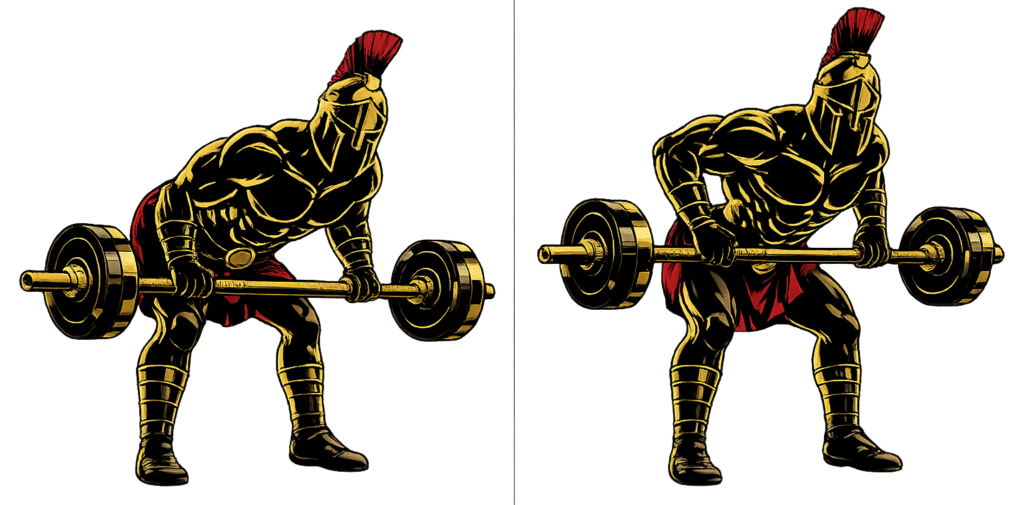
Step 3: Pull the Bar
- Drive elbows back toward your hips.
- Pull the bar to your lower chest or upper abdomen.
- Squeeze your shoulder blades together at the top.
Step 4: Lower With Control
- Slowly extend your arms.
- Keep your core tight.
- Do not round your lower back.
Proper Form Checklist
- Neutral spine throughout the movement
- Hips hinged, not rounded
- Bar pulled toward lower chest/upper abdomen
- Shoulder blades squeezed at the top
- Controlled lowering phase
Common Mistakes and Fixes
❌ Rounding the lower back
Fix: Keep your spine neutral and hinge properly at the hips.
❌ Using too much momentum
Fix: Lower the weight and focus on controlled reps.
❌ Pulling with arms only
Fix: Lead with your elbows and squeeze your back muscles.
❌ Standing too upright
Fix: Maintain a proper forward lean during bent rows.
❌ Jerking the weight
Fix: Use smooth, controlled movement.
Row Variations – How to Do Them
1. Barbell Bent-Over Row
- Hinge at the hips with a flat back and slight knee bend.
- Pull the bar toward your lower chest while driving your elbows back.
- Lower under control without rounding your spine.
2. Dumbbell Bent-Over Row
- Hinge forward, holding dumbbells at arm’s length.
- Pull weights toward your ribs, squeezing your shoulder blades.
- Lower slowly and maintain a neutral spine.
3. Upright Row
- Stand tall, holding barbell or dumbbells in front.
- Pull weight vertically toward your chin, elbows high.
- Lower with control without swinging.
4. Resistance Band Row
- Anchor the band and grab handles with arms extended.
- Pull handles toward your torso, squeezing your back.
- Return slowly while keeping tension in the band.
5 Seated Cable Row
- Sit upright with feet planted and chest lifted.
- Pull the handle toward your abdomen while driving your elbows back.
- Extend arms slowly without leaning forward.
6. Under-Bar Row (Inverted Row)
- Lie under a fixed bar and grip it at shoulder width.
- Pull your chest toward the bar, keeping your body straight.
- Lower under control until arms are fully extended.
7. Single-Arm Dumbbell Row
- Place one knee and hand on a bench for support.
- Pull the dumbbell toward your hip while keeping your back flat.
- Lower slowly and repeat before switching sides.
Final Thoughts
Rows are foundational pulling exercises that build real back strength and muscular balance. When performed with proper posture, controlled movement, and consistent progression, rows dramatically improve upper-body development and posture. Learn more about Pull Workouts here.
Master the form first. Increase weight gradually. Build strength with control.
FAQ
Q1. Are rows better than pull-ups?
Both are effective; rows build thickness while pull-ups build width.
Q2. Should I feel rows in my biceps?
Some activation is normal, but the back should do most of the work.
Q3. Is a flat back necessary?
Yes, a neutral spine protects your lower back.