
If you want powerful abs, a stronger grip, and serious core control, hanging knee raises should be in your routine. In this complete guide, you’ll learn how to do hanging knee raises properly, common mistakes to avoid, benefits, progressions, and training tips.
What Are Hanging Knee Raises?
Hanging knee raises are a core-focused bodyweight exercise performed while hanging from a pull-up bar. You lift your knees toward your chest using controlled abdominal contraction rather than momentum.
Unlike sit-ups or crunches, this movement challenges:
- Core stability
- Grip strength
- Shoulder endurance
- Hip flexor control
It’s a foundational exercise before progressing to hanging leg raises or toes-to-bar.
Benefits of Hanging Knee Raises
- Improves Core strength and Abdominal definition
- Builds strong hip flexorsfor better leg control
- Enhances Grip strength and Forearm endurance
- Improves Body control and stability
- Supports better posture and spinal stability
Muscles Worked
Primary Muscles
- Rectus Abdominis
- Hip Flexors (Iliopsoas)
Secondary Muscles
- Obliques (Internal & External)
- Transverse Abdominis
- Quadriceps
- Forearms and Grip Muscles
- Latissimus Dorsi
- Shoulders (Anterior Deltoids)
This makes it an excellent full-core strength movement.
How to Do Hanging Knee Raises Properly (Step-by-Step)
1. Start Position
- Grab a pull-up bar with an overhand grip.
- Hands slightly wider than shoulder-width.
- Fully extend your arms.
- Let your body hang straight.
- Engage your shoulders slightly (avoid hanging completely loose).
2. Set Your Core
- Tighten your abs.
- Slightly tuck your pelvis (posterior pelvic tilt).
- Keep your legs together.
- Avoid swinging before starting.
3. Lift Your Knees
- Avoid using momentum.
- Slowly raise your knees toward your chest.
- Exhale as you lift.
- Keep movement controlled.
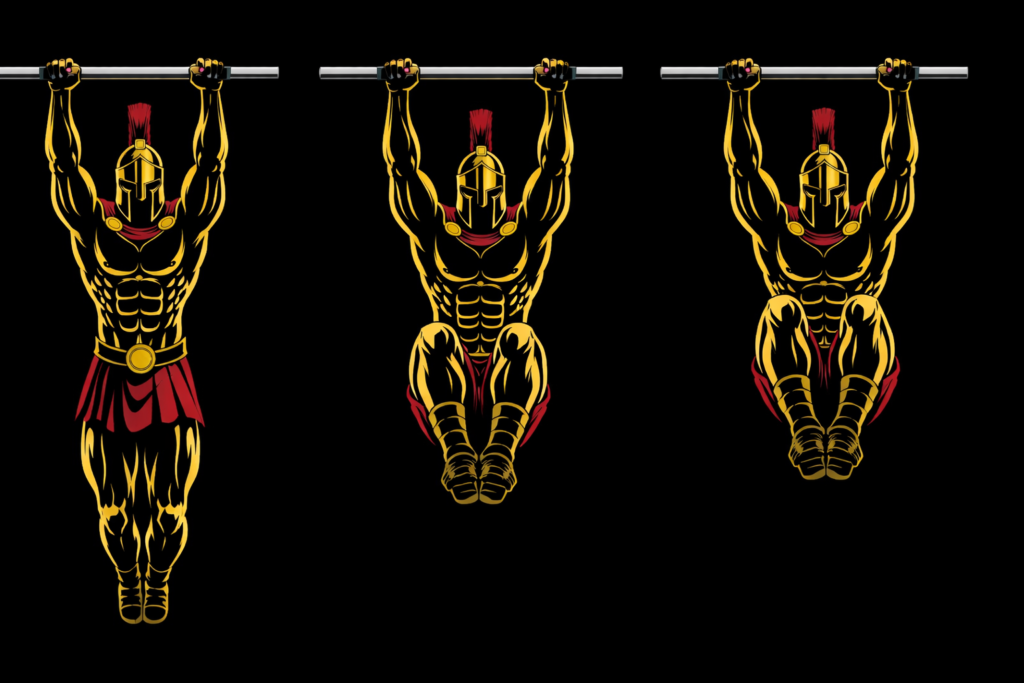
4. Pause at the Top
- Bring thighs at least parallel to the floor.
- Hold for 1–2 seconds.
- Squeeze your abs hard.
5. Lower With Control
- Slowly lower your legs back down.
- Do not drop them.
- Maintain tension throughout.
- Reset before the next rep.
Proper Form Checklist
- Body stays controlled (no swinging)
- Shoulders engaged, not shrugged
- Core tight throughout
- Knees lifted using abs, not momentum
- Controlled lowering phase
Common Mistakes (And How to Fix Them)
❌ Swinging the body
Fix: Pause between reps and control the descent.
❌ Using momentum
Fix: Slow down the lift and focus on abdominal contraction.
❌ Shrugging shoulders excessively
Fix: Keep shoulders packed and stable.
❌ Only lifting knees halfway
Fix: Raise knees at least to hip level.
❌ Dropping legs quickly
Fix: Lower slowly to maintain tension.
Progressions & Variations
- Captain’s chair knee raises (easier)
- Slow negative knee raises
- Straight leg raises
- Toes-to-bar
- Weightedhanging knee raises
Final Thoughts
Hanging knee raises are one of the most effective bodyweight exercises for building real, functional core strength. Unlike floor-based ab movements, this exercise forces your abs to work while stabilizing your entire body, improving control, coordination, and grip strength at the same time. The key to getting results is control over momentum—raise your knees using your core, pause briefly at the top, and lower slowly to keep constant tension on the muscles.
If you’re a beginner, don’t worry about high reps. Focus first on eliminating swinging, maintaining a tight core, and building a strong grip. As your strength improves, you can increase reps, slow down the tempo, or progress to straight leg raises for a greater challenge. Learn more about Core Workouts here.
FAQ
1. Why do I swing during the exercise?
Swinging usually happens from lack of core tension or from lowering your legs too quickly.
2. Are hanging knee raises better than crunches?
They are more challenging and functional because they train the core under full-body tension.
3. What if my grip gives out first?
Work on grip strength and try shorter sets until your endurance improves.